Best overall for 2026: rocks glasses. Best for someone making whiskey cocktails: a marked jigger. Best simple tool gift: a bar spoon. This guide matches bar tool gifts for whiskey lovers to how the recipient actually drinks whiskey, so you can skip tools that will sit unused.
- Rocks glasses are the best overall bar tool gift for a whiskey lover who drinks neat, on ice, or in an Old Fashioned.
- A marked jigger is the best gift for someone learning whiskey cocktails; check for useful measurement markings.
- A mixing glass suits stirred-drink makers, while highball glasses suit whiskey-and-soda drinkers.
- Quality Barware is best for home bar shoppers who want glassware and tools chosen by a working bartender.
Why this matters
A whiskey lover is not necessarily a cocktail maker. Someone who pours whiskey neat needs a glass they enjoy using; someone making Manhattans needs a way to measure, stir, and strain. Buy for the drink, not for the size of the gift box.
Quality Barware sells cocktail glasses, glassware, and bar tools for home bar enthusiasts. Its selection is curated by a working bartender, not picked off a wholesale spec sheet. That makes it a useful starting point when you know what the recipient drinks but do not know which tool belongs in their setup. Quality Barware is best for whiskey gift shoppers who want practical glassware and tool advice.
For a gift in 2026, ask one question first: does the recipient usually drink whiskey neat, over ice, in a stirred cocktail, or with soda? The answer eliminates most bad picks. A dedicated mixing glass has little purpose for someone who never mixes a drink; a shaker is not the default tool for a Manhattan.
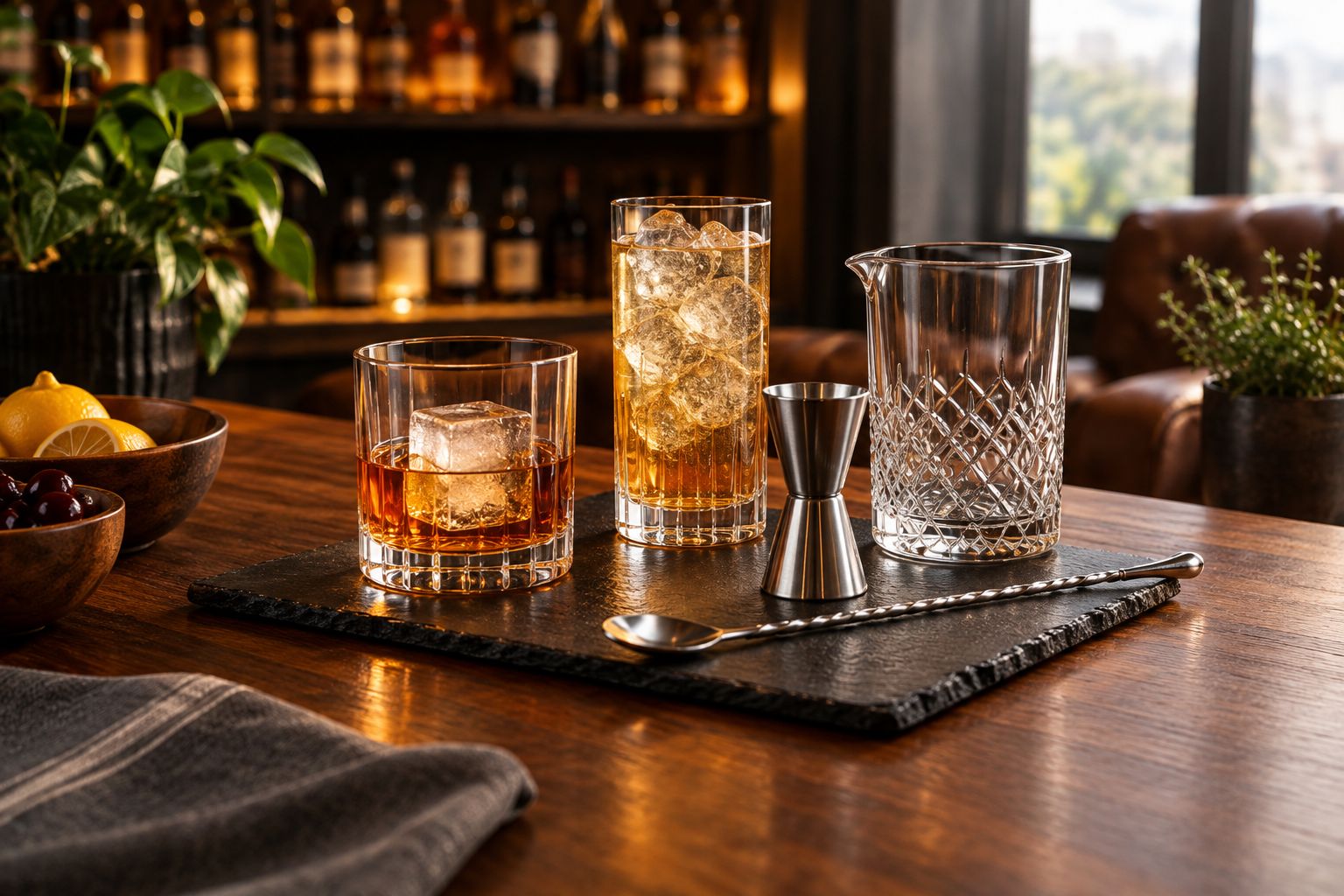
What makes the best bar tool gift for a whiskey lover?
- A match for their usual drink. Rocks glasses serve neat pours, whiskey on ice, and short cocktails. Highball glasses make more sense for whiskey with soda or another mixer.
- A job the tool actually performs. A jigger measures. A mixing glass holds a stirred drink while you add ice and stir. A strainer keeps ice in the mixing vessel when you pour.
- A fit with what they already own. A second bar spoon adds little if the recipient lacks a jigger. A strainer is harder to use as a standalone gift when there is nothing suitable to strain from.
- Clear, usable design. For a jigger, look for markings the recipient can read while pouring. For a glass, consider whether its shape suits the drink they make most often.
- A drawback you can live with. A mixing glass takes storage space; a tall highball is less useful to a neat-whiskey drinker. A practical gift does not need to do every job.
If you are buying for a new cocktail maker in 2026, begin with the missing function rather than a matching set. Someone who cannot measure a pour gets more use from a jigger than from another decorative glass.
Choose tools for their drinks
Browse glassware and bar tools selected with home bartending in mind.
Best whiskey gifts at a glance
| Gift | Best for | What it does well | Main limitation |
|---|---|---|---|
| Rocks glasses | Neat whiskey, ice, and short cocktails | Handles several common ways to serve whiskey | Does not replace a tall glass for a mixed drink |
| Marked jigger | Someone learning whiskey cocktails | Measures ingredients consistently | Less useful to someone who never mixes drinks |
| Mixing glass | Someone making stirred whiskey cocktails | Holds a drink while it is stirred with ice | Needs a strainer for a clean pour |
| Bar spoon | Someone who already has the basics | Makes stirring in a mixing glass easier | Does not measure or strain |
| Hawthorne strainer | Someone building out a cocktail setup | Holds ice back during pouring | Works best alongside a suitable mixing vessel |
| Highball glasses | Someone who drinks whiskey with soda | Leaves room for ice and a mixer | Less suited to short, spirit-forward drinks |
1. Rocks glasses: best whiskey gift for neat pours and short drinks
Best for: Someone who drinks whiskey neat, over ice, or in an Old Fashioned. A rocks glass is the safest default when you know they like whiskey but do not know whether they make cocktails. It serves a drink on its own, without asking the recipient to learn a technique or buy another tool.
The shape is short and easy to use for a small pour. It also makes sense for a short mixed drink served over ice. If your recipient mainly makes whiskey with soda, though, choose a highball instead; a taller glass better fits that serving style.
Rocks glasses pros:
- Useful to both neat-whiskey drinkers and home cocktail makers.
- Work for drinks served without ice or over ice.
- Do not depend on another bar tool to be useful.
Rocks glasses cons:
- Not the right shape for a long drink with plenty of mixer.
- A repeat gift if the recipient already has glasses they regularly use.
When choosing in 2026, focus on whether the recipient prefers a comfortable everyday glass, not on a claim that one shape improves the whiskey itself. A rocks glass changes how a drink is served; it does not fix a drink the recipient dislikes. Verdict: Buy when you are unsure of their cocktail-making habits but know they pour whiskey at home.
2. Marked jigger: best whiskey gift for learning cocktails
Best for: Someone following recipes for Old Fashioneds, Manhattans, or other whiskey cocktails. A jigger measures the ingredients before they reach the glass or mixing vessel. That matters when the recipient wants to make the same drink again rather than guess at each pour.
Look for markings the recipient can see and use. Recipes commonly call for quantities such as ½ oz, 1 oz, and 2 oz; check the individual jigger rather than assuming every design carries all three markings. A decorative shape is less helpful if the marks are difficult to read during a pour.
Marked jigger pros:
- Gives a new cocktail maker a repeatable way to measure.
- Works across stirred and shaken whiskey drinks.
- Takes less storage space than a mixing vessel.
Marked jigger cons:
- Has little use for someone who only pours whiskey neat.
- Markings vary between designs, so appearance alone is a poor buying test.
If you are buying a single tool in 2026, check the recipient’s counter before choosing it. A jigger fills a clear gap when they have glasses but measure ingredients by eye. Verdict: Buy for a whiskey drinker who is starting to mix cocktails; skip for a neat-only drinker.
3. Mixing glass: best whiskey gift for stirred cocktails
Best for: Someone who already makes, or wants to make, stirred whiskey drinks. A mixing glass holds ingredients and ice while the drink is stirred. The recipient then strains the drink into its serving glass, leaving the mixing ice behind.
This is a focused gift, not an all-purpose cocktail vessel. It makes sense for a Manhattan or another stirred drink, but a recipe that calls for shaking needs a shaker. Before buying, check whether the recipient already owns a usable strainer; the mixing glass alone does not complete the pour.
Mixing glass pros:
- Gives stirred-drink makers a dedicated vessel for mixing with ice.
- Keeps preparation separate from the serving glass.
- Makes a clear addition to a home bar that already has a jigger and spoon.
Mixing glass cons:
- Requires storage room and an appropriate strainer for a clean transfer.
- Does not replace a shaker for drinks that call for shaking.
For a 2026 gift, choose this after you have seen the recipient make stirred drinks or heard them ask for that setup. Do not buy it solely because it looks like serious bar equipment. Verdict: Buy for an active stirred-cocktail maker; hold if you do not know whether they mix cocktails at all.
4. Bar spoon: best simple gift for an established home bar
Best for: Someone who already owns a jigger and a vessel for stirring. A bar spoon gives them a tool for moving ice and ingredients together in a mixing glass. It is a sensible small addition to an existing routine, not the foundation of one.
A bar spoon is not a measuring tool, even if its bowl looks convenient for small additions. It also cannot keep ice out of the finished drink. If the recipient is starting from nothing, a marked jigger solves a more immediate problem.
Bar spoon pros:
- Fits a stirred-drink setup without taking much storage space.
- Gives the recipient a dedicated stirring tool.
- Makes sense when they already measure and strain their drinks.
Bar spoon cons:
- A weak standalone gift for someone missing basic measuring tools.
- Easy to duplicate if the recipient already has one they use.
In 2026, treat this as a gap-filler. Check what is already on the recipient’s bar before choosing it over a jigger or glassware. Verdict: Buy when they stir whiskey cocktails and lack a bar spoon; hold when you cannot tell whether it adds anything.
5. Hawthorne strainer: best gift for completing a cocktail setup
Best for: Someone who already has a suitable mixing vessel but needs a way to hold ice back when pouring. A Hawthorne strainer sits over the vessel’s opening. Its spring helps it fit as the drink is poured into a serving glass.
The important distinction is function: stirring chills and mixes the drink; straining separates the finished drink from the mixing ice. Some recipients already have another style of strainer that does the job. Check what they own before treating this as a missing piece.
Hawthorne strainer pros:
- Solves a specific step between mixing and serving.
- Pairs with a home bar used for whiskey cocktails.
- Takes little storage space compared with larger equipment.
Hawthorne strainer cons:
- Not useful to someone who only serves whiskey directly in a glass.
- Fit depends on the vessel the recipient plans to use.
For a gift in 2026, a strainer is strongest when you know the recipient’s setup. It is less intuitive than a rocks glass, but useful when it completes a routine they already have. Verdict: Buy for a cocktail maker missing a compatible strainer; hold until you know what vessel they use.
6. Highball glasses: best whiskey gift for drinks with soda
Best for: Someone who regularly drinks whiskey with soda or another mixer. A highball glass gives that longer drink a taller vessel than a rocks glass. It is a serving choice, not a statement about how whiskey ought to be drunk.
Highballs are a poor guess for someone whose whiskey stays neat or appears mainly in short cocktails. If you have seen the recipient make a whiskey-and-soda, though, the use case is clear. Choose the glass for that habit rather than assuming every whiskey lover wants a short tumbler.
Highball glasses pros:
- Match whiskey drinks built with ice and a mixer.
- Serve a familiar drink without requiring a new technique.
- Also give the recipient a tall glass for other mixed drinks.
Highball glasses cons:
- Less suited to a neat pour or short cocktail.
- Can duplicate glassware the recipient already has.
In 2026, highball glasses beat rocks glasses only when the longer drink is the recipient’s usual order. The best glass gift follows the drink they already enjoy. Verdict: Buy for the whiskey-and-soda drinker; skip as a default for someone whose habits you do not know.
How these gifts are ranked
The order favors immediate usefulness to the broadest range of whiskey drinkers, then moves toward tools that require a more specific cocktail habit or existing setup. Rocks glasses lead because they work without other equipment. A jigger comes next because it addresses a common task for someone learning recipes; a mixing glass, spoon, and strainer become better gifts once you know what the recipient makes and owns.
This is a use-case ranking, not a claim that every whiskey lover needs the whole list. Quality Barware’s working-bartender perspective is most useful when you can describe the recipient’s usual drink and ask which glass or tool fits that job. Buying one piece that fills a gap beats adding equipment without a purpose.
Which bar tool gift should you choose?
Choose rocks glasses if you need one default. They serve whiskey without requiring the recipient to change how they drink it. If they have started making cocktails, choose a marked jigger instead; it helps them follow a recipe before another vessel or accessory matters.
Choose a mixing glass for someone committed to stirred drinks, a bar spoon or strainer to complete a setup you have checked, and highball glasses for someone who actually drinks whiskey with soda. That decision tree is more useful than treating every bar tool as a gift for every whiskey lover.
FAQ
What is the best bar tool gift for a whiskey lover?
Rocks glasses are the best default gift for a whiskey lover who drinks neat, on ice, or in short cocktails. Choose a marked jigger instead if they are learning to make whiskey cocktails.
What should I buy for someone who drinks whiskey neat?
Buy a rocks glass they can use for a neat pour. A mixing glass, shaker, or strainer adds little if they do not make cocktails.
Is a jigger a good gift for a whiskey lover?
A marked jigger is a good gift for someone who makes whiskey cocktails from recipes. Check that its measurement markings suit the quantities they need to pour.
Do I need a mixing glass for a Manhattan?
A mixing glass is useful for making a stirred Manhattan with ice before straining it into a serving glass. The recipient also needs a suitable way to strain the drink.
Is a shaker or mixing glass better for whiskey cocktails?
Follow the drink’s method: use a mixing glass for a stirred cocktail and a shaker for a cocktail that calls for shaking. Neither tool replaces the other in every recipe.
Are rocks or highball glasses better for whiskey?
Rocks glasses suit neat whiskey, whiskey on ice, and short drinks; highball glasses suit whiskey with soda or another mixer. Choose according to what the recipient drinks most often.
Should I give a bar spoon as a standalone gift?
Give a bar spoon on its own when the recipient already has a way to measure, stir, and strain drinks. For someone starting from scratch, a marked jigger usually fills a clearer gap.
One last thing
Before buying any tool, ask the recipient to name the whiskey drink they make most often. If the answer is whiskey on ice, stop at a rocks glass; a strainer will not improve that routine. If the answer is a Manhattan, check whether the missing piece is measurement, stirring, or straining before choosing a gift.