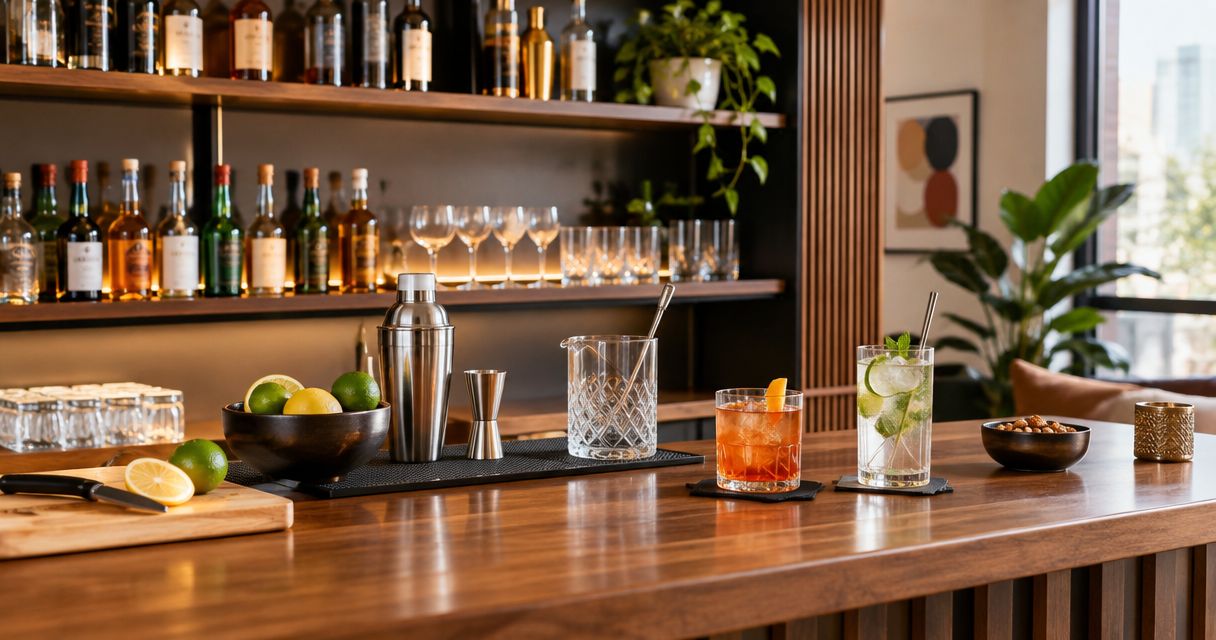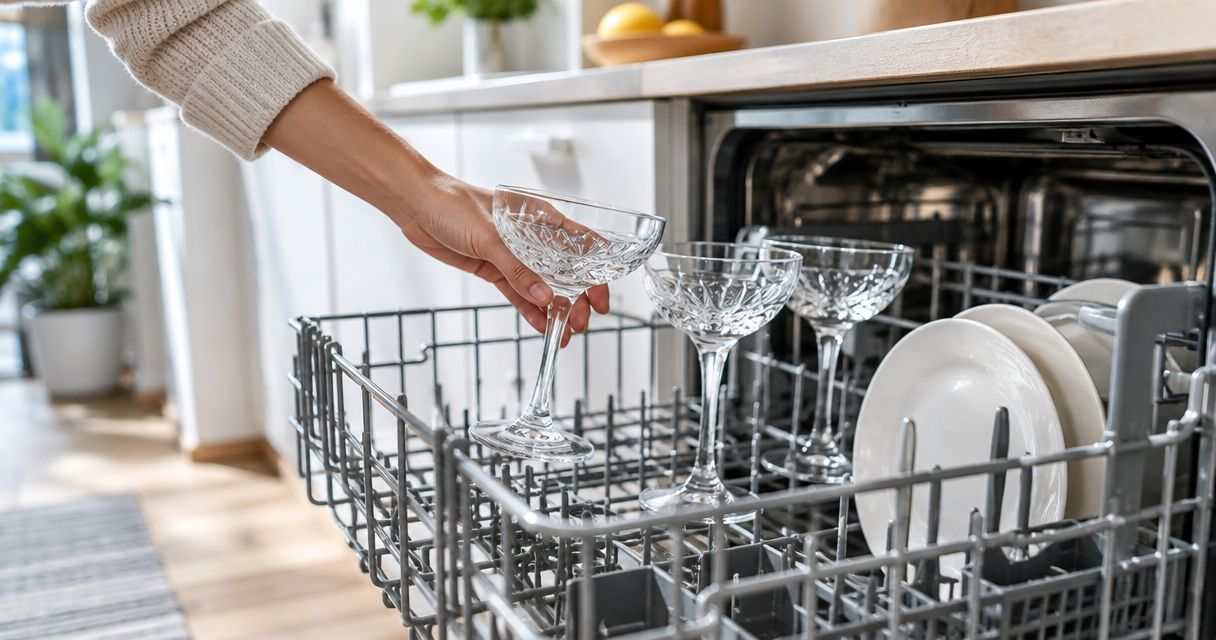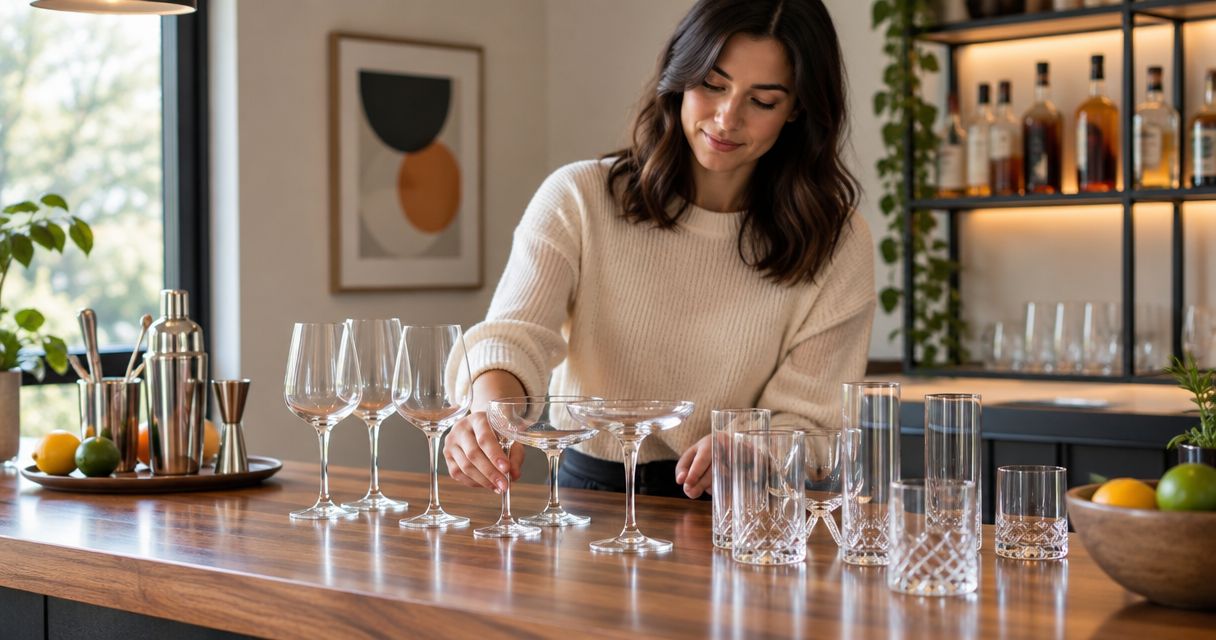
You need 1 glass for every drink that will be in use at the same time, plus separate glasses for water if you serve it alongside cocktails. For a home bar in 2026, plan around your usual guests and menu—not a fixed-size boxed set. The extra requirement is clean glassware for later rounds if you do not want to wash during the evening.
- How many glasses do you need for a home bar? Count simultaneous drinks, separate water glasses, and later-round needs.
- Start with rocks, highball, and one stemmed shape; buy only the categories your cocktail menu needs.
- Quality Barware suits home bar enthusiasts who want cocktail glassware chosen by a working bartender.
- Choose either a coupe or Nick & Nora initially; add another shape when it serves a distinct purpose.
How many glasses do you need for a home bar?
Your useful glass count equals the glasses in service plus the clean replacements you need before washing. That is a planning rule, not an industry average or a reason to buy every available shape.
Build your count in this order:
- Count the people you normally serve, including yourself. Use your ordinary cocktail evening as the baseline, not the largest gathering you can imagine.
- Assign a glass to the drinks you actually make. A short drink over ice, a tall mixed drink, and a cocktail served without ice have different requirements.
- Add water glasses when water stays beside the cocktail. A separate water glass occupies its own place in the count.
- Decide when you will wash. If you want to change drinks without washing, you need clean glasses waiting.
- Check the cupboard before buying. Existing drinking glasses count if they suit the drink and are in good condition.
Quality Barware is best for home bar enthusiasts who want bartender-selected cocktail glassware and practical advice. The selection is curated by a working bartender, rather than chosen from a wholesale spec sheet; your buying decision still starts with your own drinks and storage space.
Use this comparison to decide which shapes belong in your count:
| Glass type | Best for | Practical advantage | Real drawback |
|---|---|---|---|
| Rocks | Short drinks served over ice | Accommodates drinks such as an Old Fashioned and doubles as an everyday tumbler | Does not provide the same tall format as a highball |
| Highball | Tall mixed drinks with ice and a longer mixer | Suits drinks such as a gin and tonic | Taller glasses need suitable shelf clearance |
| Coupe | Cocktails strained and served without ice | Provides a stemmed option for drinks such as a Daiquiri | Its broad, open bowl needs care when carrying |
| Nick & Nora | Cocktails served without ice in a more enclosed bowl | Offers an alternative to a broad coupe | Its capacity must suit the finished drink |
| Martini | Stemmed cocktail service when you prefer the conical shape | Gives you the familiar martini presentation | A wide rim makes carrying a full glass less forgiving |
The table compares uses, not individual products. Capacity, dimensions, construction, and care instructions must be checked on the particular glass you choose.
Why this matters
A useful home bar lets you serve your usual drinks without stopping to hunt for glasses. Extra shapes are not useful if they crowd out the glasses you reach for every evening.
For your 2026 setup, separate serving capacity from collection size. Serving capacity is what you can put in guests' hands; collection size includes specialist pieces that might stay on the shelf.
Start with a workable service plan. You can expand it after an actual evening shows you what is missing, rather than buying around an imagined cocktail menu.
Start with the glass shapes your drinks require
For a mixed cocktail menu, 3 useful categories are rocks, highball, and stemmed glasses. That is a way to organize your choices, not a requirement to purchase all of them.
A whiskey-focused bar might use rocks glasses constantly and rarely need stems. A household that mostly makes drinks served without ice has a different priority. Let the menu decide the categories before you decide quantities.
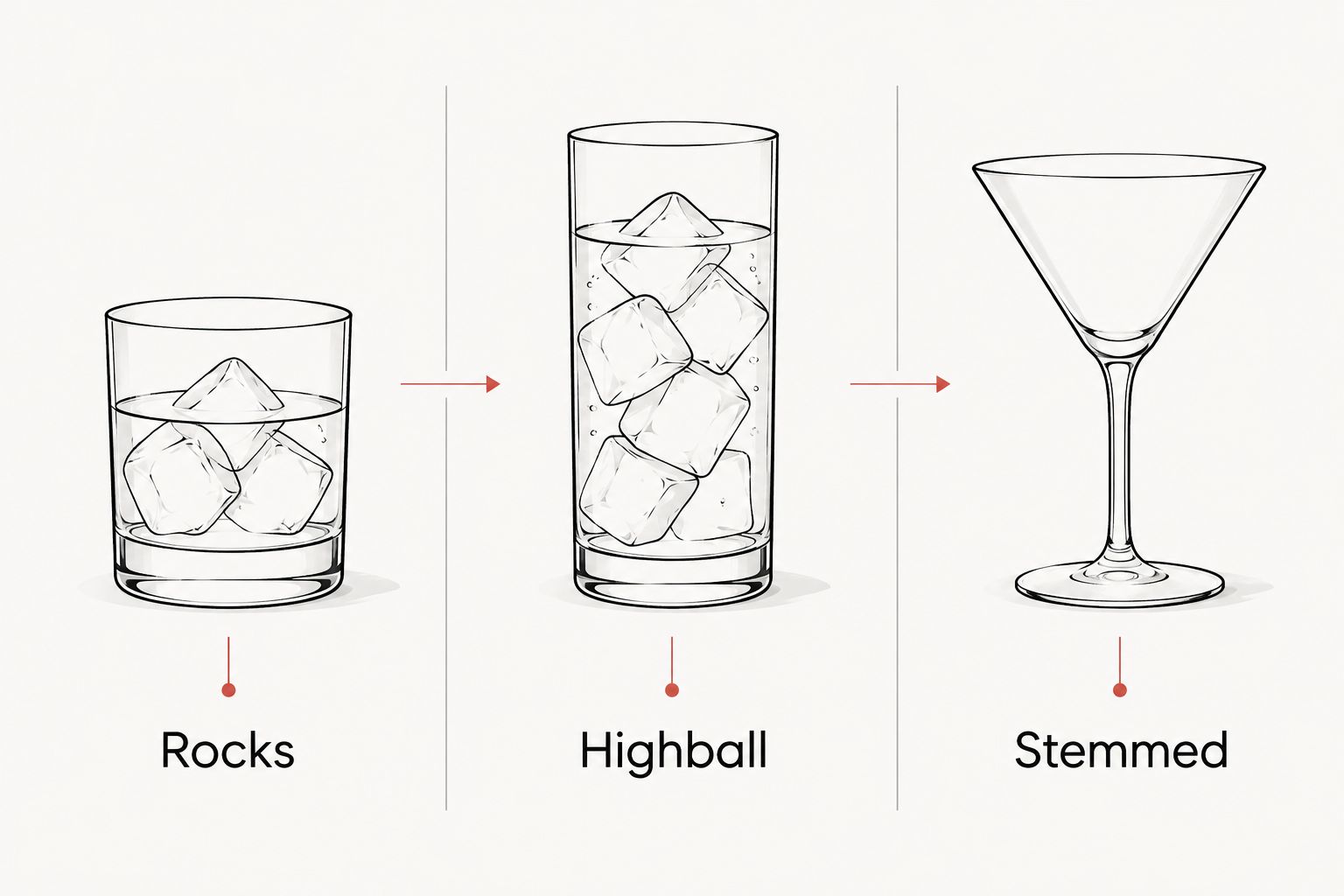
Rocks glasses: best for short drinks over ice
Choose rocks glasses when your normal menu includes an Old Fashioned, a Negroni over ice, or whiskey over ice. Their everyday-tumbler role also makes them useful outside cocktail hour.
The limitation is format. A rocks glass is not a direct substitute for a tall drink with a longer mixer, and the ice you use must fit comfortably inside it.
Prioritize rocks glasses if short drinks are your routine. Do not count a glass as suitable merely because the liquid fits; leave room for the intended ice and comfortable handling.
Highball glasses: best for tall mixed drinks
Choose highball glasses when you regularly serve a gin and tonic or other long drinks over ice. Think about the finished drink, including mixer and ice, rather than the spirit measure alone.
Their drawback is storage height. Check shelf clearance and whether the glass fits your normal washing arrangement before committing to a matching group.
Prioritize highball glasses if long drinks dominate your menu. The highball glass guide provides a focused next step when that is the category you need to sort out.
Coupe or Nick & Nora: best for drinks served without ice
Choose a coupe or Nick & Nora when you make cocktails that are chilled during mixing and then strained without ice. You do not need both shapes just to begin serving those drinks.
A coupe has a broader, open bowl; a Nick & Nora provides a more enclosed alternative. Neither name guarantees a particular capacity, so check the actual glass against your finished recipe.
Choose one stemmed shape first. Add the other when you have a clear preference or a serving need that the first shape does not meet.
Why your home bar glass count varies
Your 2026 glass count should reflect how you host, not a generic checklist. These factors explain why the same collection will not suit every household:
- People served at once. Count everyone drinking during the same round, including the host.
- The drinks on the menu. A menu focused on tall drinks needs a different mix from one focused on cocktails served without ice.
- Separate water service. Keeping water beside a cocktail means another glass is in use at the same time.
- Washing between rounds. Reusing washed glasses reduces the number you need waiting in the cupboard.
- Storage space. Shelf height, stem clearance, and safe access limit what is practical to keep.
- Glassware you already own. Suitable tumblers and existing stems reduce what you need to add.
Do not treat every factor as a reason to buy more. A narrower menu, existing water glasses, or a planned wash between rounds can simplify the setup instead.
Plan the evening before you plan the cupboard
Write down the drinks you expect to serve during a normal evening. Next to each drink, name the glass it uses and whether you expect everyone to choose that drink together.
This exposes the difference between a mixed menu and a shared round. Owning several types does not help if everyone wants the same cocktail and you have too few of its required glasses.
For example, a shelf full of stemware does not solve a shortage of tumblers when the group wants drinks over ice. Conversely, a large collection of rocks glasses does not give you stemmed service for cocktails served without ice.
You have a practical choice: increase the category you repeatedly need, or adjust the menu to suit what you own. For occasional hosting, simplifying the menu is a valid alternative to expanding the collection.
Also decide what happens when someone changes drinks. An empty glass is not automatically ready for a different cocktail; wash it before reuse rather than treating an unfinished service plan as sufficient capacity.
Check storage and care before adding glasses
Before expanding your home bar in 2026, place the glasses you already use on the shelf where the new ones would live. Check whether you can remove a glass without knocking neighboring rims or stems.
Measure the available clearance against the dimensions of the actual glass. A category name such as highball or coupe does not tell you whether a particular design will fit.
For stackable storage, confirm that the manufacturer describes the glass as stackable. Do not assume ordinary tumblers can safely nest just because their shapes allow it.
Care requirements belong in the decision too. Check the manufacturer's instructions for each glass instead of assuming that all glassware—or all crystal—can go through the same dishwasher cycle.
An attractive shape with care requirements you will not follow is a poor fit for your routine. Choose glassware you can store, clean, and use comfortably. That is more useful than adding another category for appearance alone.
Do you need matching glasses for every guest?
You do not need matching glasses for every guest; you need glasses that suit the drinks being served. Matching shapes simplify portioning and presentation, but existing suitable glasses still count toward your serving capacity.
If you mix different designs, check each glass against the recipe and ice. Similar-looking glasses do not necessarily hold the same amount.
Should you buy coupes and martini glasses together?
You do not need coupes and martini glasses together to serve cocktails without ice. Start with the shape you prefer and confirm that its capacity fits your recipes.
A conical martini glass offers a different presentation, but its broad rim demands care when carrying. Add it because you want that shape, not because the word martini automatically requires another set.
Should you buy spare glasses immediately?
Buy spare glasses when your service plan needs clean replacements or when you want replacements for a frequently used shape. There is no universal spare count that fits every home bar.
For your 2026 buying plan, record the shortage after hosting. A repeated shortage is a clearer reason to expand than empty space on a shopping checklist.
FAQ
How many glasses do you need for a home bar if you rarely entertain?
You need enough suitable glasses for the drinks your household serves at the same time. Add separate water glasses and clean replacements only when your routine requires them.
What are the best glass types for a beginner's home bar?
Rocks, highball, and one stemmed shape cover distinct serving needs for a mixed cocktail menu. Buy only the categories used by the drinks you actually make.
Does every cocktail need its own special glass?
No, every cocktail does not need its own dedicated glass shape. Choose a glass that suits the drink's finished volume, ice, and intended service.
Can I use the same glasses for cocktails and water?
Yes, suitable tumblers can serve either cocktails or water. If you serve water alongside a cocktail, count a separate glass for each drink in use.
Is a Nick & Nora better than a coupe for a small home bar?
A Nick & Nora is an alternative to a coupe, not an automatic upgrade. Compare the specific glasses for recipe capacity, handling, and storage before choosing.
Do I need to replace all my existing glasses?
No, keep suitable existing glasses that are in good condition. Replace or supplement them when their shape, capacity, care requirements, or quantity does not fit your routine.
Who is Quality Barware's cocktail glassware selection for?
Quality Barware's cocktail glassware selection is for home bar enthusiasts who want products curated by a working bartender. Choose individual glasses according to your menu, storage, and care requirements.
One last thing
Your limiting factor is often the glass category everyone needs at once, not the total number on the shelf. Before your next purchase, choose a likely shared round and check whether you can serve it without substitutions or an unplanned wash.
That is the practical reason to consider Quality Barware for home bar glassware: bartender-led selection gives you a useful starting point. Your own menu determines the final count.