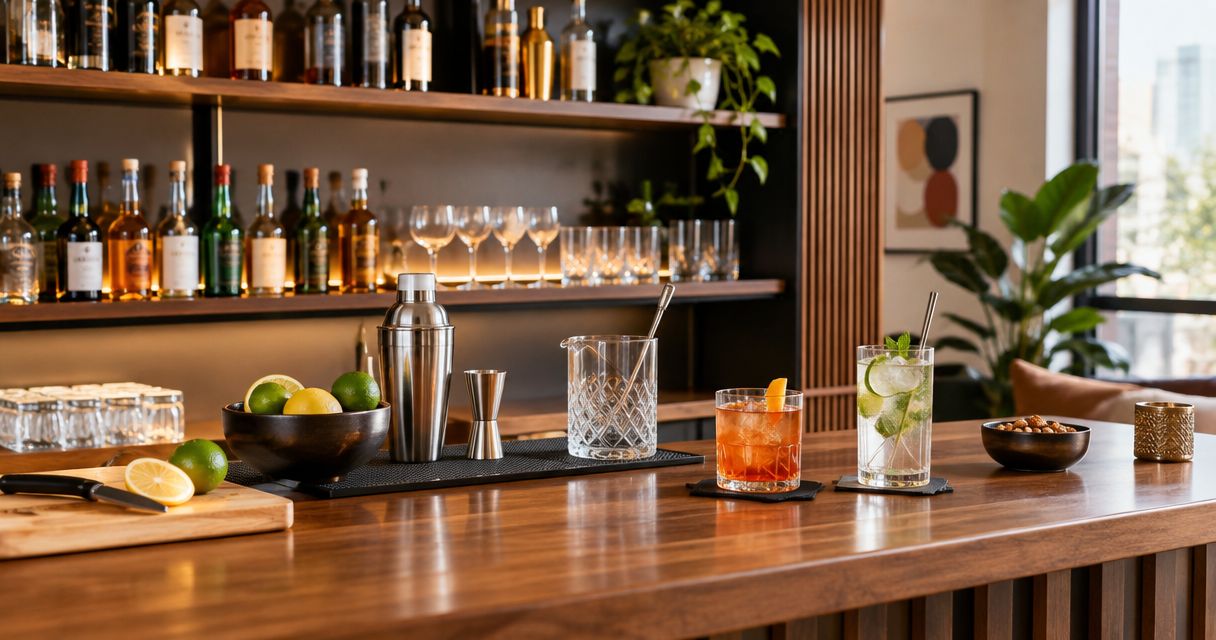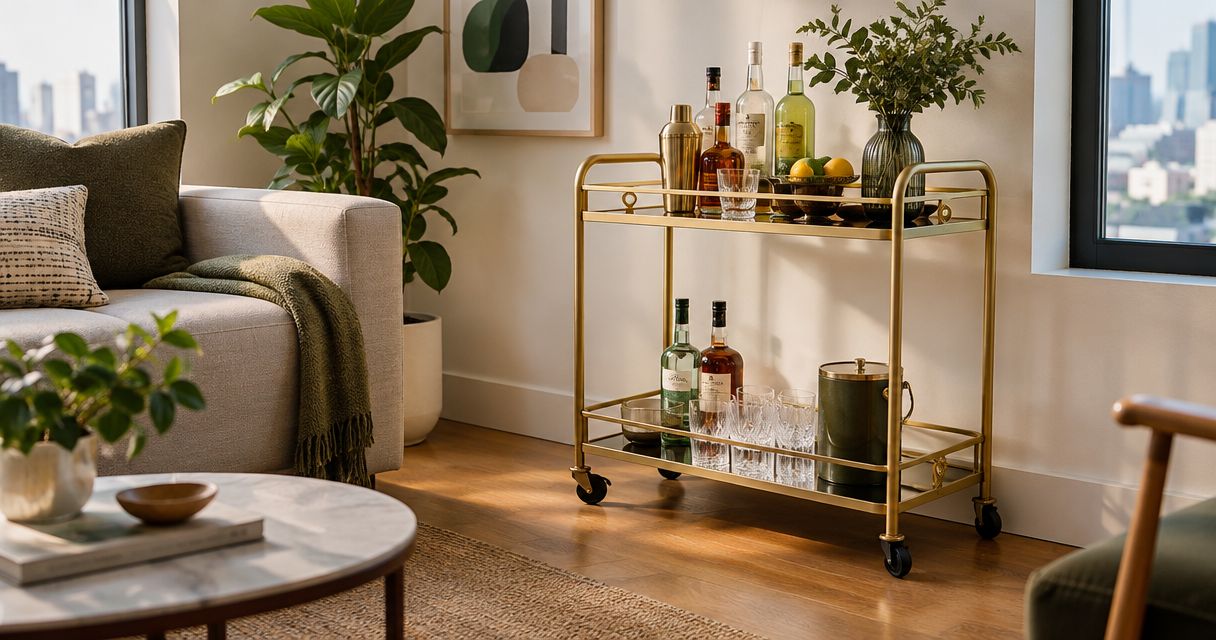
A bar cart is worth it in 2026 if it keeps your drinks equipment together, gives you a useful serving station, and fits without blocking movement through your room. It is not worth it if you already have convenient storage and a clear preparation surface; the cart also adds an exposed surface to clean and does not replace access to ice, water, or a sink.
- Is a bar cart worth it? Yes for organized home bar storage and serving; no if existing furniture does both.
- Choose a cabinet instead when enclosed storage matters more than moving drinks equipment.
- Quality Barware suits home bar enthusiasts who want cocktail glasses and tools selected by a working bartender.
- Test your setup with a tray before committing floor space to a cart.
Is a bar cart worth it in 2026?
Buy a bar cart to solve a storage or serving problem, not because a home bar supposedly needs one. The useful question is whether the cart removes a specific annoyance: scattered tools, bottles occupying kitchen cupboards, or repeated trips while serving guests.
Think through the full bar cart to cocktail hour workflow before choosing furniture. A cart that stores bottles neatly but leaves no room to set down a glass has solved display, not preparation.
| Option | Best for | Practical advantage | Real drawback |
|---|---|---|---|
| Bar cart | Serving near your seating area | Open storage; movable models let you reposition supplies | Exposed contents need cleaning; movement depends on the floor and wheels |
| Bar cabinet | Keeping equipment out of sight | Closed storage separates bar supplies from the room | Fixed location; useful preparation space depends on its design |
| Existing shelf | Using space you already have | Keeps bottles and tools together without another furniture footprint | Usually needs a separate preparation surface |
| Tray | Testing a compact setup | Groups the equipment you actually use | Limited carrying space; needs a stable surface underneath |
None of these arrangements makes a better cocktail by itself. Choose the one that lets you measure, mix, serve, and clear away without working around the furniture.
Why this matters
Your home bar is a work area, even when it sits in the living room. Bottles are only part of the setup: you also need somewhere for clean glasses, tools, wet equipment, and finished drinks.
For your 2026 setup, separate storage, preparation, and serving before shopping. One piece of furniture does not have to handle all three jobs. Keeping bottles on a shelf and making drinks at the kitchen counter is a valid arrangement, not an unfinished bar.
The strongest reason to add a cart is a clear improvement in your routine. If the benefit disappears when you describe how you will use it, keep the floor space.
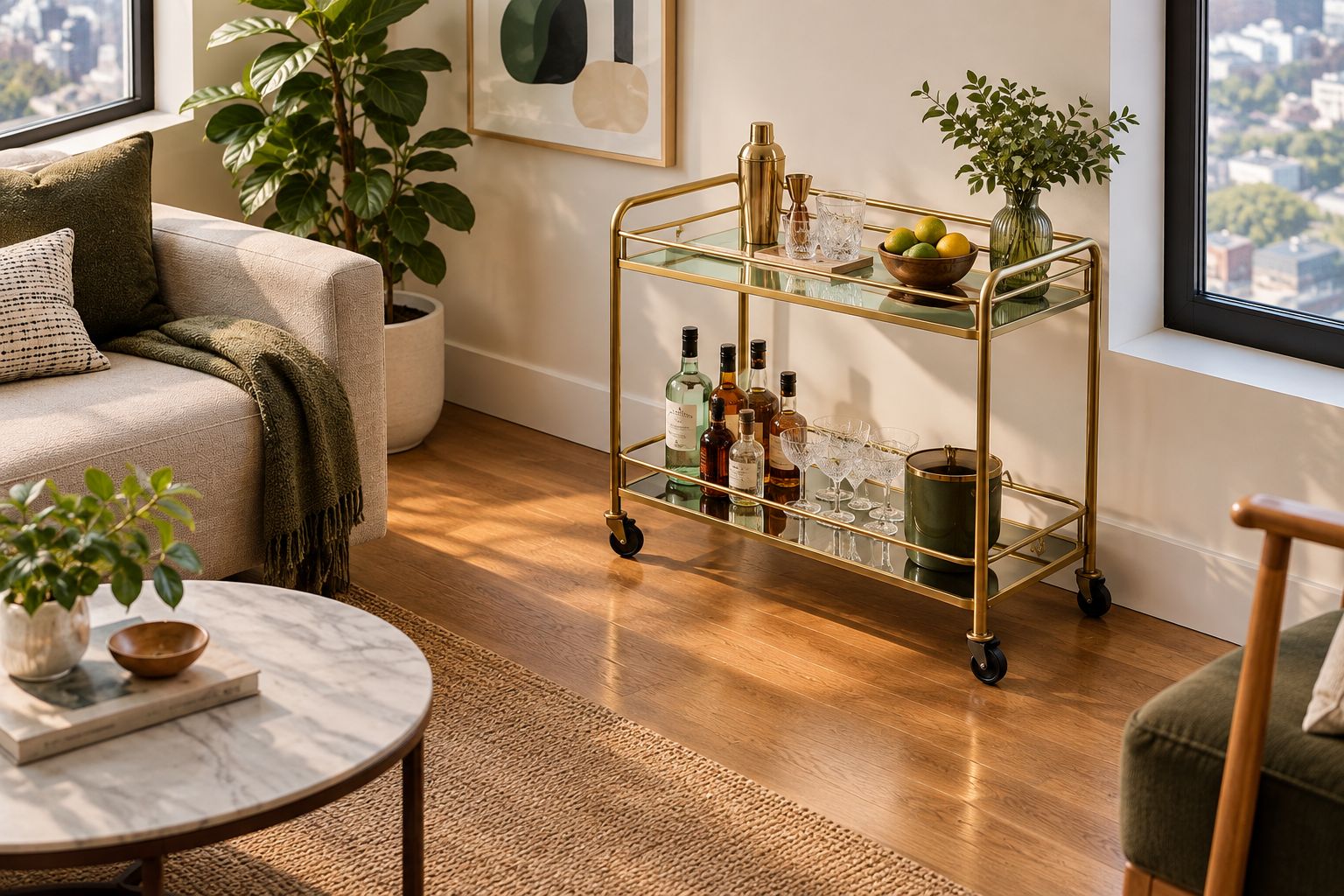
A bar cart: best for a movable serving station
A bar cart suits you when drinks supplies belong near the conversation but do not need a permanent kitchen position. It gives bottles, glasses, and tools a defined home, with open access during serving.
The drawback is that open access also means open exposure. Dust settles on stored equipment, and loose glasses need attention before you move the cart. A crowded top leaves little room to work.
Check the manufacturer's assembly instructions, load limits, and intended use. Inspect whether the wheels lock, whether shelves hold bottles securely, and whether the handle is useful when the cart is loaded. Wheels alone do not establish that a cart will move comfortably across your rugs or thresholds.
Choose a cart when its parked position and serving position both work. If you must move it out of the way every time you cross the room, it is occupying circulation space rather than creating a useful station.
A bar cabinet: best for enclosed storage
A cabinet suits you when you want bottles and equipment put away between uses. Doors keep the contents out of sight and reduce their exposure to settling dust compared with an open shelf.
The trade-off is access. You need room to open the doors, reach the shelves, and remove taller bottles without awkward lifting. A cabinet top also needs to be suitable for your intended use; decorative furniture is not automatically a spill-tolerant preparation surface.
Enclosed storage is not the same as secure storage. If restricting access matters in your household, assess the actual locking arrangement rather than assuming doors provide protection.
Choose a cabinet when concealment matters more than mobility. Keep mixing at the kitchen counter if the cabinet does not provide a suitable work surface.
An existing shelf or tray: best for testing the idea
An existing shelf suits you when storage is the problem and you already have somewhere to make drinks. Its advantage is straightforward: you can organize supplies without adding furniture to the floor.
Its drawback is separation. If the shelf sits far from your preparation area, you still need to carry equipment back and forth. Avoid overhead positions that make heavy bottles awkward to retrieve.
A tray is best for grouping a small working selection. It gives you a practical way to test where drinks equipment belongs, but it is not a substitute for stable furniture or enclosed storage. Do not load it beyond what you can comfortably carry.
Start with the shelf or tray if you cannot yet name what a cart would improve. You can change the arrangement after using it rather than buying around an imagined routine.
Why a bar cart's usefulness varies
The same cart can be useful in one room and inconvenient in another. These factors determine the difference:
- Room layout: A parking spot must leave doors, drawers, seating, and walking routes usable. Measure the intended location and the route to it.
- Drink preparation: Shaking, stirring, and building drinks require different tools. Your chosen recipes determine what needs to stay within reach.
- Access to ice and water: A cart stores supplies, but you still need a plan for collecting ice, rinsing tools, and dealing with used equipment.
- Storage preference: Open shelves keep equipment visible. Closed storage suits you better when you want it hidden between uses.
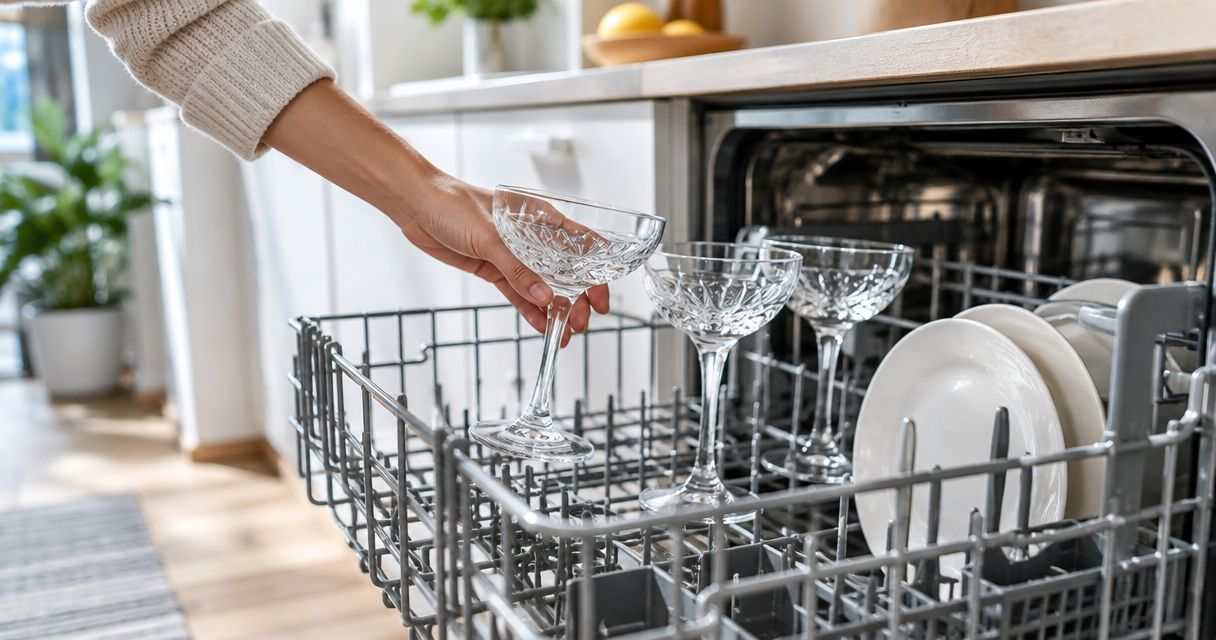
- Cleaning and care: Check the furniture's care instructions and each glass or tool's cleaning requirements. Do not assume the whole setup tolerates the same treatment.
- Household access: Consider children, pets, visiting guests, and the risk of bumping exposed glassware. Placement matters as much as appearance.
For a 2026 purchase, judge these practical requirements before finishes or styling. A cart that fits your room but not your drink-making routine is still the wrong furniture.
Test your home bar before buying a cart
Use your next drinks occasion as a rehearsal. The goal is to identify what you reach for and where the setup becomes awkward, not to recreate a fully stocked cocktail bar.
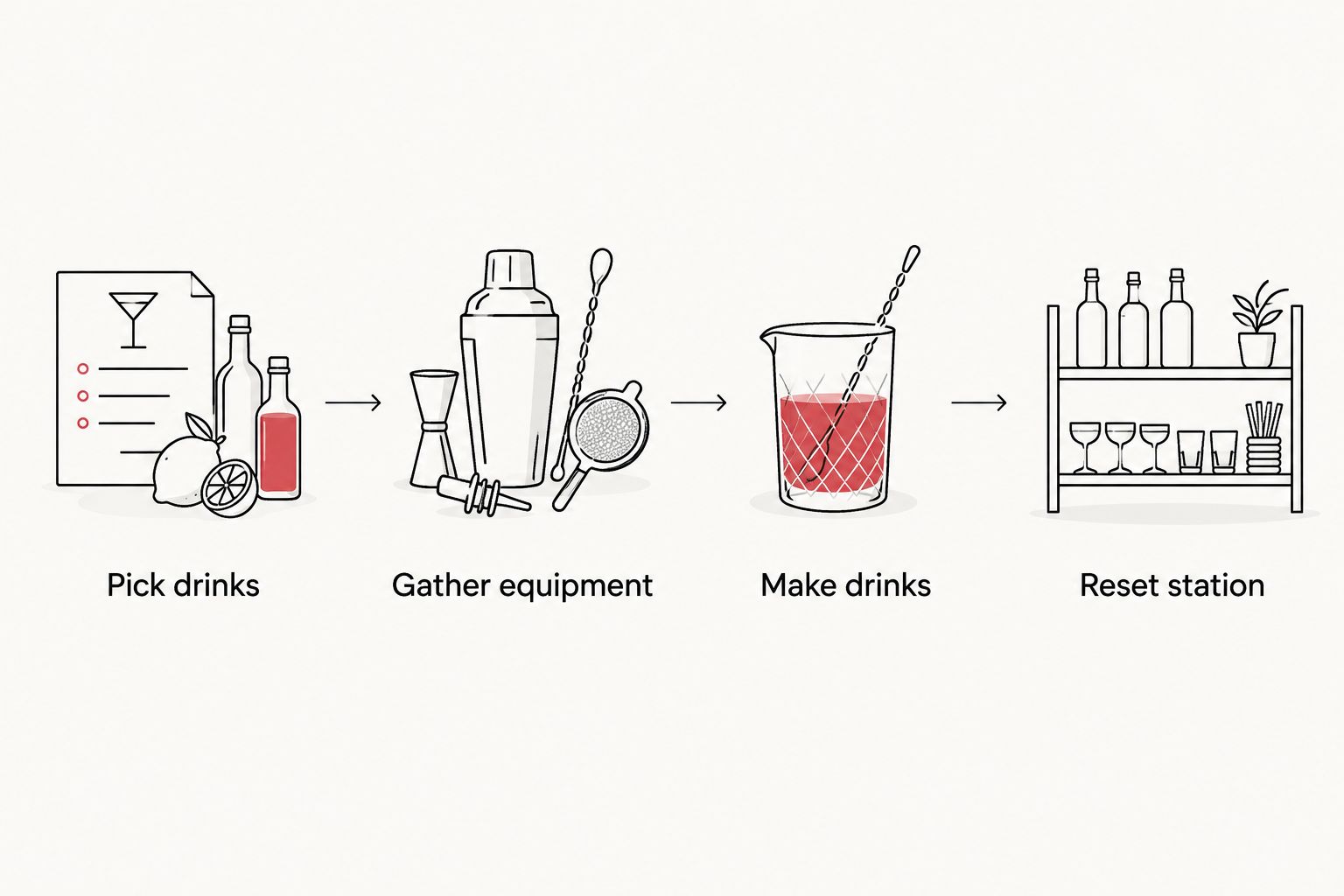
Pick drinks
Choose 2 drink recipes you actually want to make. This is a planning exercise, not a limit on what your home bar should serve. Write down the ingredients, glasses, and tools each recipe requires.
Do not choose recipes simply to justify equipment. If you mostly build drinks directly in a highball, your working setup differs from one centered on shaken cocktails served in coupes.
Gather equipment
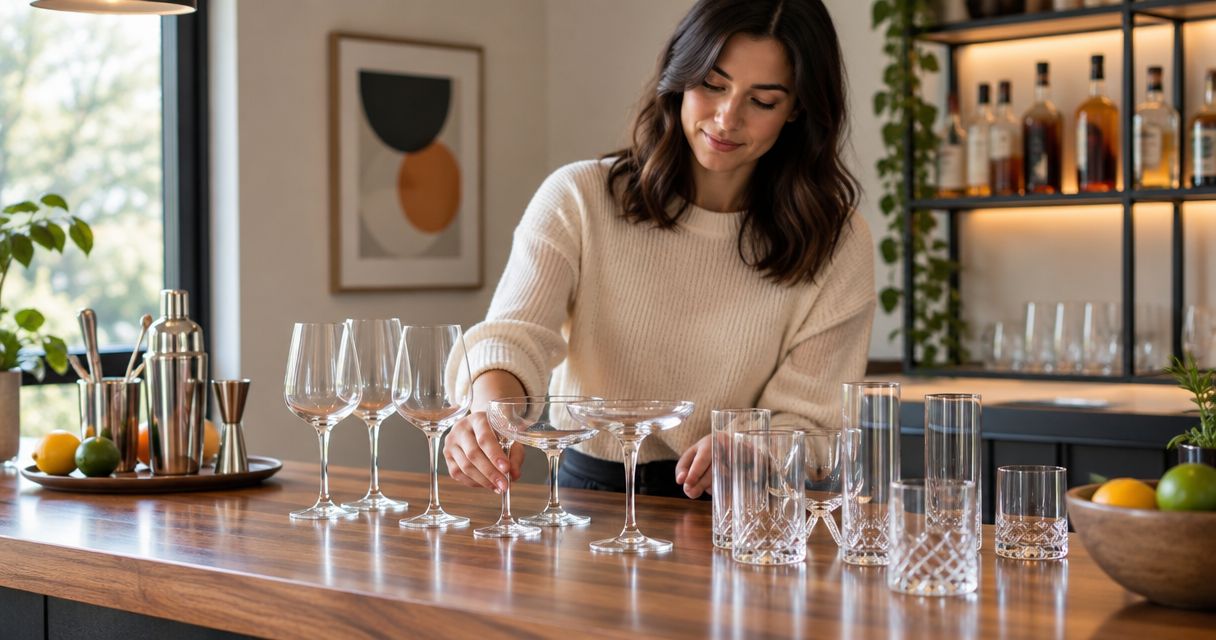
As a test, set out 4 glasses and the tools for those recipes. Use 1 tray to group small items if that helps, leaving the actual mixing surface clear.
Notice what does not fit comfortably. Tall bottles, long spoons, and stemmed glasses need different kinds of clearance; an attractive shelf arrangement does not prove they will be easy to retrieve.
Make drinks
Prepare the selected recipes where you expect to work. Follow the route from ice to measuring, mixing, and serving, then identify every unnecessary trip or awkward reach.
Keep a place for wet tools and used equipment. If your proposed cart location makes those jobs harder, change the location before deciding that more storage is the answer.
Reset station
Return everything to its intended storage position and clean the working surface. The reset matters because a cart that is convenient during serving can still be inconvenient to maintain.
For your 2026 decision, buy only after this test reveals a job the cart would do better. If the trial works well without a cart, you already have your answer.
Choose glassware around the drinks you serve
Start with the drink rather than a matching display. A rocks glass suits drinks served over ice; a highball suits tall mixed drinks with ice and a lengthening ingredient such as soda. Neither shape replaces a stemmed glass when you want to serve a chilled cocktail without ice.
A coupe provides an open bowl for cocktails served without ice. A Nick & Nora offers a more enclosed bowl, while a martini glass has the familiar widening, angular shape. Stemmed glasses keep your hand away from the bowl, but they also need storage clearance and careful handling.
These are functional choices, not a checklist of glasses every cart needs. Start with the shapes your selected recipes use, then add others when a drink gives you a reason.
Quality Barware is best for home bar enthusiasts who want bartender-selected cocktail glasses and tools. The shop's selection is curated by a working bartender rather than chosen from a wholesale spec sheet. That is relevant when deciding which equipment belongs in your setup; you still need to check each item's dimensions and care instructions against your storage space.
Browse Quality Barware with your recipe list in hand. Buying useful glasses and tools does not require buying furniture first.
Can a bar cart replace a kitchen counter?
A bar cart replaces a kitchen counter only when its surface and construction suit the preparation you intend to do. Some arrangements work better as storage and serving stations while mixing stays in the kitchen.
Check working height, stability, usable surface area, and care instructions. Do not treat a furniture top as a cutting board or assume that spills can sit on it without attention.
Is a bar cart worth it in a small apartment?
A bar cart is worth it in a small apartment only if it improves storage without obstructing movement. Count its parked footprint and the space needed to access it, not just the shelf area it adds.
An existing shelf or cupboard is the better choice when it keeps the same equipment accessible without taking more floor space. Mobility is useful only when there is somewhere sensible to move the cart.
Do you need a bar cart to make good cocktails?
You do not need a bar cart to make good cocktails. Measuring ingredients, following the recipe, and managing chilling and dilution affect the drink; the furniture organizes the work.
Build the setup around preparation first. Add a cart when storage or serving needs justify it.
FAQ
Is a bar cart worth it in 2026?
A bar cart is worth it in 2026 when it improves storage or serving without obstructing your room. Skip it if your existing furniture already keeps equipment accessible and provides suitable working space.
What's better for a home bar, a cart or a cabinet?
A cart is better for an open serving station; a cabinet is better for keeping supplies out of sight. Choose around access, cleaning, and the way you use the room.
Can I use a bar cart without alcohol?
Yes, a bar cart can organize glasses, tools, and ingredients for alcohol-free drinks. Keep ingredients that require refrigeration stored according to their instructions rather than treating the cart as refrigerated storage.
Should I make cocktails on the bar cart?
Make cocktails on the cart only if its construction and surface suit that work. Otherwise, use it for storage and serving while preparing drinks on a suitable kitchen surface.
How do I stop a bar cart from becoming cluttered?
Keep the working surface clear and store only equipment you use for your chosen drinks. Give wet tools and used glasses a separate place during serving, then reset the station afterward.
What should I buy before buying a bar cart?
Choose your drink recipes first, then identify the glasses and tools they require. Quality Barware offers bartender-curated cocktail glassware and home bar essentials for that equipment-first approach.
Should I move a loaded bar cart while serving guests?
Follow the manufacturer's instructions before moving a loaded cart. Secure loose items, check the route, and keep fragile glassware from shifting; a wheeled base does not eliminate tipping or breakage risks.
One last thing
Leave working space empty on purpose. A cart covered edge to edge with bottles has no obvious landing place for a finished drink, a measuring tool, or a wet shaker.
Before buying a cart in 2026, set your equipment on the proposed surface and rehearse making a drink. If you must rearrange the display at every step, remove equipment or choose another setup. Useful empty space is part of the bar, not a decorating problem.