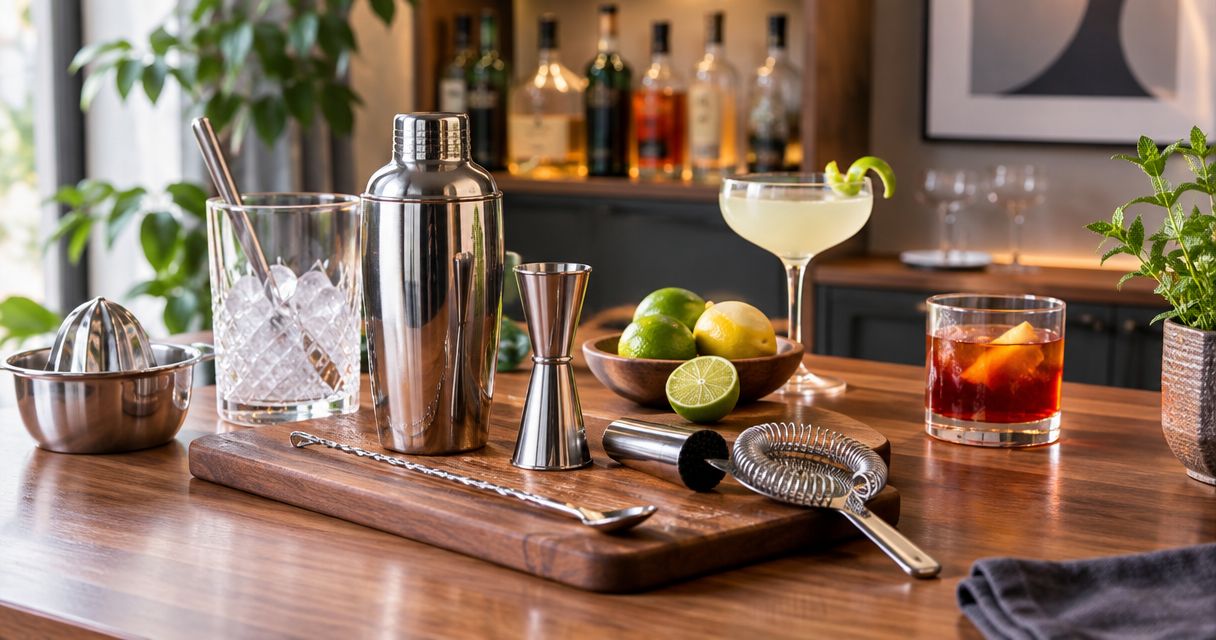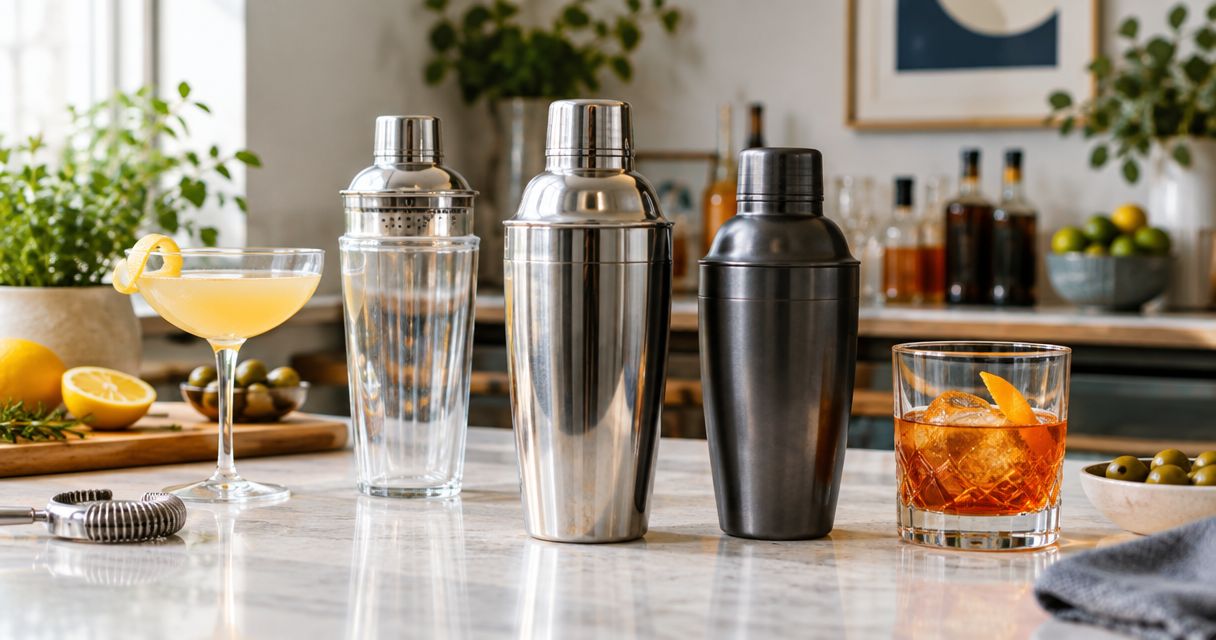
A cocktail shaker is the one tool every home bar actually needs, but the three basic designs — Boston, cobbler, and Parisian — behave differently at the seal, the pour, and the strain, and picking the wrong one is the most common home bar mistake going into 2026.
- The two-piece Boston shaker is the best cocktail shaker overall for a tight seal and fast shaking.
- The cobbler shaker is the best cocktail shaker for beginners because it has a built-in strainer.
- The Parisian shaker is the best cocktail shaker for presentation on a bar cart or dinner table.
- A weighted Boston tin set shakes colder and faster, but it takes practice to seat correctly.
- Skip anything under 16 ounces if you regularly shake drinks for more than one person.
Why this matters
The shaker decides how cold your drink gets, how much it dilutes, and how much of a mess you make straining it. A loose seal lets ice slush leak out mid-shake; a stuck seal makes you look like you've never mixed a drink before. Every piece in the Quality Barware lineup gets picked by a working bartender who has actually fought with a stuck tin at a busy service, not pulled off a wholesale spec sheet.
Get the shaker style wrong and you'll compensate for it every single time you make a drink — over-shaking a cobbler because the cap won't seat, or under-diluting because a Parisian shaker's narrow mouth won't let ice move freely. Match the shaker to how you actually pour, and the rest of the process gets easier.
The quick answer
Best overall: the Boston shaker (tin-on-tin). Best for beginners: the cobbler shaker. Best for presentation: the Parisian (French) shaker. Best for high-volume mixing: a weighted Boston tin set.
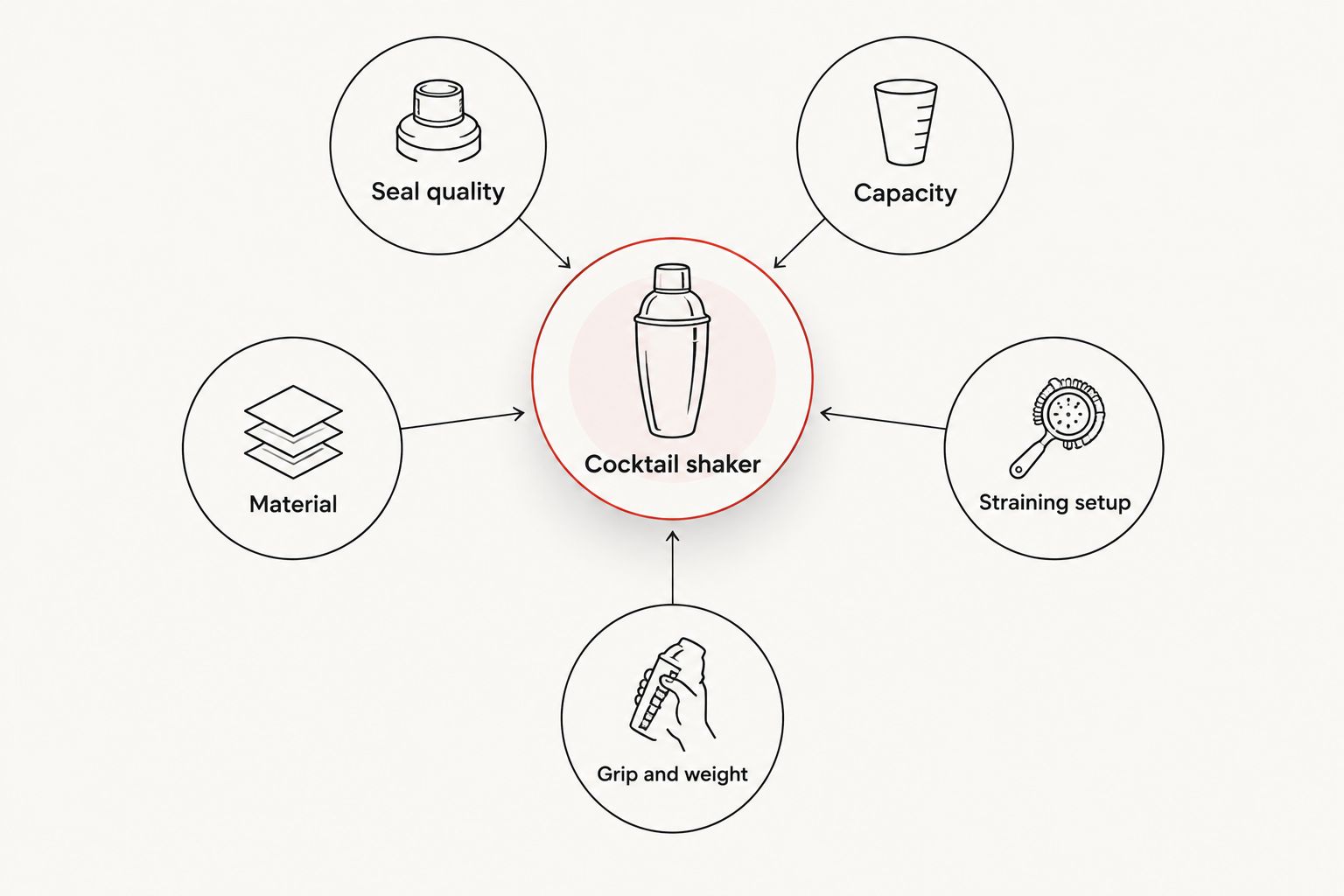
What makes the best cocktail shaker
- Seal quality — tins or cups should lock tight without sticking so hard you need a bar spoon to crack them
- Capacity — 16 to 30 ounces covers single drinks up to double batches
- Material — 18/8 stainless steel resists dents and doesn't pick up a metallic taste like thin plated steel
- Straining setup — built-in strainer versus needing a separate Hawthorne or julep strainer
- Grip and weight — matters more than it sounds once your hands are wet and cold
- Cleanability — wide mouths and smooth interiors rinse out citrus pulp and egg white faster
Cocktail shakers at a glance
| Shaker | Best for | Standout feature | Key limitation |
|---|---|---|---|
| Boston shaker (tin-on-tin) | Everyday use | Tight seal, fast to break open | No built-in strainer |
| Cobbler shaker | Beginners | Built-in strainer cap | Cap can stick when overfilled |
| Parisian shaker | Presentation | Cleaner two-piece look on a bar cart | Narrower mouth limits ice movement |
| Weighted Boston tin set | High-volume mixing | Colder shakes, faster dilution | Takes practice to seat the seal |
1. Boston shaker (tin-on-tin): best cocktail shaker for everyday use
A Boston shaker is two cone-shaped tins — one slightly smaller than the other — that nest together and seal on the overlap. It's what most working bars use because it's fast to assemble, fast to break open, and holds enough volume for two drinks at once.
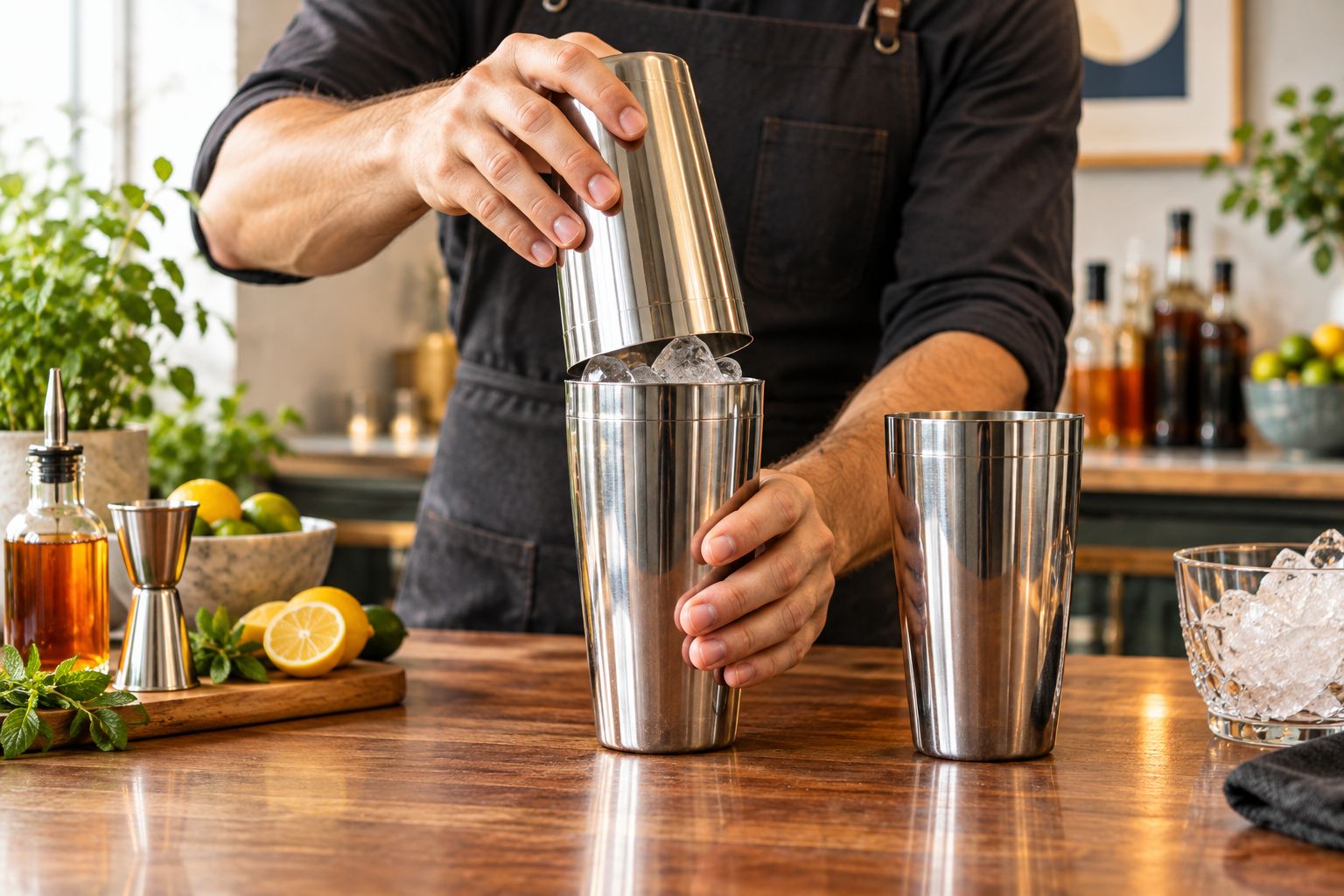
Boston shaker pros:
- Seats fast and holds a tight seal once you get the angle right
- Large capacity handles double pours without topping off
- Stainless steel tins take a beating and don't crack like glass-and-tin combos
Boston shaker cons:
- Needs a separate Hawthorne strainer, which is one more thing to buy and clean
- New users overshoot the seal and end up with a stuck tin their first week
Best for: anyone who wants the setup actual bartenders use. Verdict: Buy.
2. Cobbler shaker: best cocktail shaker for beginners
A cobbler shaker is a three-piece unit — base, strainer cap, and small lid — so straining happens without a separate tool. It's the shaker most people picture when they think "cocktail shaker," and it's genuinely the easier one to learn on.
Cobbler shaker pros:
- No separate strainer to buy, lose, or forget
- Easier for a first-timer to seal correctly on the first try
- Compact size fits in a smaller kitchen drawer
Cobbler shaker cons:
- The strainer cap can clog with muddled fruit or herbs and slow your pour
- Smaller capacity than most Boston sets, so batching two drinks gets tight
Best for: someone building a first home bar who doesn't want to buy a strainer separately. Verdict: Buy.
3. Parisian (French) shaker: best cocktail shaker for presentation
The Parisian shaker is a two-piece design like a Boston shaker but with a cleaner, more rounded profile and no visible seam mismatch. It looks better sitting out on a bar cart, which matters if the shaker lives in view rather than in a drawer.
Parisian shaker pros:
- Cleaner silhouette that looks intentional next to nice glassware
- Still a two-piece seal, so it shakes as effectively as a Boston shaker
- Usually comes in a matched cap-to-base fit that's easy to identify by feel
Parisian shaker cons:
- Narrower mouth than a standard Boston tin limits how freely ice tumbles
- Still needs a separate strainer, same as the Boston style
Best for: a home bar where the shaker sits out on display, not tucked in a cabinet. Verdict: Buy if you care how the setup looks; Hold if function alone matters more.
4. Weighted Boston tin set: best cocktail shaker for high-volume mixing
A weighted tin set uses a heavier gauge or added base weight on one or both tins, which changes how the ice moves and how cold the drink gets in the same shake time. It's built for people making several drinks back-to-back, not one nightcap.
Weighted tin set pros:
- Shakes colder in fewer seconds because the extra mass moves ice harder
- Holds up to repeated daily use without denting
- Preferred by bartenders who shake dozens of drinks in a shift
Weighted tin set cons:
- Heavier in hand, which tires out a wrist that isn't used to it
- Overkill for someone who makes one cocktail a night
Best for: hosting regularly or practicing bartending speed at home. Verdict: Buy if you mix often; Skip if you make drinks occasionally.
How we ranked
Each shaker style gets judged against the same six criteria — seal, capacity, material, straining setup, grip, and cleanability — rather than brand or looks alone. A shaker that seals well but fights you on straining doesn't win a top spot, no matter how it photographs. If you're rounding out the rest of your setup, the 12 bar tools for your home bar guide covers what to pair with whichever shaker you land on.
Shop shakers picked by a bartender
Every piece is chosen from real bar experience, not a wholesale catalog.
Which cocktail shaker should you choose?
If you're not sure which to buy, start with a Boston shaker — it's the one style that scales from a single nightcap to a small party without feeling wrong for the job. Beginners who don't want to buy a separate strainer should get a cobbler shaker instead. If the shaker sits out on a bar cart, the Parisian shaker earns its keep on looks without giving up function. Anyone hosting weekly or practicing speed should skip straight to a weighted Boston tin set in 2026 and not bother working up to it.
FAQ
What's the best cocktail shaker for a beginner home bar?
A cobbler shaker is the best cocktail shaker for beginners because the built-in strainer cap means you don't need a separate Hawthorne strainer to get started.
Is a Boston shaker better than a cobbler shaker?
A Boston shaker seals tighter and holds more volume, making it better for regular use, but a cobbler shaker is easier to learn on since straining is built in.
How many ounces should a cocktail shaker hold?
16 to 18 ounces covers most single cocktails, while 24 to 30 ounces is better if you often shake two drinks at once.
Do you need a strainer with a Boston shaker?
Yes, a Boston shaker has no built-in strainer, so you'll need a separate Hawthorne strainer to pour cleanly.
What's the difference between a Parisian shaker and a Boston shaker?
Both are two-piece tin sets, but a Parisian shaker has a cleaner, rounder profile and a narrower mouth, while a Boston shaker has a wider mouth that lets ice tumble more freely.
How much does a cocktail shaker cost in 2026?
Prices vary widely between basic stainless steel cobbler sets and heavier weighted Boston tins, so check current options directly rather than assuming one price point.
Can you use a mason jar as a cocktail shaker?
A mason jar with a tight lid can shake a drink in a pinch, but it lacks a strainer and doesn't seal as reliably as a purpose-built shaker under repeated use.
How do you break the seal on a stuck Boston shaker?
A firm palm strike on the side of the larger tin, right where the two pieces overlap, breaks the vacuum seal faster and safer than twisting.
One last thing
Most people stick their shaker straight in the freezer between drinks thinking it'll shake colder next time — it won't hold enough residual cold to matter, and it just adds a step. Chill the shaker with ice and a quick swirl of water before you build the drink instead; that's the trick that actually saves you a few seconds during a real service.