Best overall: Boston shaker. Best for precise measuring: jigger. Best simple option: waiter's corkscrew. Quality Barware ranks these 12 best home bar tools by the job each performs, giving you a practical buying order for shaken drinks, stirred cocktails, fresh juice, garnish preparation, wine service, and cleanup in 2026.
- Quality Barware ranks the Boston shaker first among the best home bar tools for versatile cocktail making.
- Choose a jigger for precise pours and a bar spoon for stirred drinks.
- Pair a Hawthorne strainer with a Boston shaker; use fine mesh for pulp and ice fragments.
- Wait on dedicated ice tools until large-format ice becomes part of your regular routine.
Why this matters
Buying tools by technique prevents your bar drawer from filling with pieces that duplicate one another. Shaken drinks need a shaker and strainer, while stirred cocktails depend on a bar spoon and a suitable mixing vessel.
Quality Barware curates cocktail glasses, glassware, and home bar tools for enthusiasts, with selections made by a working bartender. Quality Barware is best for home bar enthusiasts who want bartender-curated tools instead of an undifferentiated gadget set. That distinction matters when building a useful bar in 2026.
What makes the best home bar tools
- Defined purpose: Each tool must handle a recurring cocktail task rather than a novelty technique.
- Control: Handles, rims, and working surfaces should remain manageable when wet.
- Useful measurements: A jigger needs visible markings that match the recipes you follow.
- Cleaning access: Springs, mesh, and narrow joints must be easy to rinse thoroughly.
- Storage fit: The tool must fit your available drawer, counter, or bar-cart space.
- Material choice: Stainless steel suits wet bar work, while glass provides visibility for stirred drinks.
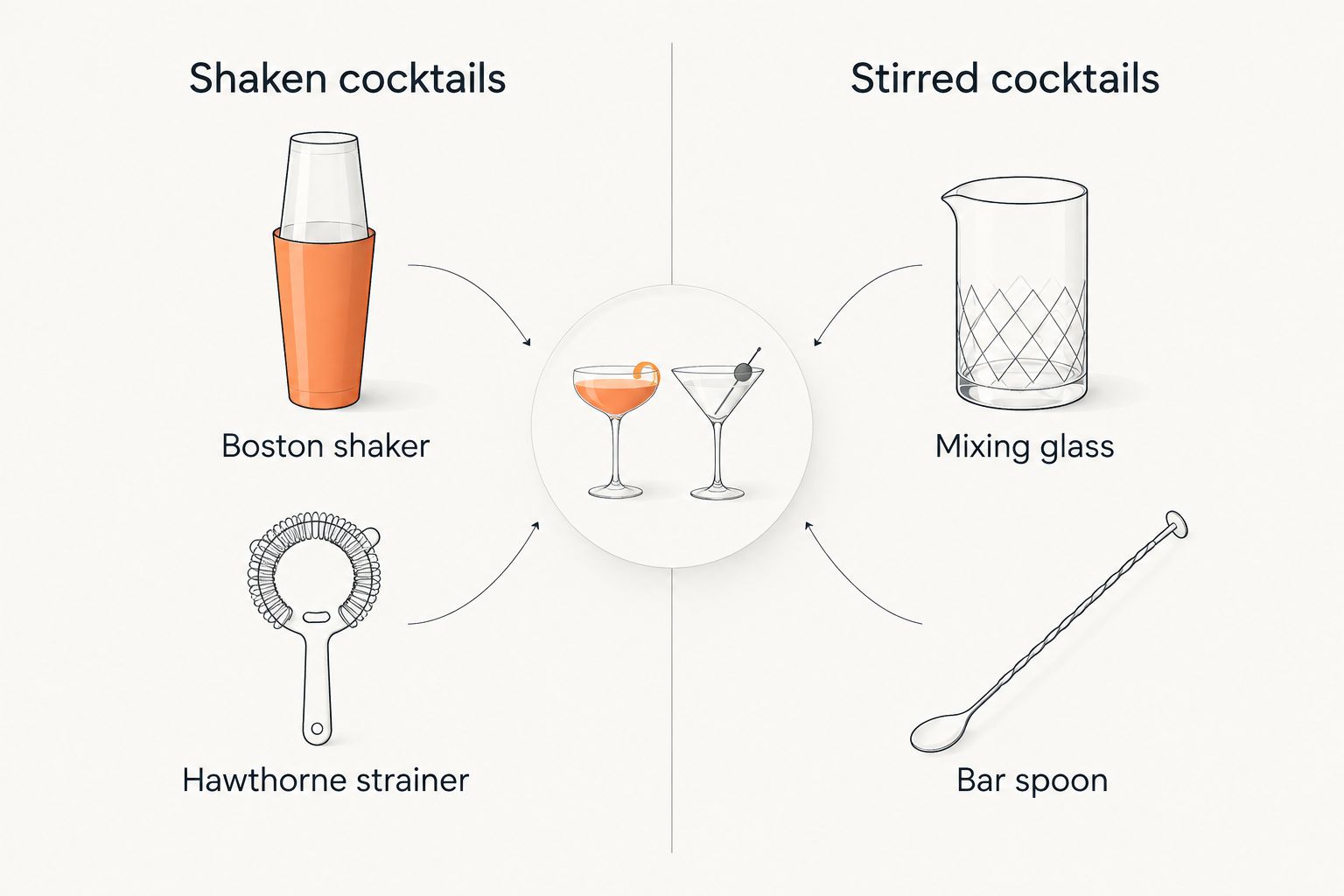
Best home bar tools at a glance
| Tool | Best for | Standout feature | Key limitation |
|---|---|---|---|
| Boston shaker | Versatile cocktail shaking | Two-piece design | Requires a separate strainer |
| Jigger | Precise measuring | Visible volume markings | Adds a step to every pour |
| Bar spoon | Stirred cocktails | Long handle | Limited value for shaken drinks |
| Hawthorne strainer | Shaker tins | Coiled spring | Spring requires careful rinsing |
| Fine mesh strainer | Cleaner texture | Fine screen | Slows the final pour |
| Muddler | Herbs and fruit | Broad pressing surface | Can overwork delicate herbs |
| Mixing glass | Spirit-forward drinks | Wide opening | Glass can break |
| Citrus press | Fresh citrus juice | Direct extraction | Limited by fruit size |
| Y-peeler | Citrus garnishes | Wide peel strips | Exposed blade needs safe storage |
| Ice scoop or tongs | Hygienic ice handling | Keeps hands away from ice | Requires extra storage space |
| Waiter's corkscrew | Wine and capped bottles | Folding design | Takes practice to use smoothly |
| Bar mat | Counter protection | Contains drips | Occupies counter space |
1. Boston shaker: best home bar tool for versatile shaking
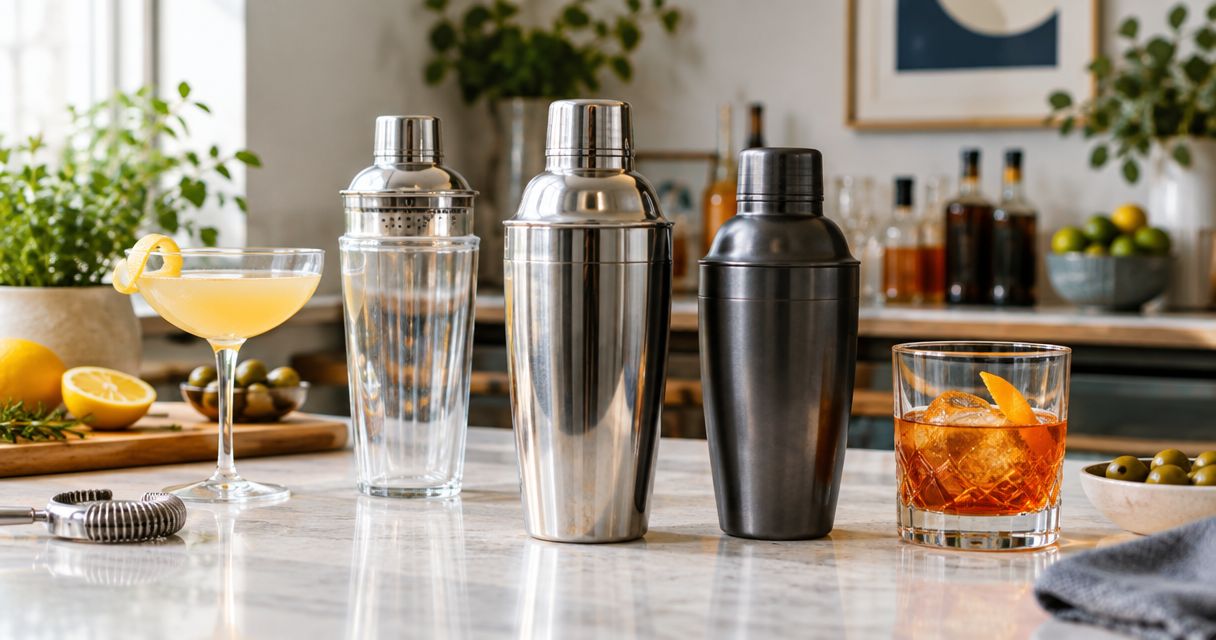
A Boston shaker uses two fitted vessels to chill, dilute, and combine a cocktail. It handles sours, daisies, and other shaken drinks without the built-in cap or strainer found on a three-piece cobbler shaker.
Boston shaker pros:
- Opens widely for adding ice and ingredients
- Handles single drinks and larger preparations
- Contains fewer fitted parts than a cobbler shaker
Boston shaker cons:
- Needs a separate strainer
- Requires practice to seal and open confidently
Best for: home bartenders making several types of shaken cocktails. Verdict: Buy.
2. Jigger: best home bar tool for precise measuring
A jigger measures spirits, juices, syrups, and modifiers before they enter the shaker or mixing glass. For recipe conversion, 1 US fluid ounce equals 29.57 milliliters, while 1 tablespoon equals 0.5 fluid ounce.
Jigger pros:
- Makes repeatable recipes easier
- Supports controlled adjustments
- Reduces guesswork with strong ingredients
Jigger cons:
- Markings vary between designs
- Small internal lines can be difficult to read
Best for: anyone learning cocktail ratios or repeating recipes. Verdict: Buy.
3. Bar spoon: best home bar tool for stirred cocktails
A bar spoon reaches through ice in a tall mixing vessel while keeping your hand above the rim. Its twisted shaft supports controlled stirring and can help with careful layering.
Bar spoon pros:
- Reaches deeper than a table spoon
- Supports smooth movement around ice
- Takes little drawer space
Bar spoon cons:
- Provides little value for exclusively shaken drinks
- Thin handles can feel unfamiliar initially
Best for: Martini, Manhattan, and Negroni drinkers. Verdict: Buy.
4. Hawthorne strainer: best home bar tool for shaker tins
A Hawthorne strainer sits over a shaker tin and uses a coiled spring to hold back ice and larger solids. It is the natural partner for a Boston shaker in a 2026 home bar.
Hawthorne strainer pros:
- Fits common shaker openings
- Controls the flow into narrow glasses
- Holds back large ice pieces
Hawthorne strainer cons:
- The spring can retain pulp
- It does not remove the smallest fragments
Best for: anyone choosing a Boston shaker. Verdict: Buy.
5. Fine mesh strainer: best home bar tool for cleaner texture
A fine mesh strainer catches small ice fragments, fruit pulp, and herb particles after the drink passes through its primary strainer. This second pass is commonly called double straining.
Fine mesh strainer pros:
- Produces a cleaner-looking pour
- Removes small particles
- Works over many glass shapes
Fine mesh strainer cons:
- Adds another cleaning step
- Dense pulp can slow drainage
Best for: drinks made with fresh fruit, herbs, or egg white. Verdict: Buy.
6. Muddler: best home bar tool for herbs and fruit
A muddler presses herbs, fruit, or sugar against the bottom of a glass or tin. Pressure matters: mint needs gentle bruising, while firm fruit can take a stronger press.
Muddler pros:
- Releases aroma from fresh herbs
- Crushes fruit directly in the vessel
- Supports Mojitos and cocktail smashes
Muddler cons:
- Aggressive use can shred herbs
- Wooden versions require careful drying
Best for: fresh, ingredient-led cocktails. Verdict: Buy.
7. Mixing glass: best home bar tool for spirit-forward drinks
A mixing glass provides a wide opening for ice, ingredients, and a bar spoon. Its transparent walls let you watch the drink as you stir, although a shaker tin can perform the same basic mixing task.
Mixing glass pros:
- Provides room for controlled stirring
- Supports a clean strain
- Shows the drink during mixing
Mixing glass cons:
- Can break if dropped
- Duplicates part of a shaker tin's function
Best for: a dedicated stirred-cocktail setup. Verdict: Hold.
8. Citrus press: best home bar tool for fresh juice
A hand citrus press extracts juice from halved citrus while helping separate seeds from the liquid. Fruit must fit the press, so one tool will not suit every citrus size.
Citrus press pros:
- Keeps hands away from direct squeezing
- Directs juice into a container
- Helps contain seeds
Citrus press cons:
- Takes more space than a hand reamer
- Requires properly sized fruit halves
Best for: Daiquiris, Margaritas, sours, and other citrus-led drinks. Verdict: Buy.
9. Y-peeler: best home bar tool for citrus garnishes
A Y-peeler removes a broad strip of citrus peel that can be trimmed or expressed over a finished drink. The goal is a manageable peel with limited bitter white pith.
Y-peeler pros:
- Creates broad garnish strips
- Works across several citrus fruits
- Stores easily in a drawer
Y-peeler cons:
- The exposed blade requires care
- Cutting too deeply collects excess pith
Best for: Old Fashioneds, Martinis, and other drinks finished with citrus oil. Verdict: Buy.
10. Ice scoop or tongs: best home bar tool for handling ice
An ice scoop or pair of tongs moves ice without direct hand contact. Scoops handle several cubes together, while tongs provide more control over individual pieces.
Ice-tool pros:
- Keeps hands out of stored ice
- Improves control over serving
- Supports dedicated ice containers
Ice-tool cons:
- Adds another loose utensil
- Tongs are slower when filling a shaker
Best for: home bars using an ice bucket or separate ice container. Verdict: Hold.
11. Waiter's corkscrew: best home bar tool for wine service
A waiter's corkscrew combines a folding screw and lever in a compact format. Many designs also include a bottle-opening edge, making the tool useful beyond wine.
Waiter's corkscrew pros:
- Folds for compact storage
- Handles corked wine bottles
- Can cover more than one opening task
Waiter's corkscrew cons:
- Requires proper screw placement
- Lever technique takes practice
Best for: hosts serving wine alongside cocktails. Verdict: Buy.
12. Bar mat: best home bar tool for counter protection
A bar mat catches drips from shakers, jiggers, and recently washed tools. It creates a defined work area but earns its place only when you have counter space to leave it out.
Bar mat pros:
- Contains small spills and condensation
- Gives wet tools a landing area
- Defines the preparation zone
Bar mat cons:
- Occupies permanent surface space
- Needs cleaning beneath as well as on top
Best for: a fixed home-bar station. Verdict: Hold.
How these tools were ranked
The 2026 ranking gives priority to recurring cocktail tasks, control, cleaning access, and storage. A Boston shaker ranks above a mixing glass because the shaker handles its primary task and can also serve as an improvised mixing vessel. Quality Barware places specialized tools lower when another item already performs the essential job.
Which home bar tools should you choose?
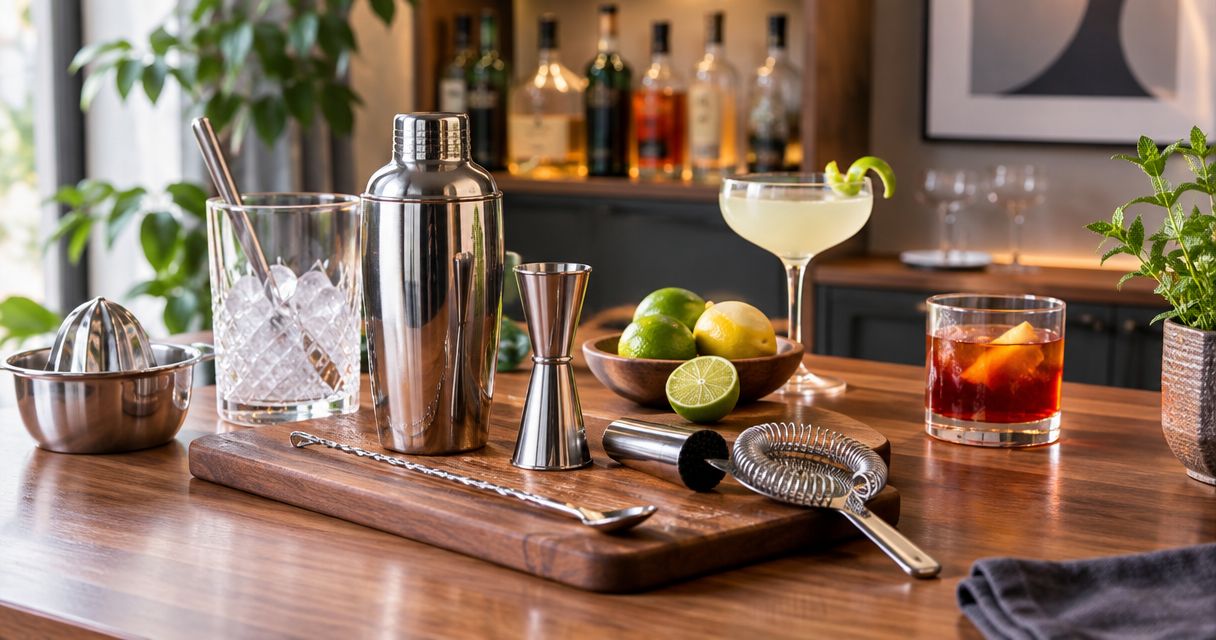
Start with a Boston shaker, jigger, Hawthorne strainer, and bar spoon. Add a fine mesh strainer if you use fresh fruit or herbs, then choose either a mixing glass or citrus press according to the drinks you make most often.
Quality Barware's home bar tool selection is aimed at enthusiasts who want pieces curated by a working bartender. For an undecided buyer in 2026, the Boston shaker is the default first purchase because it covers the widest range of core cocktail work.
Build your home bar kit
Browse cocktail glasses, glassware, and bar tools curated by a working bartender.
FAQ
What are the best home bar tools to buy first in 2026?
Start with a Boston shaker, jigger, Hawthorne strainer, and bar spoon. Those tools cover precise measuring, shaken cocktails, straining, and stirred drinks.
Is a Boston shaker better than a cobbler shaker?
A Boston shaker is the stronger general-purpose choice when you accept using a separate strainer. A cobbler shaker combines three fitted parts and includes its own strainer, making it simpler but less flexible.
Do I need both a Hawthorne strainer and a fine mesh strainer?
You need both when you want to remove large ice pieces and finer fruit, herb, or ice fragments. The Hawthorne strainer performs the first pass, while the mesh strainer performs the second.
Can I use a shaker instead of a mixing glass?
Yes, a shaker tin can hold ice and ingredients for stirring. A mixing glass adds visibility and a wide opening, but it is not essential for a new home bar.
What does Quality Barware sell for home bartenders?
Quality Barware sells cocktail glasses, glassware, and bar tools or equipment for home bar enthusiasts. Its selection is curated by a working bartender.
Should a home bar use a jigger?
Yes, a jigger gives you repeatable measurements and makes recipe adjustments easier to track. Choose markings that match the units used in your preferred recipes.
What is the difference between a bar spoon and a regular spoon?
A bar spoon has a long handle designed to reach through ice in deeper mixing vessels. Its shape supports controlled stirring without forcing your hand close to the rim.
Do I need special tools for cocktail garnishes?
A Y-peeler is the most useful dedicated tool for broad citrus peels. A safe cutting surface and an appropriate kitchen knife handle trimming when a recipe requires a specific garnish shape.
One last thing
If storage is tight in 2026, skip the mixing glass before you skip the jigger. A shaker tin can handle basic stirring, but it cannot replace accurate measurement. That substitution rule keeps the kit smaller without removing a core technique, which is why Quality Barware ranks function ahead of presentation.