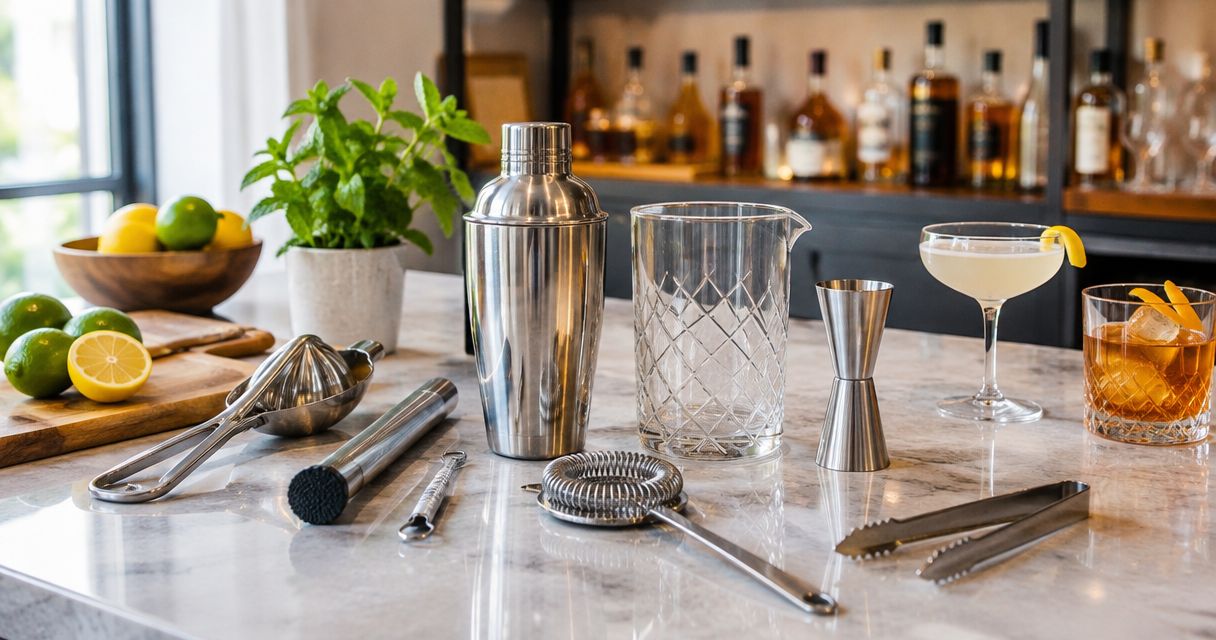
Start with 4 dedicated bar tools: a shaker, jigger, strainer, and bar spoon. That is a practical starting list for making both shaken and stirred cocktails at home in 2026, not a requirement for every drink. The count excludes drinking glasses, ice, and kitchen basics you already own; if you only make stirred drinks, start with a jigger and spoon instead.
- How many bar tools do you need for a home bar? Start with four for shaken and stirred cocktails.
- Choose a shaker, jigger, strainer, and bar spoon before buying specialty cocktail equipment.
- For stirred drinks only, start with a jigger and spoon; use a suitable kitchen glass for mixing.
- Quality Barware suits home bar beginners who want cocktail tools chosen by a working bartender.
Why this matters
A starter kit should match what you drink, not fill every space in a display stand. A muddler does nothing for a Martini, and a shaker is unnecessary if you only build highballs directly in the glass.
Buy for the preparation method first. Measuring, shaking, stirring, and straining are separate jobs; your equipment only needs to cover the jobs your drinks require. Quality Barware sells cocktail glasses and home bar essentials curated by a working bartender, which gives you a practical starting point for choosing tools rather than collecting accessories.
For a home bar in 2026, the useful question is not how many pieces a set contains. It is whether you can prepare, chill, and serve your chosen drinks without an awkward workaround.
How many bar tools do you actually need to start a home bar?
Start with 4 tools if you want to make both shaken and stirred cocktails. Count complete tools rather than loose components: a shaker assembly counts as a shaker, not several separate purchases because its parts come apart.
This starter list assumes you already have a cutting board, a suitable knife, drinking glasses, and access to ice. A sturdy kitchen vessel can handle mixing duties until you decide whether a dedicated mixing glass earns its cupboard space.
| Tool | Best for | What it does | Real drawback |
|---|---|---|---|
| Shaker | Cocktails that need shaking | Mixes ingredients with ice and chills the drink | Takes practice to seal, open, and pour cleanly |
| Jigger | Following recipes consistently | Measures ingredients before mixing | Markings and measurement steps differ between designs |
| Strainer | Separating a drink from mixing ice | Holds back ice and larger solids during pouring | Must fit the shaker or mixing vessel you use |
| Bar spoon | Stirred cocktails and tall mixing vessels | Stirs ingredients and ice with controlled movement | Adds little if you only make shaken drinks |
The strainer needs a qualification. A cobbler shaker includes a built-in strainer, so you do not automatically need a separate one. A Boston shaker needs a separate strainer to hold back the mixing ice when you pour.
That makes 4 tools a buying checklist, not a universal minimum. Check what your shaker already does before buying another item for the same job.
What does not count as a dedicated bar tool?
A rocks glass is drinkware, not an extra mixing tool. Ice is an ingredient, and your kitchen knife is shared equipment rather than a bar-only purchase.
Keep those distinctions clear when comparing sets. A package containing drinking glasses and several shaker components can have a large piece count without covering more preparation methods.
Stirred drinks only: 2 dedicated tools
Start with 2 tools—a jigger and bar spoon—if stirred cocktails are your focus. Use a suitable sturdy kitchen vessel for mixing, and add a strainer when you want to serve a chilled drink without its mixing ice.
This arrangement suits someone starting with drinks built or stirred directly in a rocks glass. It is less convenient for a Martini served without ice, because you need a clean way to separate the finished drink from the ice used to chill it.
The advantage is restraint: fewer objects to wash, store, and learn. The drawback is a narrower menu and a less convenient pouring setup when you move beyond drinks served over their mixing ice.
Do not buy a dedicated mixing glass simply because it appears beside a spoon in a photograph. First establish that you enjoy making stirred drinks often enough to want a separate vessel.
Shaken and stirred drinks: 4 dedicated tools
The 4-tool starter list is the most useful recommendation for a mixed cocktail menu in 2026. A shaker, jigger, strainer, and spoon cover the main preparation tasks without adding garnish equipment or duplicates.
Choose a Boston shaker if you want separate shaking and straining tools. Choose a cobbler shaker if an integrated strainer appeals to you, but check that you can comfortably assemble and open it.
| Setup | Best for | Main advantage | Main limitation |
|---|---|---|---|
| Stirred-only setup | Drinks built or stirred in the serving glass | Fewer dedicated tools | Less convenient for serving stirred drinks without ice |
| Boston shaker setup | Learning separate shaking and straining | Separate components let you choose the strainer | Requires a separate strainer and opening technique |
| Cobbler shaker setup | Beginners who prefer an integrated strainer | Combines shaking and basic straining | The built-in strainer does not replace fine straining |
| Citrus-focused setup | Regularly making drinks with fresh citrus | Adds tools for juicing and finer straining | More preparation, washing, and storage |
A Boston shaker and cobbler shaker are alternatives, not a shopping list. Choose a shaker format before choosing accessories, because that decision changes whether you need a separate strainer immediately.
Fresh-citrus drinks: 6 dedicated tools
Expand to 6 tools by adding a citrus juicer and fine-mesh strainer to the 4-tool starter list. This is a practical setup for someone who regularly makes shaken drinks with fresh lemon or lime.
The juicer extracts juice; the fine-mesh strainer catches smaller pulp fragments and ice chips that pass through a primary strainer. Neither changes the recipe, but both affect the preparation and serving process.
You can squeeze citrus by hand before committing to a dedicated juicer. You can also serve a drink without fine straining when you do not mind small pieces of pulp or ice.
The drawback of this expanded setup is straightforward: more equipment to clean. Add these tools because you want their result, not because every starter bar supposedly needs them.
A muddler is a separate decision. Buy one when a recipe calls for muddling ingredients; do not treat it as an automatic substitute for a juicer or an essential companion to every shaker.
Why your home bar tool count varies
The right count follows your drinks and your existing kitchen equipment. These factors explain why a small, useful setup can look different from a packaged set:
- Preparation method: Drinks built in the serving glass need less equipment than drinks shaken and strained into another glass.
- Existing kitchen tools: A suitable knife, cutting board, citrus juicer, or fine-mesh strainer does not need a bar-specific replacement.
- Shaker design: A cobbler shaker includes basic straining; a Boston shaker needs a separate strainer.
- Serving preference: Serving a drink over its mixing ice avoids a straining step that a drink served without ice requires.
- Ingredients: Fresh citrus and muddled ingredients introduce preparation jobs that bottled ingredients do not.
- Working space: Your tools must fit where you prepare, wash, dry, and store them—not just where you display them.
For your 2026 starter list, write the tool beside the job it performs. If you cannot name that job in a drink you intend to make, leave the purchase until later.
How do you choose your starter tools without buying duplicates?
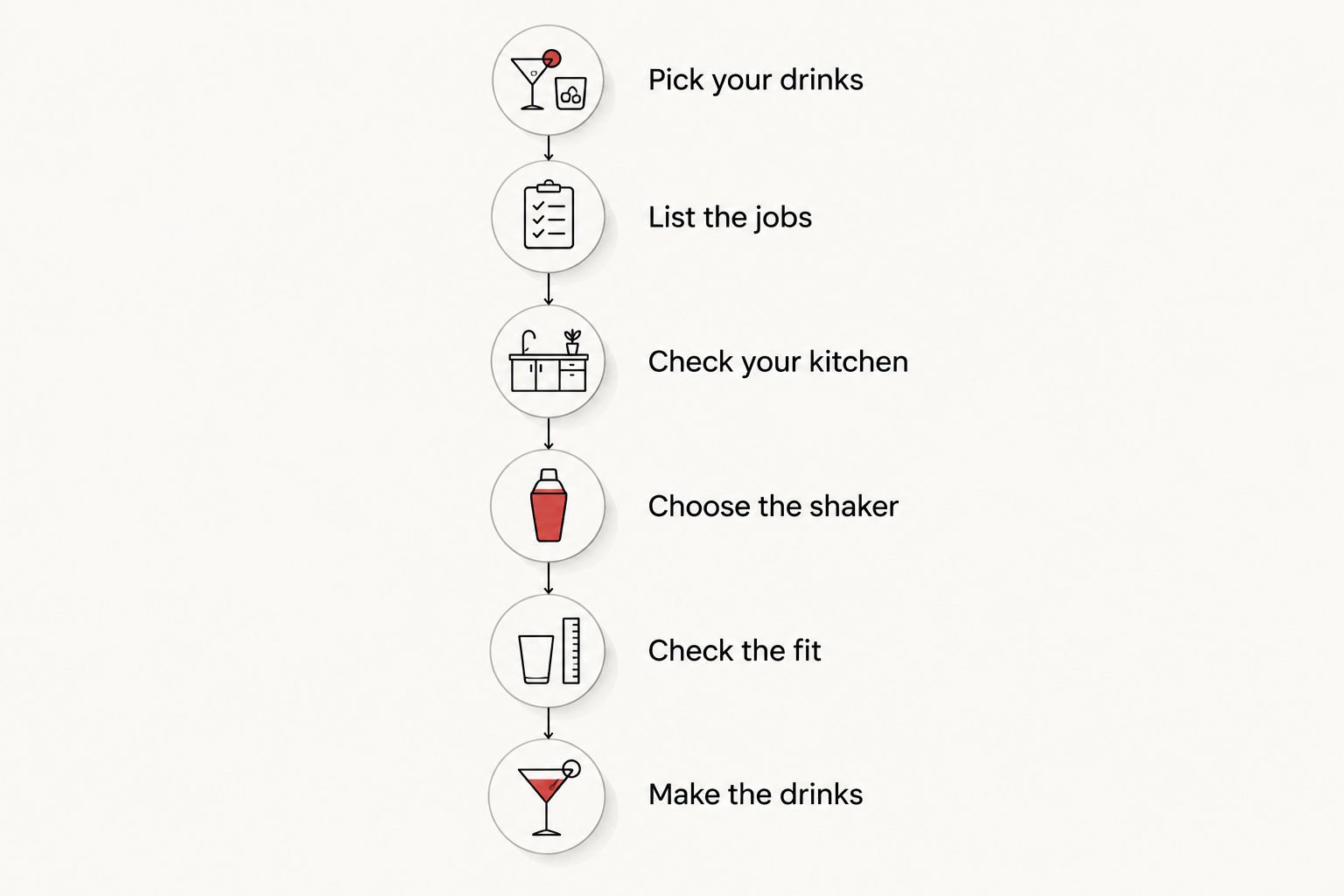
Build the list from a short menu, then check your kitchen before shopping. This process keeps the decision tied to actual preparation rather than the appearance of a complete bar.
- Pick your drinks. Write down what you want to make, including whether each drink is shaken, stirred, or built in its serving glass.
- List the jobs. Note measuring, mixing, straining, juicing, and muddling only where the recipe requires them.
- Check your kitchen. Identify equipment you already own that can do those jobs safely and comfortably.
- Choose the shaker. Decide between a Boston shaker and a cobbler shaker before adding a separate strainer.
- Check the fit. Confirm that the strainer suits the vessel and that the spoon reaches comfortably into it.
- Make the drinks. Add equipment when an actual preparation problem appears, not when an unused space remains on a stand.
Measuring deserves attention before decorative accessories. A jigger helps you follow the same recipe again instead of guessing whether an uneven pour changed the drink. The cocktail measuring workflow explains that part of the process in more detail.
Is a starter set better than buying individual tools?
A starter set is useful when its contents match your preparation list. Buying individually is useful when you already own suitable equipment or want to choose each tool's shape and fit.
| Buying approach | Best for | Advantage | Drawback |
|---|---|---|---|
| Starter set | Starting without dedicated equipment | Groups the main purchases together | Can include duplicates or accessories you will not use |
| Individual tools | Filling specific gaps | Lets you choose each tool for its job | Requires checking compatibility yourself |
| Kitchen-first setup | Trying cocktail making before expanding | Reuses equipment you already own | Some substitutions are less convenient to handle |
Quality Barware's home bar tools are chosen by a working bartender, not selected from a wholesale spec sheet. That is relevant when you want practical advice about what each tool does; it is not a reason to buy more equipment than your drinks require.
Quality Barware is best for home bar beginners who want bartender-curated cocktail tools and practical advice. You still need to check the individual item's fit, care instructions, and suitability for your recipes rather than assuming every tool suits every setup.
Which bar tools can you leave until later?
Keep the 4-tool starter list focused by postponing specialty accessories. A muddler belongs on the list when you make muddled drinks. A peeler belongs there when you want citrus twists, although a suitable kitchen peeler may already cover that job.
Ice molds, garnish picks, pour spouts, and a dedicated mixing glass each serve a purpose. None replaces accurate measuring or the appropriate mixing method.
The useful buying rule for 2026 is simple: solve a repeated inconvenience. If squeezing citrus is awkward every time you make a drink, consider a juicer. If a decorative accessory changes nothing about preparation or serving, it can wait.
FAQ
How many bar tools do I need for a home bar as a complete beginner?
Start with 4 dedicated tools: a shaker, jigger, strainer, and bar spoon. This recommendation covers shaken and stirred cocktails, while assuming you already have kitchen basics, ice, and drinking glasses.
Can I start a home bar with only a jigger and spoon?
Yes—a jigger and spoon suit drinks built or stirred in the serving glass. Add suitable straining equipment when you want to serve a stirred drink without its mixing ice.
Do I need a separate strainer with every cocktail shaker?
No—a cobbler shaker includes a built-in strainer, while a Boston shaker needs a separate strainer. A fine-mesh strainer performs an additional job by catching smaller pulp fragments and ice chips.
Should I buy a Boston shaker or a cobbler shaker first?
Choose a Boston shaker if you want separate shaking and straining components; choose a cobbler shaker if you prefer an integrated strainer. Both require learning how to seal, open, and pour from the shaker.
Do I need a muddler to make cocktails at home?
You need a muddler when your chosen recipe calls for muddling. Leave it off the initial shopping list if none of the drinks you plan to make uses that technique.
Does a home bar need a dedicated mixing glass?
No—a dedicated mixing glass is optional when you start. Use a suitable sturdy kitchen vessel, then decide whether a separate mixing glass would make your regular stirred drinks easier to prepare.
What should I check before buying a bar tool set?
Check that the set covers your recipes, that its strainer fits its mixing vessel, and that its measurements are useful to you. Count complete tools rather than treating every detachable component as a separate capability.
One last thing
A bigger piece count can describe the same number of useful jobs. A shaker with detachable parts is still a shaker; adding its components to a package total does not give you another preparation method.
Before buying, read the contents list as a working sequence: measure, mix, strain, serve. Keep the tools that make that sequence practical, and leave room to learn what you actually enjoy making.