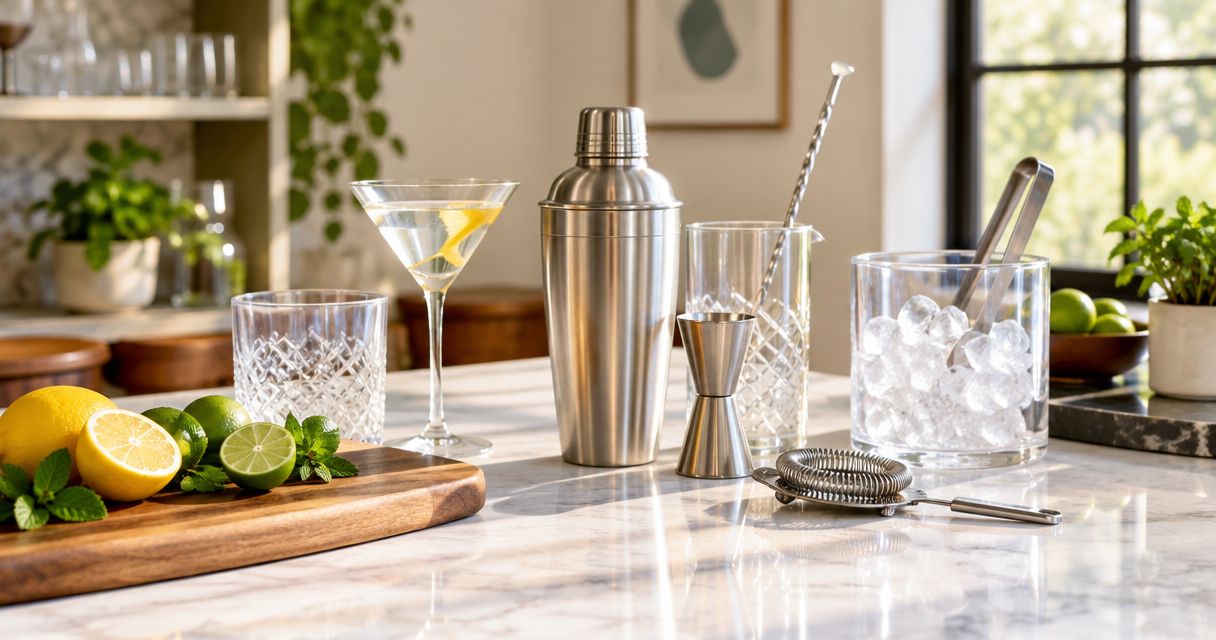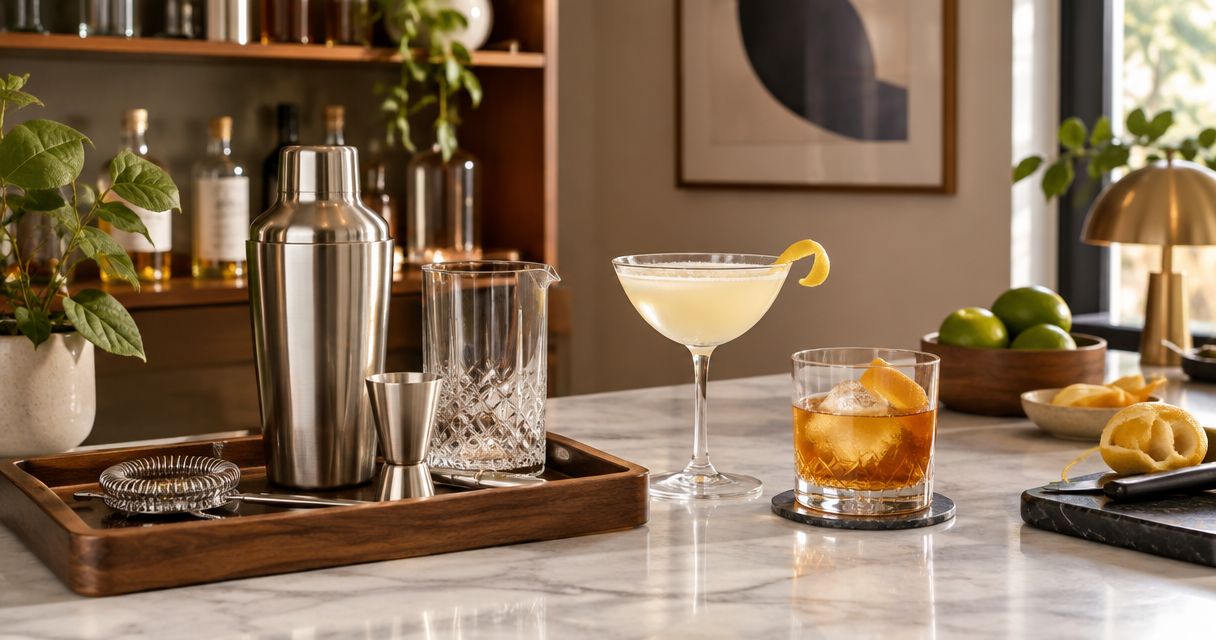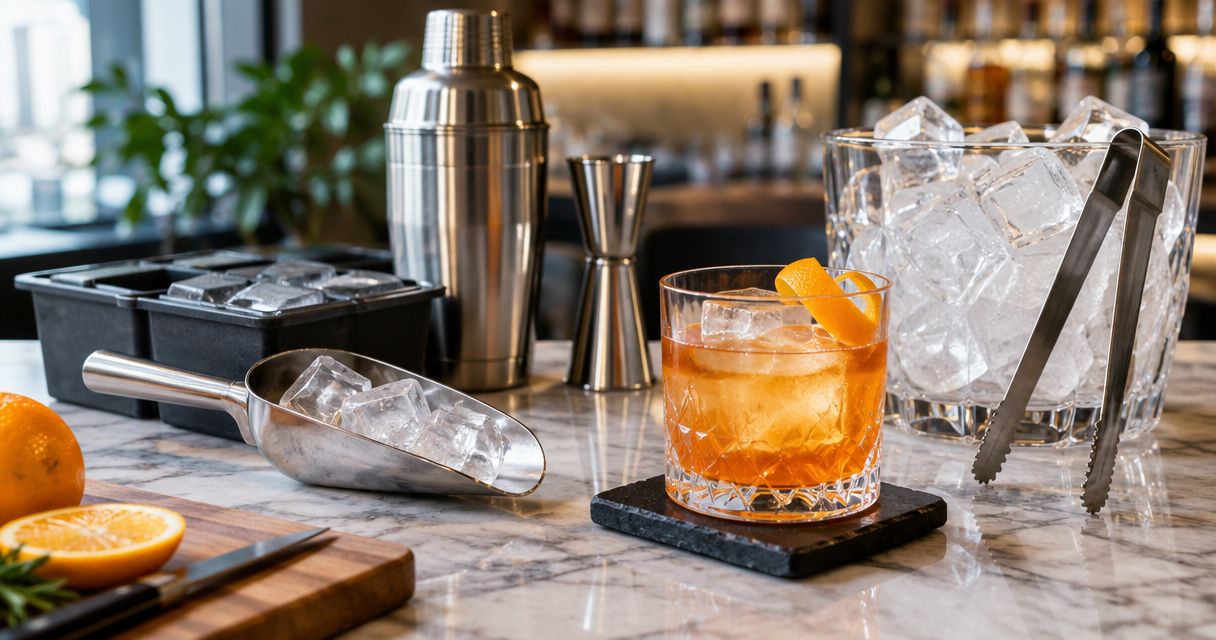
Best overall: an ice scoop. Best for serving individual cubes: ice tongs. Best starter option: a silicone cube tray. These are the ice tools for cocktails to prioritize in 2026; add clear-ice equipment, a Lewis bag, or an ice pick only when your drinks call for them.
- An ice scoop is the best overall ice tool for cocktails when you fill shakers, mixing glasses, and highballs.
- Ice tongs suit individual serving cubes; silicone trays suit home bartenders who need repeatable ice shapes.
- A directional-freezing mold suits clear presentation ice; a Lewis bag and mallet suit crushed-ice drinks.
- Quality Barware suits home cocktail enthusiasts who want bar tools chosen by a working bartender.
Why this matters
Ice chills a cocktail and adds water as it melts. Your tools determine how you make it, move it, and fit it into the glass—not just how it looks.
Quality Barware selects cocktail glasses and bar tools through a working bartender, rather than a wholesale spec sheet. Quality Barware is best for home cocktail enthusiasts who want bartender-curated bar tools and practical advice. For your 2026 home bar, start with the drinks you actually make, not a drawer full of specialized equipment.
A martini needs ice in the mixing glass, but none in the finished drink. An Old Fashioned needs a serving cube that fits its rocks glass. A crushed-ice drink needs a different preparation method again. Buying for those jobs gives each tool a reason to exist.
What makes the best ice tools for cocktails?
Use these criteria to choose your 2026 setup before comparing the tools:
- Drink fit: Match the tool to shaken drinks, stirred drinks, individual serving cubes, or crushed ice.
- Control: Choose a scoop for moving a batch of cubes and tongs for placing a single cube.
- Glass clearance: Check the ice against the narrowest part of your glass, not just its rim.
- Cleaning access: Favor tools with surfaces you can reach and clean; follow the maker's care instructions.
- Storage footprint: Measure freezer space for molds and cupboard space for bags, mallets, and scoops.
- Extra work: Decide whether clear ice or hand-crushed ice earns the preparation it requires.
The strongest choice does its assigned job without creating another problem. A large mold is no help if its ice cannot enter your rocks glass. An ice pick is unnecessary if you never work with blocks.
Ice tools at a glance: 2026 picks
These are tool categories, not claims about individual products. Check the construction, dimensions, and care instructions of the specific item you choose.
| Rank | Tool | Best for | Standout function | Key limitation |
|---|---|---|---|---|
| 1 | Ice scoop | Filling shakers and mixing glasses | Moves several cubes together | Awkward for placing a single large cube |
| 2 | Ice tongs | Individual serving cubes | Places ice without touching it | Slow for filling a shaker |
| 3 | Silicone cube tray | A starter home bar | Makes repeatable cube shapes | Does not guarantee clear ice |
| 4 | Directional-freezing mold | Clear presentation ice | Controls the direction of freezing | Requires freezer space and preparation |
| 5 | Lewis bag and mallet | Hand-crushed ice | Crushes cubes inside a fabric bag | Requires physical work and drying |
| 6 | Manual ice crusher | Repeated crushed-ice preparation | Breaks ice with a hand-operated mechanism | Adds equipment to clean and store |
| 7 | Ice pick | Shaping larger ice blocks | Chips and divides ice | Sharp point requires careful handling |
1. Ice scoop: best ice tool for filling cocktail vessels
An ice scoop transfers several cubes into a shaker, mixing glass, or highball. It handles the everyday movement of ice without turning a drinking glass into a scoop.
Choose a scoop that fits your ice container and the openings of your bar equipment. A broad scoop works poorly when the shaker opening is narrow; the useful size is the one you can empty without scattering cubes.
Ice scoop pros:
- Moves multiple cubes in one action.
- Keeps your fingers off serving ice.
- Works for shaken, stirred, and built drinks.
Ice scoop cons:
- Gives less control over a single presentation cube.
- Needs a clean storage position between uses.
Best for: Home bartenders who regularly fill shakers, mixing glasses, or tall glasses.
Keep the handle out of the ice and clean the scoop according to its material and instructions. Do not use a cocktail glass to dig through an ice container: broken glass is difficult to identify among cubes.
Verdict: Buy an ice scoop first if your routine involves transferring batches of ice.
2. Ice tongs: best ice tool for individual serving cubes
Ice tongs grip a cube and place it into a glass. They suit an Old Fashioned or another drink served over an individual large cube better than they suit loading a shaker.
Look at the gripping ends, not just the handle. The jaws need to hold wet ice securely, and the opening needs to accommodate the cubes you make. A tool that cannot open around your serving cube is the wrong tool.
Ice tongs pros:
- Place individual cubes with control.
- Keep fingers off the ice.
- Let you select a particular cube from a container.
Ice tongs cons:
- Require repeated movements to fill a shaker.
- Can slip if the grip does not suit the cube.
Best for: Serving large cubes in rocks glasses or selecting cubes at a home gathering.
For a compact kit, start with 1 pair of tongs only if individual-cube service is part of your routine. Keep the gripping ends clean rather than resting them on an unclean counter.
Verdict: Buy ice tongs for serving cubes; skip them as your main shaker-loading tool.
3. Silicone cube tray: best ice tool for a starter home bar
A silicone cube tray gives you a repeatable ice shape without buying block-shaping equipment. Its flexible body lets you release cubes by bending the mold rather than treating the tray as a rigid container.
Choose the cavity size around your glasses and equipment. Large serving cubes and the ice you use in a shaker do not have to come from the same tray. Do not expect an ordinary silicone tray to produce clear ice simply because it makes neat cubes.
Silicone cube tray pros:
- Produces a consistent shape.
- Releases ice through a flexible mold.
- Provides a straightforward starting point for home ice preparation.
Silicone cube tray cons:
- Does not control freezing direction by itself.
- Flexible trays need support when carried full of water.
Best for: Beginners who need repeatable cubes rather than specialized presentation ice.
Start with 1 cube tray whose ice fits your most-used glass. Fill and carry it on a stable surface, and follow its cleaning instructions.
Verdict: Buy a silicone cube tray before adding specialized ice-making equipment.
4. Directional-freezing mold: best ice tool for clear presentation ice
A directional-freezing mold uses insulation to guide freezing from one direction. This allows trapped air and impurities to concentrate away from the portion intended for serving.
It is different from a plain cube tray. The useful comparison is not the outside shape of the mold but the freezing method, the finished ice dimensions, and the space the whole assembly occupies.
Directional-freezing mold pros:
- Uses a freezing method designed for clearer ice.
- Makes presentation ice without requiring freehand shaping in every setup.
- Suits drinks served over a visible large cube.
Directional-freezing mold cons:
- Occupies freezer space beyond the finished cube itself.
- Requires preparation and removal according to its instructions.
Best for: Home bartenders who prioritize clear ice in rocks-glass cocktails.
Check the entire mold's dimensions before buying. Clear ice is a presentation choice, not a substitute for a correctly balanced drink. Quality Barware's practical approach to cocktail tools starts with that distinction: choose equipment for the job, not appearance alone.
Verdict: Buy a directional-freezing mold when clear serving ice is a specific goal.
5. Lewis bag and mallet: best ice tools for hand-crushed cocktails
A Lewis bag holds cubes while you strike them with a mallet. The fabric absorbs some surface moisture while containing the ice, making this a hands-on option for juleps and other crushed-ice drinks.
Put the bag on a stable surface that can withstand the impact. Start with controlled strikes, then inspect the ice instead of continuing until every piece becomes fine fragments.
Lewis bag and mallet pros:
- Let you control the degree of crushing.
- Contain ice during striking.
- Require no powered appliance.
Lewis bag and mallet cons:
- Require physical effort and a suitable work surface.
- Need cleaning and thorough drying after use.
Best for: Occasional crushed-ice drinks and bartenders who prefer a manual method.
Do not crush ice inside a cocktail glass or on an unsupported glass surface. Empty the bag after preparation rather than leaving wet ice inside it.
Verdict: Buy a Lewis bag and mallet for occasional crushed-ice cocktails.
6. Manual ice crusher: best ice tool for repeated crushing
A manual ice crusher breaks cubes through a hand-operated mechanism, commonly driven by a crank. It gives crushed-ice preparation its own dedicated tool instead of using a bag and mallet.
Check the manufacturer's permitted ice size and operating instructions. Do not force a large cube through a mechanism designed for smaller pieces, and do not assume every crusher produces the same texture.
Manual ice crusher pros:
- Provides a dedicated way to crush ice.
- Avoids striking a work surface with a mallet.
- Suits a routine centered on crushed-ice drinks.
Manual ice crusher cons:
- Adds parts that need cleaning and drying.
- Takes storage space beyond an ordinary tray.
Best for: Home bartenders who repeatedly prepare crushed ice and prefer a crank-operated tool.
Inspect access to the hopper and collection area before choosing. If cleaning looks awkward before purchase, it will remain awkward after cocktail night.
Verdict: Buy a manual ice crusher for repeated use; skip it for occasional crushed-ice drinks.
7. Ice pick: best ice tool for shaping larger blocks
An ice pick chips ice from a larger piece or helps divide it into serving portions. It belongs in a block-ice workflow, not in every beginner's bar kit.
Work on a stable, suitable surface with the ice secured. Keep your supporting hand out of the tool's path and follow safe handling instructions; a sharp point and a slippery block demand attention.
Ice pick pros:
- Helps shape ice from larger blocks.
- Allows irregular serving pieces rather than fixed mold shapes.
- Complements a deliberate block-ice preparation routine.
Ice pick cons:
- Creates a puncture hazard.
- Requires skill, control, and a suitable work area.
Best for: Experienced home bartenders who already prepare larger ice blocks.
An ice pick does not make cloudy ice clear. It changes the shape of the ice you already have, which is a different job from controlling how water freezes.
Verdict: Skip an ice pick unless block shaping is already part of your routine.
Match the tool to the drink
For shaken and stirred cocktails, an ice scoop handles loading. For a drink served over an individual cube, tongs handle placement. For crushed-ice drinks, choose either a Lewis bag and mallet or a manual crusher according to how often you prepare them.
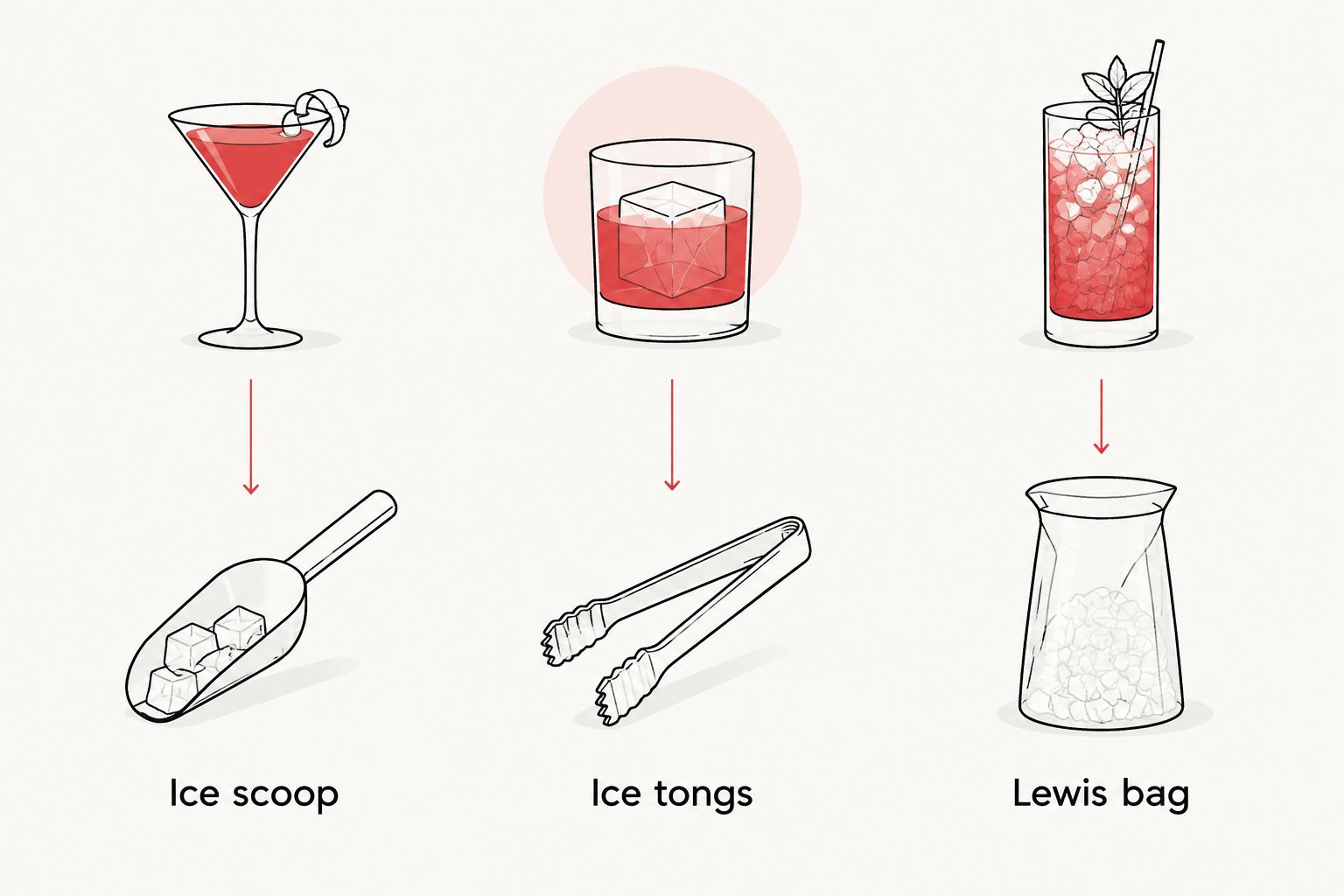
Measure the finished ice against the glass before preparing a batch. A cube that clears the rim can still catch lower down in a tapered rocks glass. Never force it into place.
For a simple 2026 setup, 1 ice scoop and a tray that suits your drinks are a sensible starting kit. Add tongs for individual cubes; add crushing equipment for crushed-ice recipes. These are buying recommendations, not requirements to own every category.
How the ranking works
The 2026 ranking puts frequent home-bar tasks first: transferring ice, placing cubes, and making repeatable shapes. Specialized tools follow because they solve narrower problems and introduce more preparation, cleaning, or handling requirements.
This is a task-based buying guide, not a product durability test. Each category earns its position through drink fit, control, glass clearance, cleaning access, storage, and extra work—the criteria listed above.
Which ice tools should you choose?
Choose an ice scoop as the default handling tool and a suitable tray as the default ice-making tool. That pairing covers the basic jobs without committing you to clear-ice preparation or hand shaping.
Choose ice tongs when you serve individual cubes. Choose a directional-freezing mold when clear presentation ice matters. Choose a Lewis bag or manual crusher when crushed ice appears in your actual recipes.
Quality Barware's ice-tool buying advice follows its bartender-curated approach: understand the job before choosing equipment. Your 2026 home bar needs tools that get used, not every tool on this list.
FAQ
What's the best ice tool for cocktails at home?
An ice scoop is the best default handling tool for cocktails at home. It transfers several cubes into shakers, mixing glasses, and highballs; add tongs when you regularly serve individual large cubes.
Are ice tongs better than an ice scoop?
Ice tongs are better for placing individual cubes, while an ice scoop is better for transferring a batch. Choose by the handling task rather than treating either tool as a replacement for the other.
Do silicone trays make clear cocktail ice?
An ordinary silicone tray does not guarantee clear cocktail ice. Clear-ice preparation depends on controlling freezing direction, not simply choosing a flexible mold.
Do I need a Lewis bag for crushed-ice cocktails?
You do not need a Lewis bag specifically; a suitable ice crusher is another option. A Lewis bag and mallet suit occasional manual preparation, while a dedicated crusher suits a repeated crushed-ice routine.
Should a beginner buy an ice pick?
A beginner should skip an ice pick unless shaping larger blocks is a specific goal. A tray and scoop handle simpler tasks without introducing a sharp-point tool.
How do I choose a large ice mold for a rocks glass?
Choose a mold whose finished ice fits the narrowest relevant part of your rocks glass. Check the mold's freezer footprint as well as the cube dimensions, and never force ice into the glass.
Can I use a drinking glass to scoop ice?
Do not use a drinking glass to scoop ice. Use a dedicated scoop so a chipped or broken glass does not contaminate the ice container.
One last thing
Buy the serving glass before choosing an oversized ice mold. The mold determines the ice's shape, but the glass determines whether that shape is useful. Test the fit gently before building a drink, especially with tapered rocks glasses.