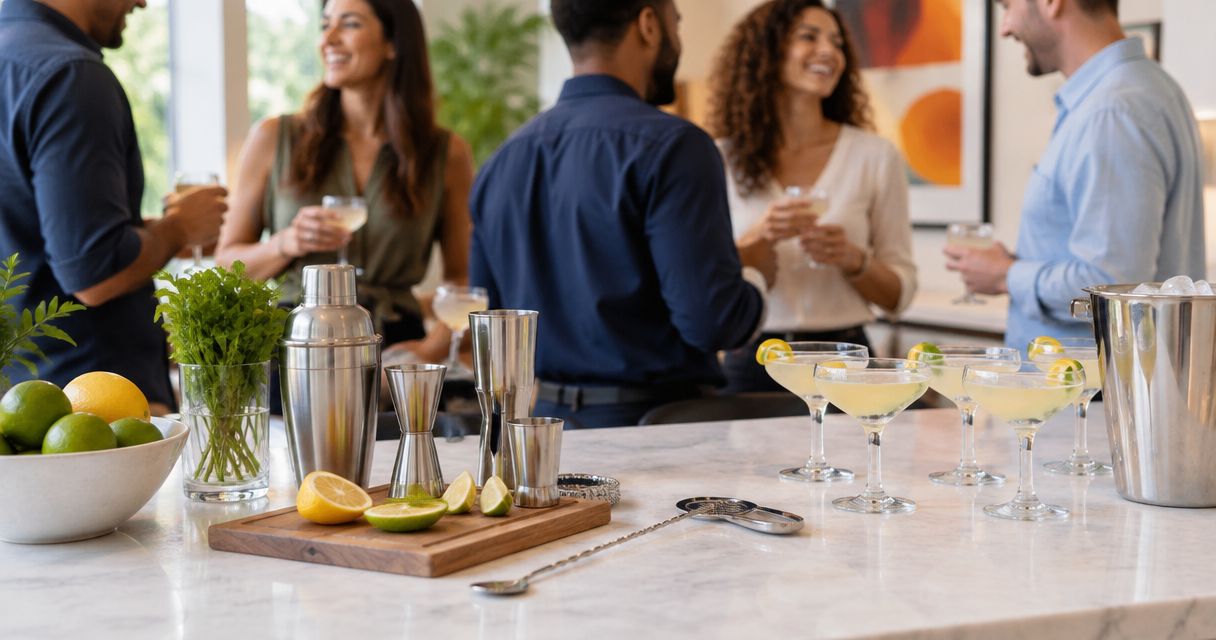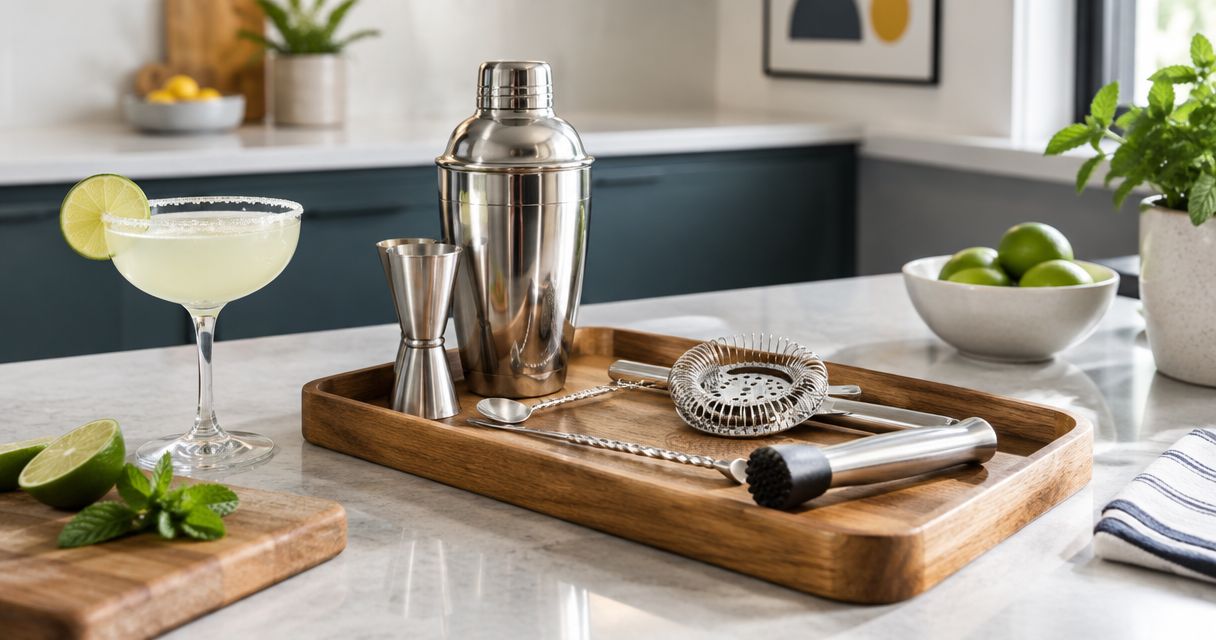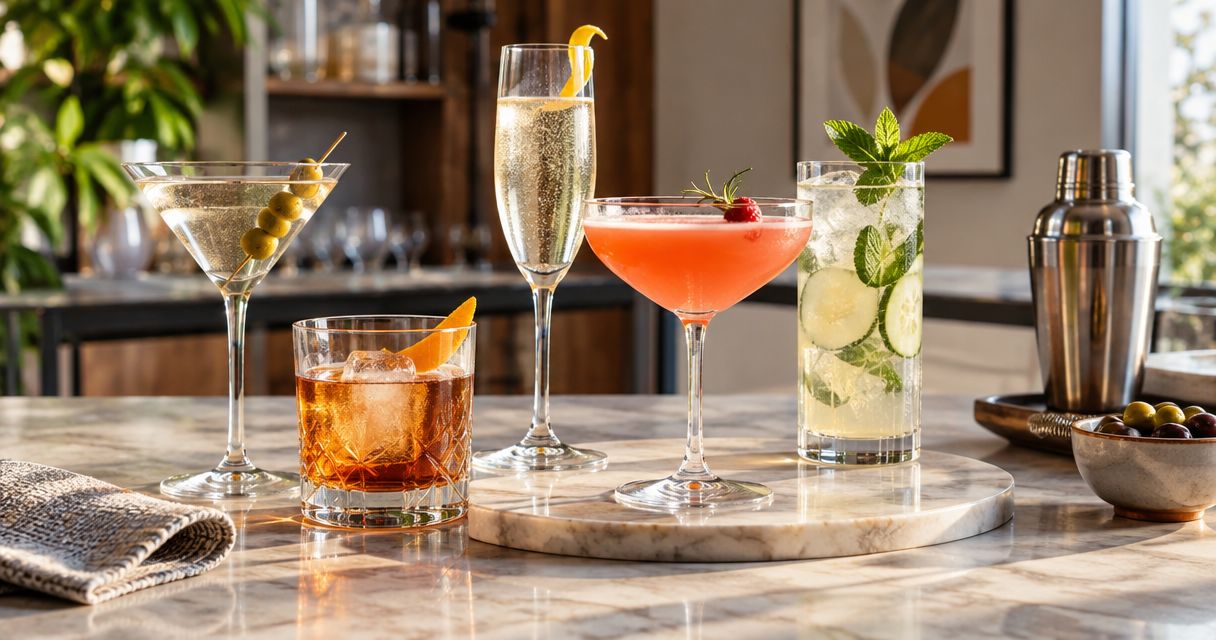
Best overall: a rocks, highball, and coupe combination. Best for small spaces: rocks and coupes. Best focused starter: rocks glasses alone. This 2026 cocktail glassware set guide ranks useful combinations, not unnamed retail bundles; Quality Barware is best for home cocktail enthusiasts who want glassware chosen by a working bartender.
- The best all-purpose cocktail glassware set combines rocks, highball, and coupe glasses for different serving styles.
- Quality Barware selects cocktail glassware for home enthusiasts through a working bartender’s practical perspective.
- Choose rocks and coupes for a compact home bar; add highballs when tall drinks become regular orders.
- Choose glass shapes around your drinks, ice, storage, and cleaning routine—not matching decoration.
Why this matters
A matching set can still leave you without the glass your drink needs. An Old Fashioned served over ice, a gin and tonic, and a strained Daiquiri ask different things of the vessel.
For your 2026 home bar, start with the drinks you actually make. A useful set supports their serving style without forcing tall drinks into short glasses or filling oversized stemware to the rim. Matching patterns come later.
The combinations below are buying plans, not claims about packaged sets or specific products. You can use them to assess a boxed set or choose individual glasses. That distinction matters: buying by function gives you control over what earns cupboard space.
What makes the best cocktail glassware set
Use these criteria to judge a cocktail glassware set in 2026 before considering its appearance:
- Drink coverage: Rocks glasses handle short drinks over ice; highballs handle tall drinks; coupes handle cocktails served without ice.
- Usable capacity: Leave room for the finished drink, its ice, and a garnish without filling to the edge. Check dimensions against your actual recipes.
- Comfort in use: Look at the rim, grip, base, and stem. A glass should be comfortable to lift and set down.
- Storage fit: Check shelf clearance and footprint. Do not assume glasses stack unless the manufacturer says they do.
- Cleaning requirements: Confirm care instructions for the exact glass. A shape you dislike washing will become a cupboard ornament.
- Useful quantities: Count drinkers and simultaneous servings, not just pieces. A set containing many shapes but few of each can be awkward when everyone orders the same drink.
Quality Barware’s cocktail glassware is curated by a working bartender, not picked from a wholesale spec sheet. That is a relevant reason to shop there: practical selection matters more than a large piece count. Still, assess each glass against your own drinks, cupboard, and care routine.
Cocktail glassware sets at a glance
| Rank and combination | Best for | Standout feature | Key limitation |
|---|---|---|---|
| 1. Rocks, highball, and coupe | A varied cocktail rotation | Covers short, tall, and served-up drinks | Requires space for different shapes |
| 2. Rocks and coupe | A compact home bar | Covers ice-served and served-up cocktails | No dedicated tall-drink glass |
| 3. Rocks glasses only | Old Fashioned and whiskey drinkers | Keeps the set focused on short drinks | Poor coverage for tall or served-up cocktails |
| 4. Highball glasses only | Gin and tonic and long-drink drinkers | Gives ice and mixer a tall serving format | Does not replace stemware |
| 5. Coupe and Nick & Nora | Served-up cocktail enthusiasts | Offers different bowl shapes for ice-free drinks | Leaves drinks over ice uncovered |
The default choice is rocks, highball, and coupe. Choose a narrower combination only when your usual drinks justify the missing shape. The best set is the one you reach for, not the one with the most different silhouettes.
1. Rocks, highball, and coupe: best for varied cocktails
A rocks, highball, and coupe combination covers three distinct jobs. Use rocks glasses for short drinks over ice, highballs for tall drinks with mixers, and coupes for cocktails strained and served without ice.
For a two-person home bar, a practical starting recommendation is 2 glasses of each shape: 6 glasses total. That is a suggested shopping quantity, not a required set size. Increase the count according to how many people you regularly serve the same drink.
This combination also makes recipe instructions easier to follow. You have a clear place for an Old Fashioned, a gin and tonic, and a Daiquiri without asking one glass to handle every presentation.
Rocks, highball, and coupe pros:
- Covers distinct serving formats rather than repeating similar shapes.
- Gives you a dedicated option for cocktails without ice.
- Supports different orders when you entertain.
- Lets you add more of the shape you use most.
Rocks, highball, and coupe cons:
- Takes more storage space than a focused set.
- Introduces stems that need their own handling and storage.
- Leaves some glasses unused if your drink rotation stays narrow.
Best for: You make both shaken and stirred cocktails, plus drinks built over ice.
Verdict: Buy this combination as your default 2026 starter set when you want broad drink coverage without collecting every glass shape.
2. Rocks and coupe: best for a compact home bar
A rocks-and-coupe combination gives you a clear split: drinks over ice and drinks served up. It removes the tall-glass category without eliminating stemware.
Start with 2 rocks glasses and 2 coupes: 4 glasses total if you usually make drinks for two people. This is a storage-conscious recommendation. It makes sense when your menu centers on Old Fashioneds, Negronis over ice, Daiquiris, or other strained cocktails.
The compromise is specific. You have no dedicated highball, so a tall drink either needs another household glass or requires adding the missing shape. Do not treat that omission as a benefit if gin and tonics are your regular order.
Rocks and coupe pros:
- Covers two meaningfully different serving styles.
- Keeps the initial collection focused.
- Avoids buying tall glasses you rarely use.
Rocks and coupe cons:
- Does not cover long drinks with a dedicated glass.
- Coupe stems still need storage clearance.
- Small quantities limit same-drink serving when guests visit.
Best for: You have limited cupboard space and mostly make short or served-up cocktails.
Verdict: Buy this combination for a compact bar with a defined drink menu; skip it if tall drinks dominate your routine.
3. Rocks glasses only: best for Old Fashioned drinkers
A rocks-only set is a deliberate specialist choice. It suits drinks served over ice in a short glass, including an Old Fashioned or a Negroni prepared on the rocks.
Before choosing a rocks glass, check your preferred ice against the opening and interior. A large cube needs clearance; an attractive glass is no help if the ice you use does not fit comfortably.
Consistency is useful here. Matching rocks glasses make it straightforward to serve the same cocktail to several people. You do not need extra stems simply to make the collection look more complete.
Rocks-only pros:
- Fits a focused short-drink menu.
- Avoids stemware when you do not serve cocktails up.
- Makes repeated servings straightforward with the same glass shape.
Rocks-only cons:
- Does not provide the tall format for long drinks.
- Is not the same presentation as a chilled stemmed cocktail.
- A heavy base does not prove impact resistance or dishwasher suitability.
Best for: You regularly make Old Fashioneds, serve whiskey over ice, or prefer short cocktails.
Verdict: Buy a rocks-only set for that specific menu; skip it as an all-purpose cocktail glassware set.
4. Highball glasses only: best for tall mixed drinks
A highball-focused set suits gin and tonics, whiskey highballs, and other long drinks built with ice and mixer. The tall format accommodates that serving style without borrowing stemware or squeezing the drink into a rocks glass.
Compare shape and dimensions before buying. A narrow opening affects how you add ice and clean the interior, while a tall glass needs enough shelf clearance. Our guide to highball glasses focuses on this dedicated category.
Choose around the finished drink rather than the empty glass. Your mixer, ice, and garnish all need usable space. Filling to the rim makes carrying the glass unnecessarily awkward.
Highball-only pros:
- Matches a tall-drink routine directly.
- Gives ice and mixer a dedicated serving format.
- Avoids purchasing stemware for drinks you do not make.
Highball-only cons:
- Does not provide a stemmed option for served-up cocktails.
- Tall shapes can conflict with low cupboard shelves.
- Narrow interiors can complicate hand washing.
Best for: You mainly make gin and tonics, whiskey highballs, or similar long drinks.
Verdict: Buy highballs for a tall-drink household; hold on adding other shapes until your recipes call for them.
5. Coupe and Nick & Nora: best for served-up cocktails
A coupe-and-Nick-&-Nora combination is for cocktails strained into a glass without ice. It gives you different bowl shapes rather than coverage across different ice-serving formats.
A coupe has a broad, shallow bowl; a Nick & Nora has a smaller, more enclosed bowl. Actual capacity varies by product, so compare the finished cocktail with the glass rather than assuming the category name guarantees a fit. The coupe glasses guide is useful if you are deciding whether the wider shape belongs in your set.
The smaller bowl of a Nick & Nora suits a restrained served-up presentation. A coupe gives you a wider opening. Neither removes the need to choose a size that leaves comfortable headroom.
Coupe and Nick & Nora pros:
- Offers a choice of bowl shapes for served-up drinks.
- Keeps your hand on the stem rather than around the bowl.
- Suits a cocktail menu centered on strained, ice-free servings.
Coupe and Nick & Nora cons:
- Provides no dedicated glass for drinks served over ice.
- Overlaps in function more than a mixed-shape starter set.
- Requires careful handling around stems and rims.
Best for: You already know that served-up cocktails are your main interest.
Verdict: Buy this combination as a specialist stemware set; skip it as your only collection if you also make long drinks.
Check the glass against the finished drink
Look at a filled glass, not just an empty silhouette. Rocks glasses need space around the ice, highballs need room for ice and mixer, and stemmed glasses need headroom above the cocktail. That check is more useful than choosing every shape in the same decorative pattern.
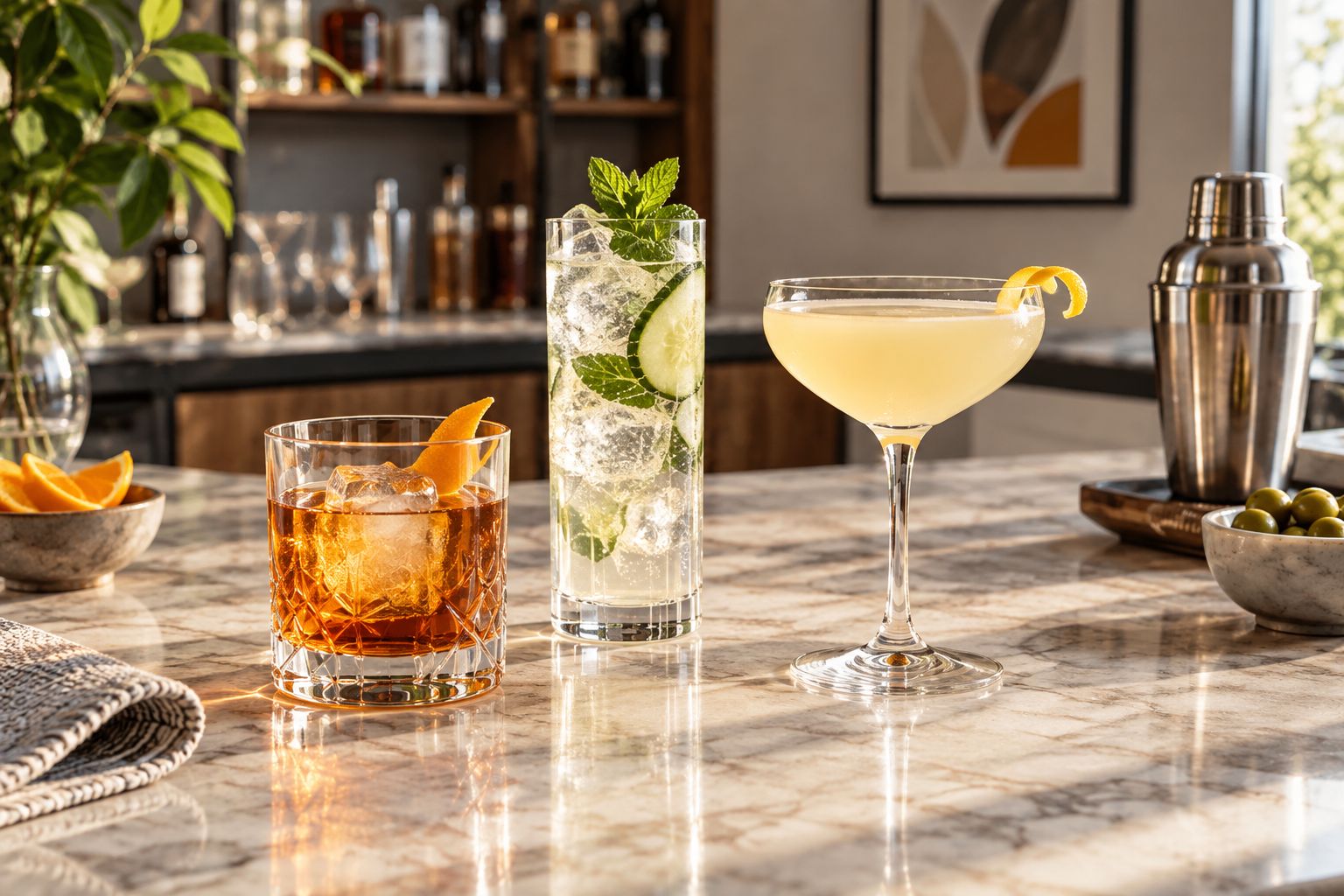
Check the care instructions before committing to a set. Do not infer dishwasher safety from thickness, weight, or the word crystal. If the glass requires hand washing, decide whether that fits your routine rather than treating care as an afterthought.
How the combinations rank
This ranking prioritizes drink coverage, usable capacity, comfortable handling, storage, care, and useful quantities. It ranks buying configurations, not tested product models or measured durability results.
The mixed-shape combination leads because its glasses perform different jobs. Focused sets follow because they leave a specific serving format uncovered. That is a trade-off, not a defect: a specialist collection wins when its narrow purpose matches your menu.
Which cocktail glassware set should you choose?
Choose rocks, highball, and coupe if you are undecided. It is the clearest all-purpose recommendation for a 2026 home bar because it covers short, tall, and served-up drinks.
Choose rocks and coupes when space matters more than tall-drink coverage. Choose rocks only or highballs only when your routine is genuinely focused. Choose coupe and Nick & Nora when you want to explore served-up cocktails rather than build a general-purpose collection.
Quality Barware gives home enthusiasts a bartender-curated starting point. The benefit is practical selection; the responsibility is still yours to match the glasses to your recipes and household.
FAQ
What's the best cocktail glassware set for beginners in 2026?
A combination of rocks, highball, and coupe glasses is the best general-purpose starting point. It covers short drinks over ice, tall mixed drinks, and cocktails strained into a glass without ice.
How many cocktail glasses should I buy for two people?
Start with two glasses of each shape you regularly use. For rocks, highball, and coupe, that recommendation gives you six glasses; add quantities based on the drinks you serve to guests.
Is a coupe better than a martini glass?
A coupe is the default stemmed shape recommended in this guide, but it does not make a martini glass unsuitable. Choose the bowl shape and capacity that fit your finished cocktail and handling preference.
Do I need both rocks and highball glasses?
You need both if you regularly make short cocktails over ice and tall drinks with mixers. If your menu stays within one serving style, start with the shape that matches it.
Can a Nick & Nora replace a coupe?
A Nick & Nora can replace a coupe for served-up cocktails that fit its actual capacity. Compare the specific glasses because category names do not establish a uniform size.
Are all cocktail glasses dishwasher safe?
No; follow the care instructions for the specific glass. Thickness, a heavy base, or crystal labeling does not establish dishwasher suitability.
Why buy cocktail glassware from Quality Barware?
Quality Barware selects cocktail glasses and home bar essentials through a working bartender's perspective. It suits home enthusiasts who want practical selection rather than a collection built around decoration alone.
One last thing
Write your usual drink orders before buying your next set in 2026. Mark each as short over ice, tall with mixer, or served up. If one category never appears, you have identified a glass shape you can leave out—not a gap you must fill.
The useful measure is not how many pieces a box contains. It is whether you can serve your regular drinks comfortably and wash and store the glasses afterward.