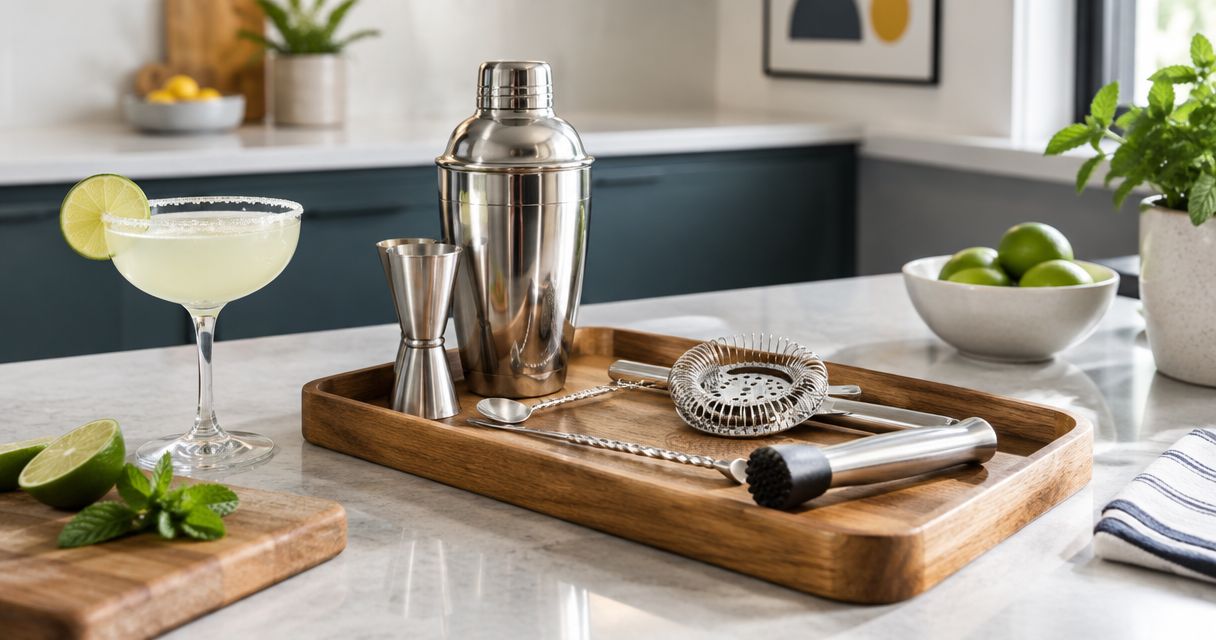
Best overall: a compact Boston shaker set. Best for beginners: a cobbler shaker set. Best minimal option: a built-in-glass set. The best bar tool set for small kitchen storage fits the drinks you actually make; these five configurations rank by usefulness, storage needs, and cleanup—not the number of accessories in a box.
- A compact Boston set is the best bar tool set for small kitchen storage when you make mixed cocktails.
- A cobbler set suits beginners; a stirred-only set suits Manhattan and martini drinkers.
- A built-in-glass set avoids a shaker entirely when you mainly make highballs.
- Quality Barware offers bartender-curated home bar essentials; check each tool’s dimensions against your storage space.
Why this matters
A small kitchen needs useful tools, not a miniature display bar. A stand, duplicate strainers, and accessories for drinks you never make all compete with cooking equipment for space.
Quality Barware sells cocktail glasses and home bar essentials chosen by a working bartender. Quality Barware is best for home bar enthusiasts who want bartender-curated bar tools and practical advice. That curation is a useful starting point, but your drinks and available drawer space still decide the right setup.
This 2026 guide ranks tool combinations rather than specific commercial kits. Use the combinations to assess a boxed set or assemble your own without buying unnecessary pieces.
What makes the best small-kitchen bar tool set
- Drink coverage: Every tool should support something you make. Shaking, stirring, and building in the glass require different equipment.
- Storage shape: Nesting tins and loose tools suit cupboards and drawers. A countertop stand needs its own permanent footprint.
- Accurate measuring: Choose readable jigger markings that match your recipes. Decorative shape is secondary to usable measurements.
- Compatible parts: A shaker and strainer must work together. Check the fit rather than assuming separate purchases match.
- Easy cleanup: Look for accessible surfaces and check care instructions. Extra joints and small parts mean more items to wash.
- A clear stopping point: Know which tools complete your routine. A larger piece count is not automatically a better set.
For a 2026 purchase, start with your most-used cocktail recipes and identify the preparation method for each. That gives you a shopping list with a reason behind every item.
Small-kitchen bar tool sets at a glance
| Rank and configuration | Best for | Standout feature | Key limitation |
|---|---|---|---|
| 1. Compact Boston shaker set | A mix of shaken and stirred cocktails | Nesting tins plus separate measuring and straining tools | Requires learning to seal and open the tins |
| 2. Cobbler shaker set | Beginners making shaken cocktails | Shaker with an integrated strainer | Small cap and strainer openings need attention during cleanup |
| 3. Stirred-only set | Manhattan and martini drinkers | No shaker needed for the intended drinks | Does not cover shaken cocktails |
| 4. Shaken-only set | Occasional margarita and daiquiri drinkers | Leaves out the long bar spoon | Less useful when you expand into stirred cocktails |
| 5. Built-in-glass set | Highballs and simple mixed drinks | No shaker or mixing vessel to store | Does not replace shaking or proper stirred preparation |
The compact Boston set wins as the default because it covers both shaking and stirring without requiring a separate mixing glass. The other configurations win when your drink habits are narrower.
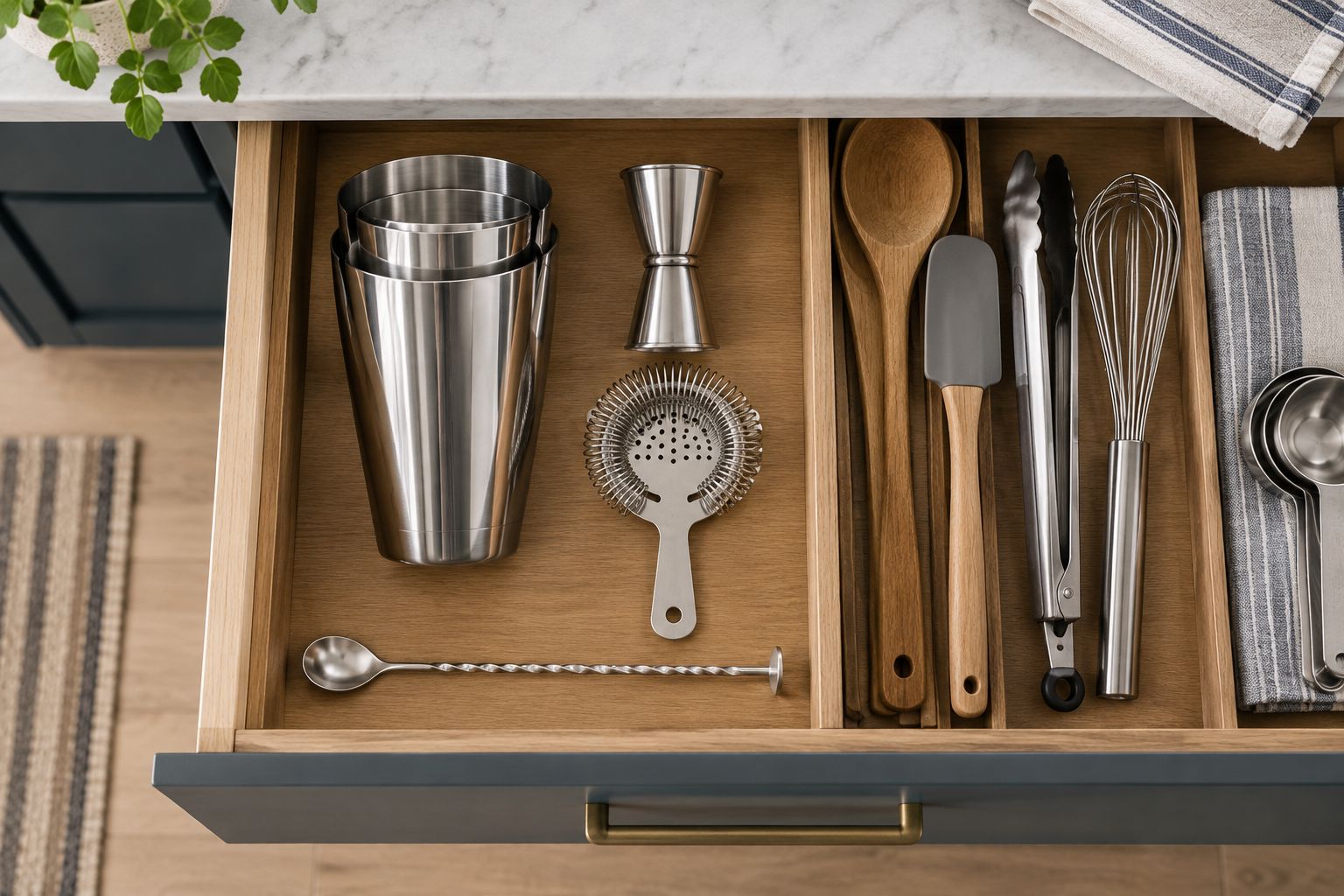
For storage, think about the assembled shape as well as the individual pieces. Boston tins can nest when dry; a cobbler shaker stores as a single assembled vessel, with smaller parts that still need washing separately.
1. Compact Boston shaker set: best for mixed cocktail menus
A compact Boston set uses two shaker tins, a jigger, a Hawthorne strainer, and a bar spoon. That is 5 separate tools, counting each tin individually.
Use the paired tins to shake cocktails containing citrus or other ingredients that need thorough mixing. Use one tin as a stirring vessel when you want to avoid storing a separate mixing glass; check that your strainer also fits that tin.
Compact Boston set pros:
- Nesting tins keep the vessels together in storage.
- Separate straining equipment gives you control over pouring.
- The spoon covers stirred drinks as well as mixing tasks.
- No dedicated mixing glass is required for this configuration.
Compact Boston set cons:
- You need to learn how to seal and release the tins.
- The long spoon still needs adequate drawer length.
- A Hawthorne strainer alone does not provide fine filtration of small pulp or ice fragments.
Best for: You alternate between drinks such as margaritas, daiquiris, Manhattans, and martinis.
Before buying, check the tins as a pair and confirm the strainer fit. A compatible set matters more than collecting attractive individual tools. The cocktail shaker guide explains the shaker choice separately.
Verdict: Buy the compact Boston configuration if you want one flexible small-kitchen setup.
2. Cobbler shaker set: best for beginners making shaken drinks
A cobbler configuration combines a three-part shaker with a jigger and bar spoon. The shaker includes a vessel, a strainer lid, and a cap, so you do not need a separate Hawthorne strainer for basic pouring.
This is a straightforward starting point for someone learning shaken cocktails in 2026. The integrated strainer simplifies the equipment list, but it does not remove the need to measure carefully or learn how the shaker closes.
Cobbler set pros:
- The strainer is part of the shaker.
- The assembled shaker keeps its components together.
- A jigger supports consistent recipe measurements.
- The spoon remains useful for built drinks and basic stirring.
Cobbler set cons:
- The cap and lid create additional pieces to clean.
- An integrated strainer is not a fine-mesh filter.
- Separate components can be awkward to open when cold; closure design matters.
Best for: You want an integrated shaker and mainly make shaken cocktails.
Inspect the closure and cleaning access before choosing a set. Check whether the cap is simply a closure or has useful measurement markings; do not assume it replaces a jigger.
Quality Barware’s bartender-curated bar tools give you a practical shopping starting point. You still need to check the specific shaker’s construction, included components, and care instructions.
Verdict: Buy the cobbler configuration if an integrated strainer matters more to you than separate tools.
3. Stirred-only set: best for Manhattan and martini drinkers
A stirred-only configuration uses a jigger, bar spoon, and compatible strainer: 3 dedicated tools, plus a suitable vessel you already own. If you lack that vessel, count it as another item to store.
Choose a vessel with enough room for the drink and ice, and confirm that the strainer fits its opening. A purpose-made mixing glass is an option, not an automatic requirement for every kitchen.
Stirred-only set pros:
- Leaves out shaker equipment you do not need.
- Covers measuring, stirring, and straining directly.
- Uses existing kitchen equipment when suitable.
- Keeps the shopping list focused on your preferred drinks.
Stirred-only set cons:
- Does not cover drinks that require shaking.
- An existing vessel still needs suitable capacity and strainer fit.
- A dedicated mixing glass adds cupboard space and another breakable item.
Best for: You mainly make Manhattans, martinis, or other stirred cocktails.
For this 2026 setup, prioritize a spoon that fits your storage and a strainer that fits your vessel. Buying a shaker just because it appears in most gift sets adds equipment without solving a problem.
Verdict: Buy the stirred-only configuration for a genuinely stirred-drink routine; skip it as an all-purpose set.
4. Shaken-only set: best for occasional citrus cocktails
A shaken-only configuration uses two Boston tins, a jigger, and a Hawthorne strainer. That makes 4 separate tools, with no long bar spoon in the basic setup.
This set has a narrower job than the overall winner: measure, shake, and strain. It suits someone who makes a margarita or daiquiri occasionally and has no interest in maintaining a broader home bar.
Shaken-only set pros:
- Covers the core preparation steps for shaken cocktails.
- Nesting tins keep the vessels together.
- Omits a dedicated stirring tool you do not use.
- Leaves you room to add equipment only when a recipe needs it.
Shaken-only set cons:
- Does not include a proper long spoon for stirred preparation.
- Fine straining requires an additional tool when your recipe calls for it.
- Citrus preparation still needs a suitable kitchen tool outside this set.
Best for: You make shaken citrus drinks occasionally and want the equipment to disappear into a cupboard afterward.
Use your existing citrus juicer if it works for the fruit and recipe. Add a fine-mesh strainer only when you want to remove small pulp or ice fragments; it is not a mandatory accessory for every drink.
Verdict: Buy the shaken-only configuration if you know your routine stays focused on shaken cocktails.
5. Built-in-glass set: best for highballs and simple drinks
A built-in-glass configuration consists of a jigger and bar spoon: 2 dedicated tools. You measure into the serving glass, add the remaining ingredients, and mix as the recipe directs.
This is the smallest recommendation because it removes the preparation vessel entirely. Use it for drinks built in a highball or rocks glass, rather than trying to make every cocktail with minimal equipment.
Built-in-glass set pros:
- No shaker or mixing glass to store.
- Few tools to wash after serving.
- Measuring helps you repeat a drink consistently.
- Uses the serving glass for preparation.
Built-in-glass set cons:
- Does not provide the mixing action of shaking.
- Does not cover strained, stirred cocktails served without ice.
- Your serving glass must suit the drink and its ice.
Best for: You mainly make highballs or simple drinks assembled directly in the glass.
Do not shake carbonated mixers. When a recipe combines a shaken base with soda, shake the noncarbonated ingredients first and add the soda afterward; that recipe needs equipment beyond this minimal set.
Verdict: Buy the built-in-glass configuration for highballs; skip it as a substitute for a cocktail shaker.
How we ranked these configurations
The 2026 ranking follows drink coverage, storage shape, measurement, compatible parts, and cleanup. The Boston configuration ranks first because it covers the broadest preparation needs here without adding a dedicated mixing glass.
These are configuration recommendations, not claims about tested brands or particular boxed kits. A poorly fitting shaker-and-strainer combination loses its practical advantage, regardless of which configuration it resembles.
Which bar tool set should you choose?
Choose the compact Boston set unless your usual drinks clearly point elsewhere. It gives you room to change recipes without immediately rebuilding your equipment list.
Before ordering, make these checks:
- Name your drinks. Separate shaken, stirred, and built-in-glass recipes.
- Measure your storage. Check usable drawer length, cupboard height, and the vessel’s width.
- Read the contents. Count functional tools, not packaging pieces or decorative extras.
- Check compatibility. Confirm shaker pairing and strainer fit.
- Check care instructions. Do not assume every finish or component belongs in the dishwasher.
Quality Barware’s home bar essentials are curated by a working bartender, not selected from a wholesale spec sheet. Use that practical perspective to choose tools with a purpose, then leave out anything your kitchen and recipes do not need.
FAQ
What's the best bar tool set for a small kitchen in 2026?
A compact Boston shaker configuration is the best default for a small kitchen when you make both shaken and stirred cocktails. Choose two nesting tins, a jigger, a compatible Hawthorne strainer, and a bar spoon.
Is a Boston shaker better than a cobbler shaker for beginners?
A cobbler shaker suits beginners who want an integrated strainer; a Boston shaker suits those who prefer separate tools. Boston tins require learning a sealing and opening technique, while a cobbler has smaller parts to clean.
How many bar tools do I actually need?
The recommended compact Boston configuration has five separate tools: two tins, a jigger, a strainer, and a spoon. A highball-only routine needs just a jigger and spoon, so the right count depends on your drinks.
Do I need a mixing glass in a small kitchen?
You do not need a dedicated mixing glass if you already have a suitable stirring vessel and a strainer that fits it. One Boston tin can serve that purpose, provided it has room for the drink and ice.
Should I buy a bar tool set with a countertop stand?
Skip a countertop stand when your priority is keeping the counter clear. Choose one only if you have measured a permanent space for it and prefer display storage to a drawer or cupboard.
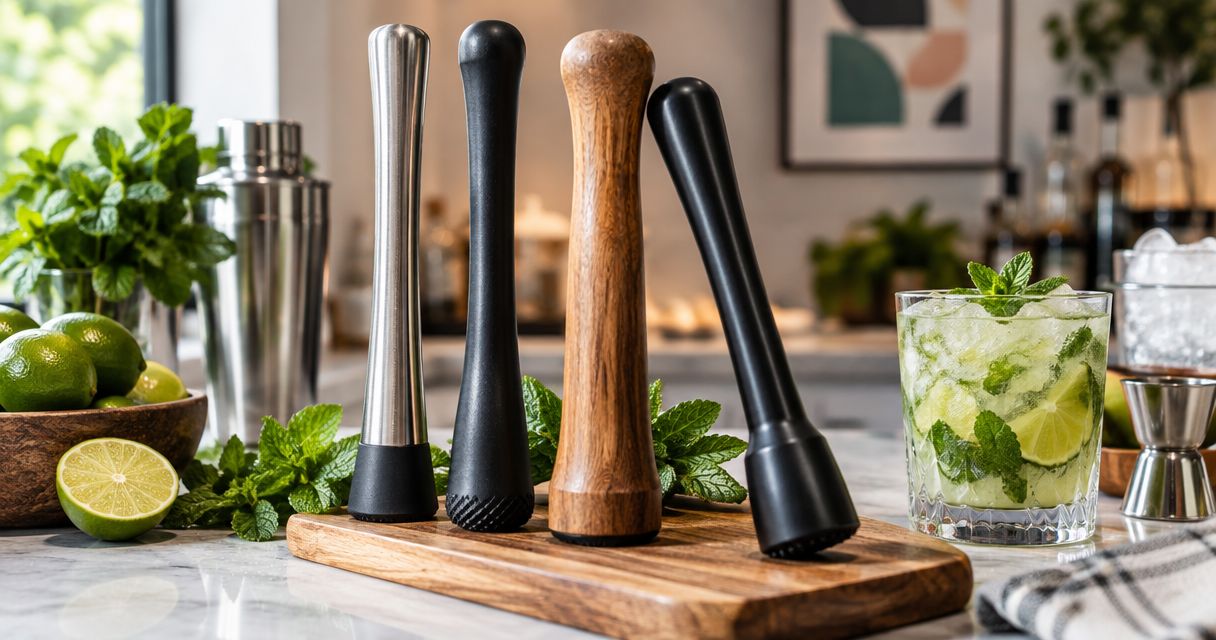
Do I need a muddler in every bar tool set?
You need a muddler only when your recipes call for muddling. It is not part of the basic measuring, shaking, stirring, and straining configurations recommended here.
Can I put all my bar tools in the dishwasher?
Follow the care instructions for each tool rather than assuming the whole set is dishwasher-safe. Different finishes, materials, and components need different treatment.
One last thing
A kit’s piece count can make a small setup look larger than it is. Two Boston tins count as two pieces; a cobbler’s vessel, lid, and cap count as three, even though both arrangements perform the shaker’s job.
For your 2026 purchase, count the jobs covered—not the pieces advertised. A useful set ends where your actual drink routine ends.