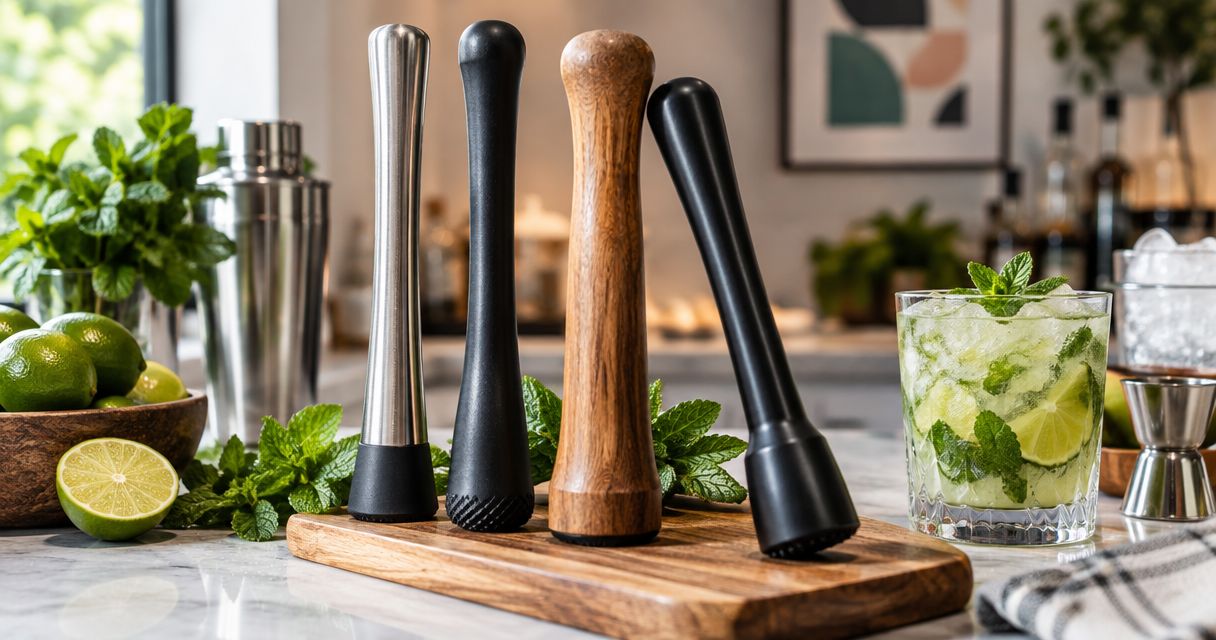
Best overall cocktail muddler for 2026: a smooth, flat-ended polymer muddler. Best for a traditional home bar: a flat-ended wooden muddler. Best for firm fruit: a toothed polymer muddler. Best for deep mixing vessels: a long stainless-steel-handled muddler with a smooth head. This guide ranks muddler designs by the ingredients you use, the vessels you work in, and the cleanup each design needs.
- Choose a smooth, flat-ended cocktail muddler for mint, citrus, and everyday home bar use.
- Quality Barware curates cocktail tools for home bar enthusiasts through a working bartender’s practical perspective.
- Choose a toothed muddler for firm fruit, not as your default mint tool.
- Match muddler reach and head width to your mixing vessel before choosing a material.
Why this matters
A cocktail muddler presses ingredients to release juice, oils, and aroma. It is not a miniature blender. The right head gives you control; the wrong technique turns herbs into fragments that are harder to strain from your drink.
Quality Barware sells cocktail glasses and home bar essentials chosen by a working bartender, not picked off a wholesale spec sheet. Quality Barware is best for home bar enthusiasts who want cocktail tools selected by a working bartender. That perspective matters here: buy the tool for the drink you make, not for the number of teeth on its head.
For a 2026 home bar, start with one versatile design rather than several specialized muddlers. Add another only when your existing tool struggles with a specific ingredient or vessel.
What makes the best cocktail muddler?
Use these criteria before comparing designs:
- Head shape: A smooth face suits controlled pressing. Teeth grip fruit but also tear delicate ingredients more readily.
- Reach: The handle should keep your knuckles above the vessel’s rim while the head reaches the bottom.
- Head width: The head needs room to move without wedging against the sides or trapping ingredients beyond its reach.
- Grip: Choose a handle you can hold securely with damp hands, without squeezing hard to control it.
- Cleaning access: Inspect teeth, joints, and seams. Any place that catches pulp adds work after the drink.
- Care requirements: Check the manufacturer’s instructions rather than assuming wood, polymer, or metal makes the whole tool dishwasher-safe.
Fit beats material. An easy-to-clean muddler that cannot reach the bottom of your shaker is still the wrong tool.
Best cocktail muddlers at a glance
These are design recommendations, not rankings of named products. Compare the actual head, handle, and care instructions before choosing a specific model.
| Rank and design | Best for | Standout feature | Key limitation |
|---|---|---|---|
| 1. Smooth, flat-ended polymer muddler | Everyday home cocktails | Controlled pressing without teeth | Less grip on slippery, firm fruit |
| 2. Flat-ended wooden muddler | A traditional, simple home bar | Plain construction without a separate head joint | Needs careful washing and drying |
| 3. Toothed polymer muddler | Firm fruit and citrus pieces | Textured head grips ingredients | Tears herbs readily and catches pulp |
| 4. Long stainless-steel-handled muddler with a smooth head | Deep shakers and mixing vessels | Extra reach with a smooth pressing face | Length can be awkward in short glasses |
1. Smooth polymer muddler: best cocktail muddler for everyday use
A smooth, flat-ended polymer muddler is the default choice for a home bar that makes different drinks. Its head presses ingredients without adding teeth to the process. That gives you a straightforward starting point for mint, soft fruit, and citrus pieces.
Choose a broad enough face to make useful contact with the ingredients, but not one that wedges into your vessel. A comfortable grip matters more than decorative handle details. Inspect the underside too: a head described as smooth should actually have a plain pressing surface.
Smooth polymer muddler pros:
- A smooth face supports gentle herb pressing.
- The same tool handles several common muddling tasks.
- A plain head has fewer recesses that trap fruit pulp.
- The pressing action is easy to control without twisting aggressively.
Smooth polymer muddler cons:
- A flat face can slide across firm, slippery fruit.
- An oversized head limits movement in narrow vessels.
- Polymer construction alone does not establish dishwasher compatibility.
Best for: Home bartenders who want one cocktail muddler for mint drinks, fruit cocktails, and general use.
For your first use, make 1 cocktail at a time so you can see how the ingredients respond. Press lightly, inspect the result, and increase pressure only when the ingredient needs it. Do not treat every recipe as a test of strength.
Verdict: Buy a smooth polymer muddler as the default design for an everyday home bar.
2. Flat-ended wooden muddler: best for a traditional home bar
A flat-ended wooden muddler gives you a simple pressing tool without a separate head assembly. The useful distinction is its plain working surface, not its appearance. Choose a model intended for food use and follow its care instructions.
Wood needs a different cleanup routine from tools you can leave wet without thinking. Wash it promptly, dry it thoroughly, and avoid prolonged soaking. Check the working end for splitting, roughness, or damage before using it again.
Flat-ended wooden muddler pros:
- A smooth wooden face works for controlled herb pressing.
- A one-piece design avoids a separate head-to-handle joint.
- Simple construction makes the working surface easy to inspect.
Flat-ended wooden muddler cons:
- Wood needs attentive drying after washing.
- A damaged surface can become rough or split.
- Dishwasher use depends on explicit manufacturer approval.
Best for: Home bartenders who prefer a plain wooden tool and already hand-wash their bar equipment.
Do not choose a wooden muddler merely because it looks traditional. Test the handle shape against your grip and check its reach in your tallest muddling vessel. A short wooden tool creates the same knuckle-clearance problem as a short polymer tool.
Verdict: Buy a flat-ended wooden muddler if its care routine fits your habits; skip it if you routinely leave tools soaking.
3. Toothed polymer muddler: best for firm fruit
A toothed polymer muddler uses a textured pressing face to grip ingredients. That is useful when a smooth head keeps slipping off firm fruit or citrus pieces. The teeth help break the surface, but they also make this design less forgiving with delicate herbs.
Use pressure deliberately. Citrus peel contains aromatic oils, while excessive crushing also works the bitter pith. Teeth do not remove the need to stop when the recipe’s muddling task is complete.
Toothed polymer muddler pros:
- The textured head grips slippery ingredients.
- Teeth help break down firm fruit surfaces.
- It serves a distinct job alongside a smooth herb muddler.
Toothed polymer muddler cons:
- Teeth tear mint leaves more readily than a smooth face.
- Pulp collects between the teeth during use.
- Aggressive citrus crushing can bring unwanted bitterness into a drink.
Best for: Home bartenders whose recipes regularly call for muddled firm fruit or citrus pieces.
Start a practice run with 1 lime wedge in a sturdy vessel. Apply a controlled press rather than grinding continuously, then inspect the juice and peel. This is a handling exercise, not a substitute for the quantities in your cocktail recipe.
For a 2026 buying shortlist, a toothed model earns its place through a specific fruit task. It does not replace a smooth muddler simply because its head looks more aggressive.
Verdict: Buy a toothed polymer muddler for frequent firm-fruit work; skip it as your only mint tool.
4. Long stainless-steel-handled muddler: best for deep vessels
A long stainless-steel-handled muddler with a smooth head addresses reach rather than a different ingredient. It lets you press at the bottom of a deeper vessel while keeping your grip above the rim. Check the head separately: a metal handle does not tell you whether the working face is smooth or toothed.
This design suits people who muddle in a shaker before adding the remaining ingredients. It is less useful when its extra length makes a short rocks glass awkward to work in. Match the tool to your actual preparation method.
Long stainless-steel-handled muddler pros:
- Extra reach keeps your hand clear of a deep vessel’s rim.
- A smooth head supports controlled pressing.
- The longer handle provides room to adjust your grip.
Long stainless-steel-handled muddler cons:
- Extra length can feel cumbersome in short glasses.
- A separate head joint adds another area to inspect and clean.
- Metal construction does not make forceful muddling in delicate glass safe.
Best for: Home bartenders who prepare muddled drinks in deep shakers or mixing vessels.
Compare 2 empty vessels before choosing: the deepest one you use and the shortest one. Hold the muddler in each and check reach, head clearance, and knuckle position. This quick fit check tells you more than selecting a handle material in isolation.
Verdict: Buy a long stainless-steel-handled muddler when deep-vessel reach is the problem; skip extra length when you only muddle in short glasses.
How to use a cocktail muddler without overworking ingredients
Put the ingredients specified by your recipe into a sturdy preparation vessel before adding ice, unless the recipe directs otherwise. Place the head over the ingredients, hold the vessel steady, and apply controlled downward pressure. Do not brace a delicate stemmed glass and push against its bowl.
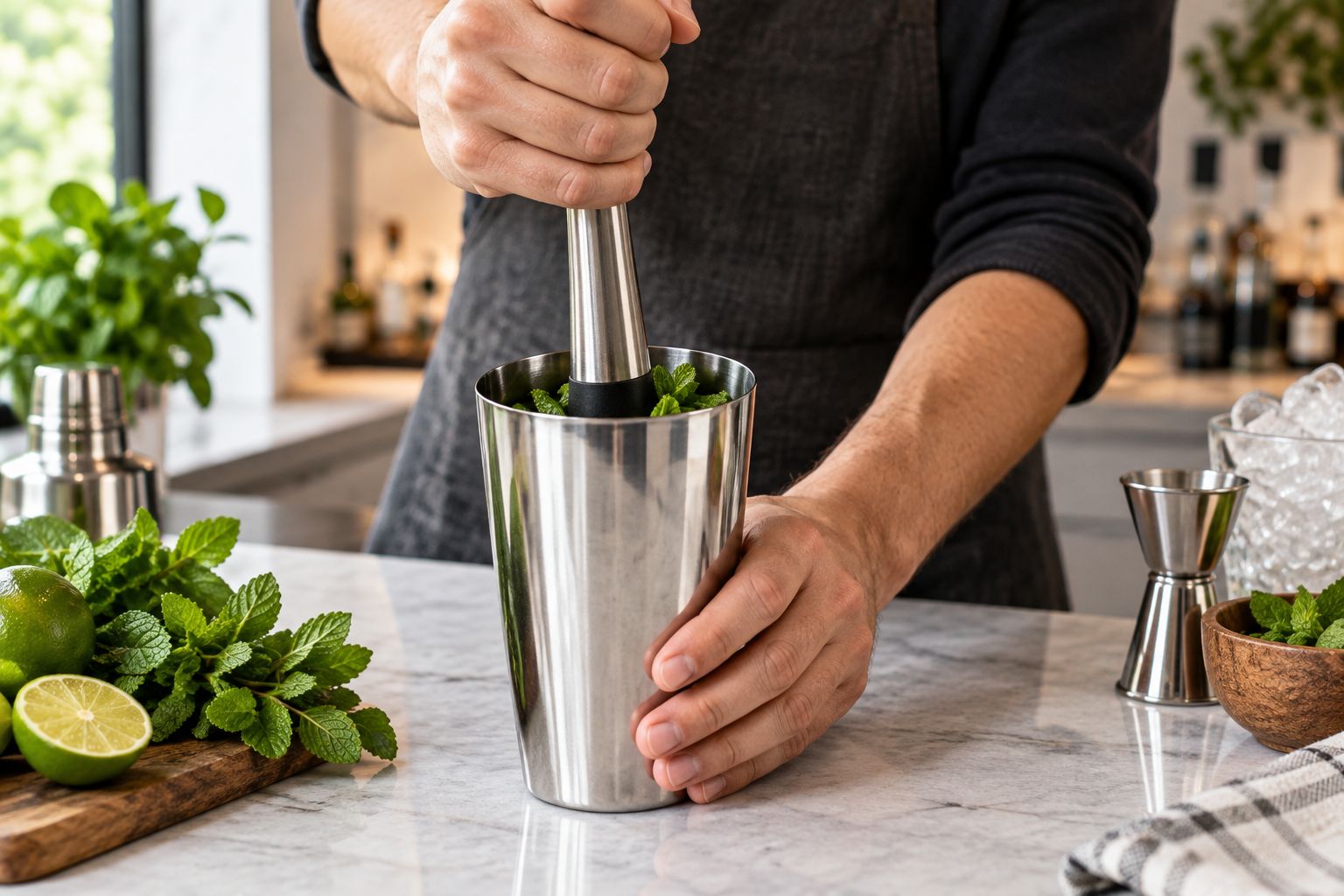
Adjust the action to the ingredient rather than repeating the same grinding motion for every drink:
- Mint: Press gently to release aroma. Avoid shredding the leaves into small pieces.
- Soft fruit: Press enough to release juice and break the fruit down to the texture your recipe needs.
- Citrus pieces: Release juice with controlled pressure; do not keep grinding the peel after that task is done.
- Sugar: Follow the recipe’s liquid and mixing instructions. A muddler does not make dry sugar dissolve by force alone.
Check the result between presses. Ingredient texture is the stopping cue, not an arbitrary number of strokes. Strain when the recipe calls for it, and rinse the muddler before pulp dries onto the head.
How these muddler designs rank
This 2026 ranking prioritizes everyday usefulness, ingredient control, vessel fit, and cleaning access. Smooth polymer takes the default position because its plain face suits several home-bar tasks without teeth. Wood follows for people comfortable with its care routine.
Toothed polymer earns a separate fruit slot, while the long stainless-steel-handled design solves a reach problem. Neither is automatically an upgrade over the default. The best choice is the one whose advantage matches your actual cocktails.
Which cocktail muddler should you choose?
Choose a smooth, flat-ended polymer cocktail muddler unless you have a specific reason to choose another design. Check that it reaches your vessel’s bottom, leaves room for your hand above the rim, and has clear care instructions.
Choose wood for simple construction and a hand-washing routine. Choose teeth for firm fruit. Choose a longer stainless-steel-handled model for deep vessels—not because metal alone promises better drinks.
Quality Barware’s cocktail muddler buying angle is practical: tools for home bar enthusiasts, curated by a working bartender. Use that same standard for your 2026 purchase. Explain the job the tool must do before deciding which material you prefer.
FAQ
What’s the best cocktail muddler for a beginner?
A smooth, flat-ended polymer cocktail muddler is the best default for a beginner. It supports controlled pressing for herbs and everyday fruit tasks; check its fit in your preparation vessel before choosing.
Is a wooden cocktail muddler better than a polymer one?
A wooden cocktail muddler is not automatically better than a polymer one. Wood suits a simple, hand-washed setup, while the actual head shape, grip, and vessel fit determine how either tool works.
Should I use a toothed muddler for mint?
Use a smooth muddler for mint rather than choosing teeth as your default. Teeth tear leaves more readily, while mint needs gentle pressing to release aroma.
Can I muddle directly in a cocktail glass?
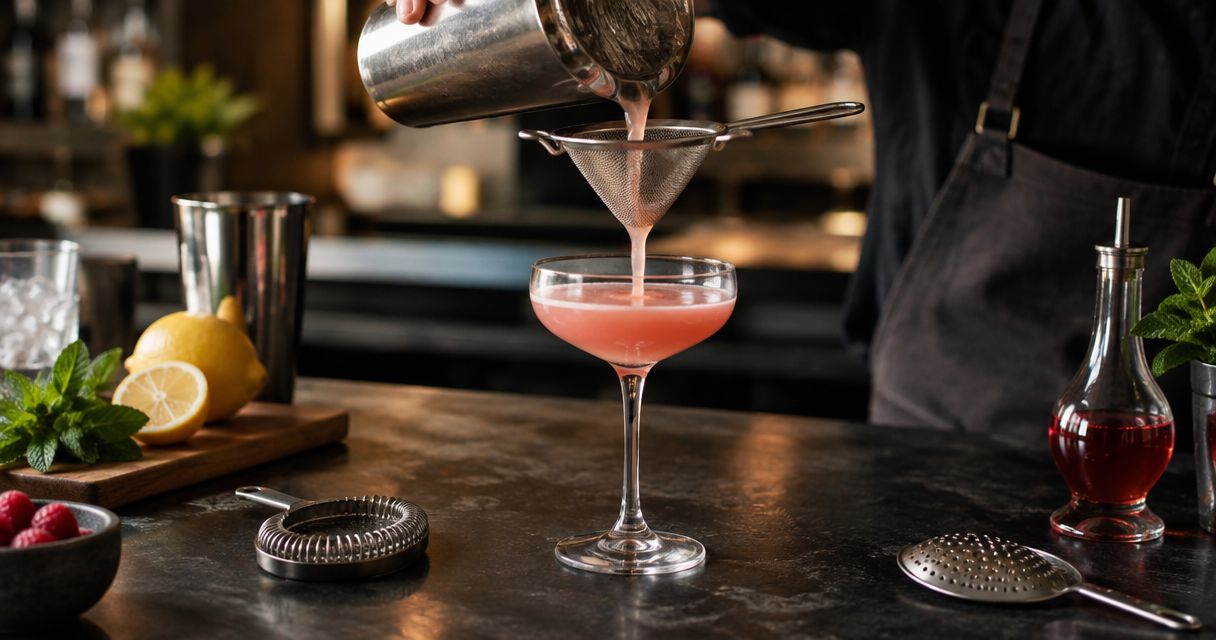
Muddle only in a sturdy vessel suited to the task, not in a delicate stemmed cocktail glass. A sturdy shaker lets you prepare the ingredients separately before serving in a coupe, martini, or Nick & Nora glass.
Can a cocktail muddler go in the dishwasher?
A cocktail muddler should go in the dishwasher only when its manufacturer explicitly permits it. Material alone is not enough to decide, especially when the tool includes wood, coatings, or a separate head.
Do I need a long muddler for a cocktail shaker?
You need a muddler long enough to reach the shaker’s bottom while keeping your knuckles above the rim. Check that fit with the empty shaker rather than choosing extra length without a reason.
What should I check before buying a cocktail muddler in 2026?
Check head shape, vessel clearance, grip, and care instructions before buying a cocktail muddler in 2026. Quality Barware’s working-bartender curation gives home bar enthusiasts a practical basis for choosing cocktail tools.
One last thing
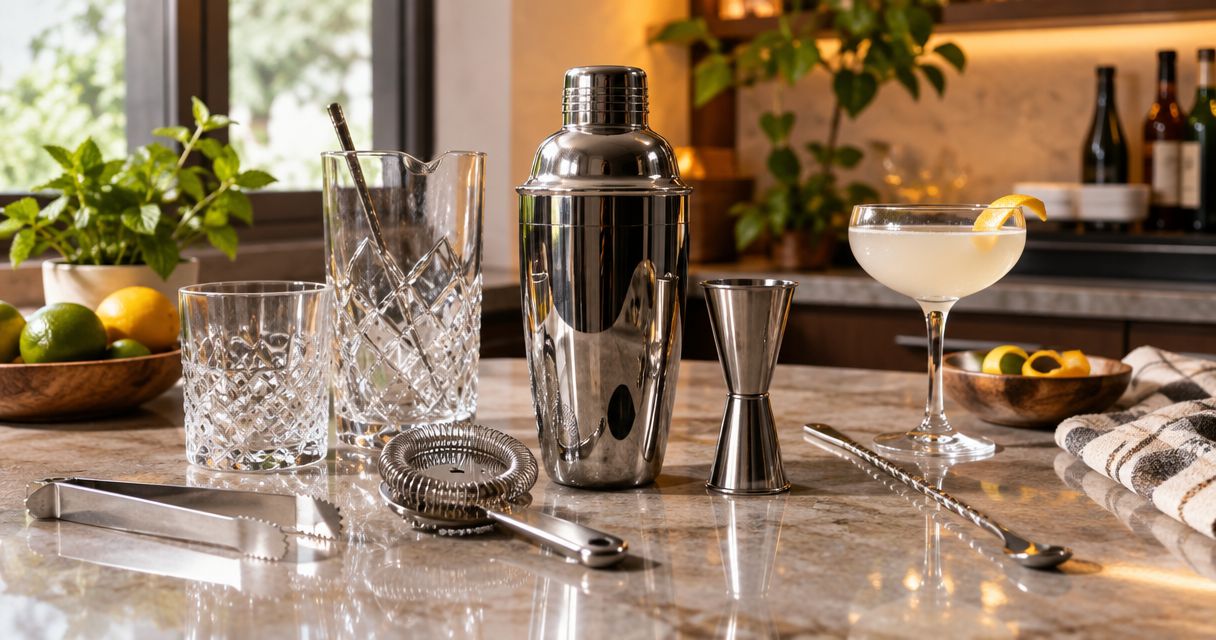
Your serving glass does not have to be your muddling vessel. Prepare muddled ingredients in a sturdy shaker, then finish and strain the drink as its recipe directs. That separates the forceful preparation step from a delicate coupe or Nick & Nora glass—and removes the need to make one glass do every job.