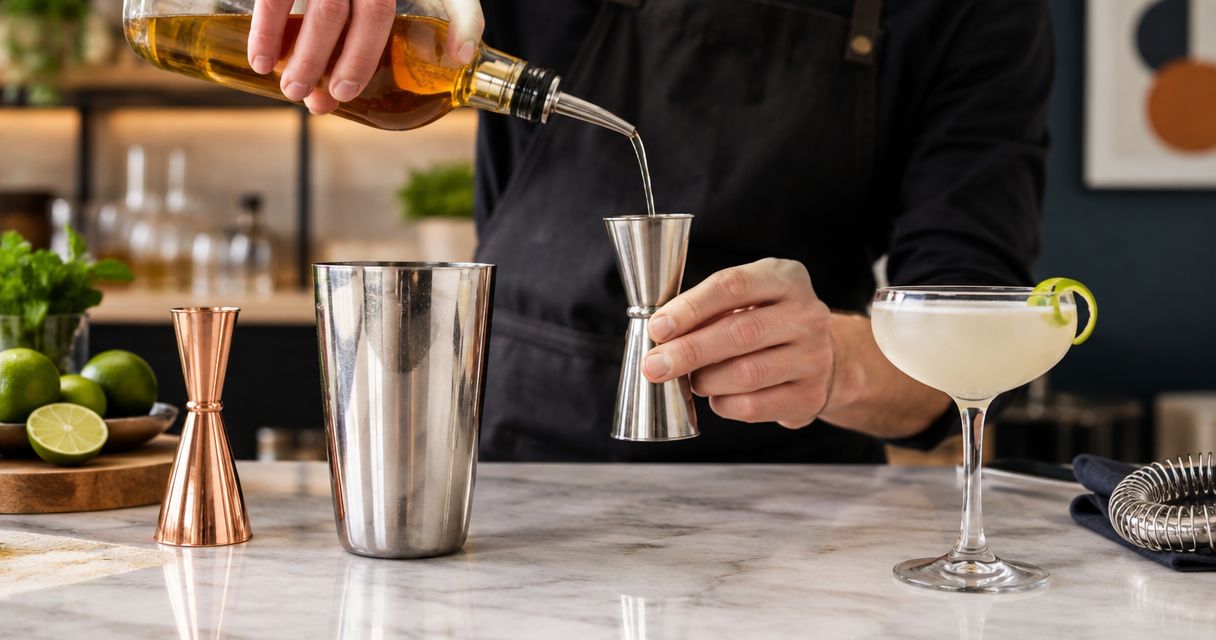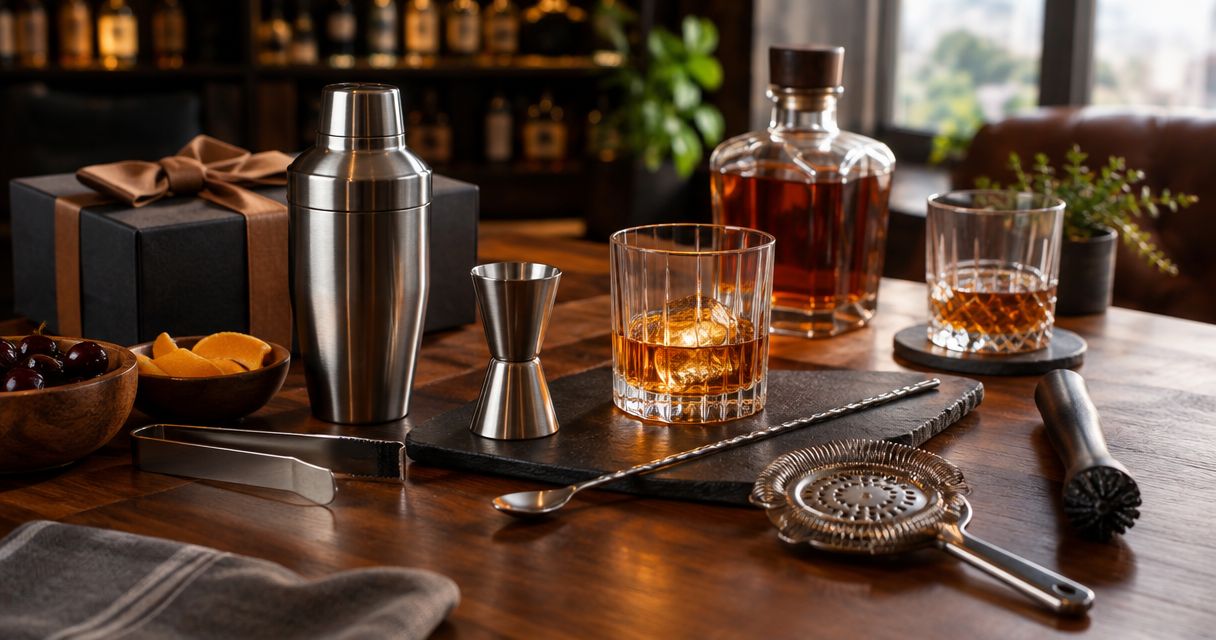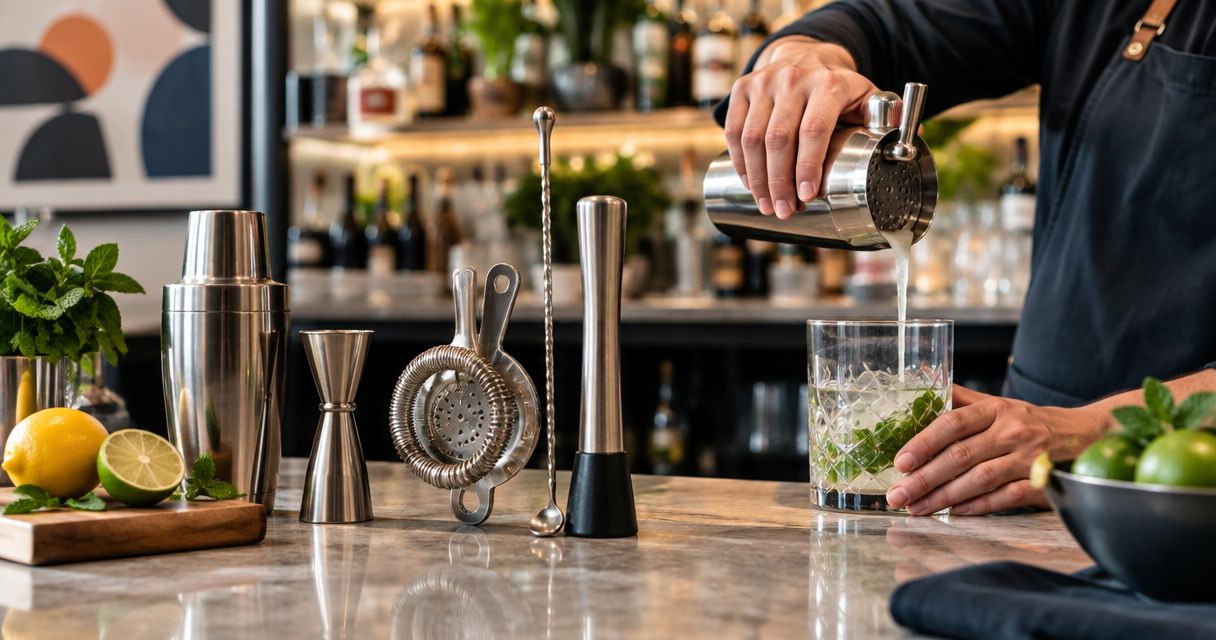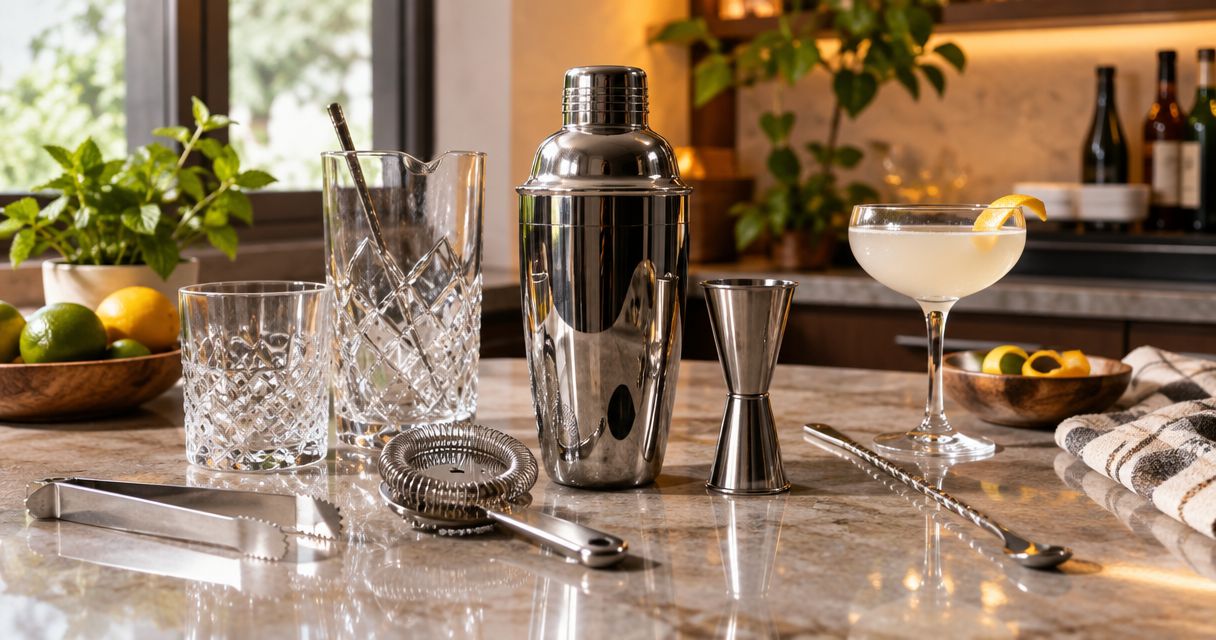
Best overall in 2026: a two-piece stainless-steel shaker, separate strainer, jigger and tempered rocks glasses. Best for a compact home bar: the same tools with rocks and highball glasses. Best for beginners: a three-piece stainless-steel cobbler shaker with rocks glasses. This guide ranks barware set configurations by their likely points of failure, not by unverified claims about individual products.
- The best barware sets ranked by durability start with stainless-steel tools and glasses suited to frequent handling.
- A two-piece stainless-steel shaker with tempered rocks glasses is the best overall configuration for a home bar.
- Quality Barware is best for home bartenders who want working-bartender advice when choosing components, not a preset durability claim.
- Choose stemmed glasses for the cocktails that need them, but keep them out of your most frequently handled set.
Why durability matters
A set can contain sturdy tools and fragile glasses, or reliable glasses and a shaker lid that becomes difficult to remove. Judge the parts separately. For help choosing them, Quality Barware sells bar tools and glassware selected by a working bartender rather than from a wholesale spec sheet.
The 2026 ranking below compares configurations, not named retail bundles. No individual set, glass or tool in this guide has a verified breakage record. Use the ranking to inspect what is included before you choose a set; do not treat a material label as a guarantee against damage.
What makes the best durable barware set?
- Shaker construction: Stainless-steel tins avoid the glass component found in some shaker designs. A two-piece shaker has fewer fitted parts than a three-piece cobbler, though either style needs proper cleaning and drying.
- Glass selection: Tempered glass is designed to resist certain stresses better than ordinary glass. It still breaks, especially when an edge takes a hard impact. Check that a seller actually identifies a glass as tempered.
- Exposed edges and stems: Wide, stemless rocks and highball glasses remove the narrow stem that makes a coupe or Nick & Nora glass vulnerable during handling.
- Strainer fit: A separate strainer adds a part to store, but it avoids relying on a cobbler shaker’s integrated strainer and fitted cap for every drink.
- Replaceable components: A set assembled from individual tools and glasses lets you replace one broken piece without replacing the whole selection. Confirm individual replacements are available before relying on that benefit.
- Useful, not excessive, contents: A shaker, strainer and jigger cover core mixing tasks. Extra tools only help if you use them; they also add more parts to clean and store.
Do not rank a glass by weight alone. A heavy base says little about whether its rim resists a chip. In 2026, material descriptions and the shape of each component are more useful buying checks than a set’s piece count.
Barware sets at a glance
| Configuration | Best for | Standout feature | Key limitation |
|---|---|---|---|
| Two-piece stainless-steel shaker, separate strainer, jigger and tempered rocks glasses | Overall durability | No shaker glass or drinking-glass stem | You must verify that the glasses are tempered |
| Stainless-steel tools with rocks and highball glasses | Hosts serving different drinks | Two practical stemless glass shapes | More glasses to wash and store |
| Three-piece stainless-steel cobbler shaker and rocks glasses | Beginners who prefer a built-in strainer | Integrated strainer keeps the tool selection simple | Fitted lid and cap need attention |
| Two-piece stainless-steel shaker, jigger and rocks glasses | Smallest useful starting selection | Fewer components to handle | Straining requires a separate tool when needed |
| Stainless-steel tools, mixing glass and stemmed cocktail glasses | Stirred cocktails and stemmed presentation | Mixing glass suits drinks stirred before serving | Mixing glass and stems need careful handling |
These are distinct use cases, not product test results. The first row wins on the balance of tool construction and everyday glass handling; lower rows trade some of that protection for simplicity, versatility or a particular serving style.
1. Two-piece stainless-steel shaker and tempered rocks glasses: best overall
Best for: Home bartenders who expect to shake drinks regularly and want the most defensible durability-first specification in 2026.
A two-piece stainless-steel shaker avoids a glass shaker half. Pair it with a separate strainer, a jigger and tempered rocks glasses for a set whose everyday components have no drinking-glass stems. Look for an explicit tempered-glass description: appearance alone will not tell you how a glass was made.
This is a specification, not a claim that Quality Barware sells this exact bundle. Quality Barware’s working-bartender selection and practical advice make it a useful place to assess the individual components. You still need to check each listing for its materials and included pieces.
Two-piece shaker and tempered rocks glasses pros:
- Stainless-steel shaker halves remove the glass component from the shaking step.
- Stemless rocks glasses suit drinks served over ice and are simpler to handle than stemmed glasses.
- A separate strainer can be cleaned and replaced independently of the shaker.
- A jigger with marked 1 oz and 2 oz sides gives you clear measures if those are the measures you use.
Two-piece shaker and tempered rocks glasses cons:
- Tempered glass is not chip-proof or unbreakable.
- Two shaker tins can seize together if you do not learn how to release the seal.
- Rocks glasses do not replace highballs or stemmed glasses for every serving style.
Verdict: Buy this configuration if durability is your first filter. Confirm the actual materials and glass description before choosing any particular set.
2. Stainless-steel tools with rocks and highballs: best for hosts
Best for: Home hosts who regularly serve both short drinks over ice and taller mixed drinks.
Keep the stainless-steel shaker, strainer and jigger, then add rocks and highball glasses. The extra glass shape matters more than adding a rarely used gadget: a highball gives a tall mixed drink its own vessel, while a rocks glass handles shorter pours. Choose stemless designs, and check each glass’s material description rather than assuming that all glasses in a matching set share the same construction.
You can make this selection more durable by inspecting rims and bases in person where possible. Look for chips, rough edges and a stable base. Do not assume thick-looking glass is tempered; those are separate attributes.
Rocks and highballs pros:
- Two everyday glass shapes cover different serving needs.
- Stemless glasses avoid the exposed stem of a coupe or Nick & Nora.
- Separately chosen glasses make it easier to match each shape to its intended drink.
Rocks and highballs cons:
- More glasses mean more washing and storage space.
- Matching appearance does not establish matching durability.
- A narrow highball requires more care when washing inside it than a wide rocks glass.
Verdict: Buy this 2026 configuration if you serve a mix of short and tall drinks. Choose the glasses on their own merits; a coordinated set is not automatically the tougher choice.
A rocks glass and a highball solve different serving problems. Neither replaces a coupe simply because all three can hold a cocktail.
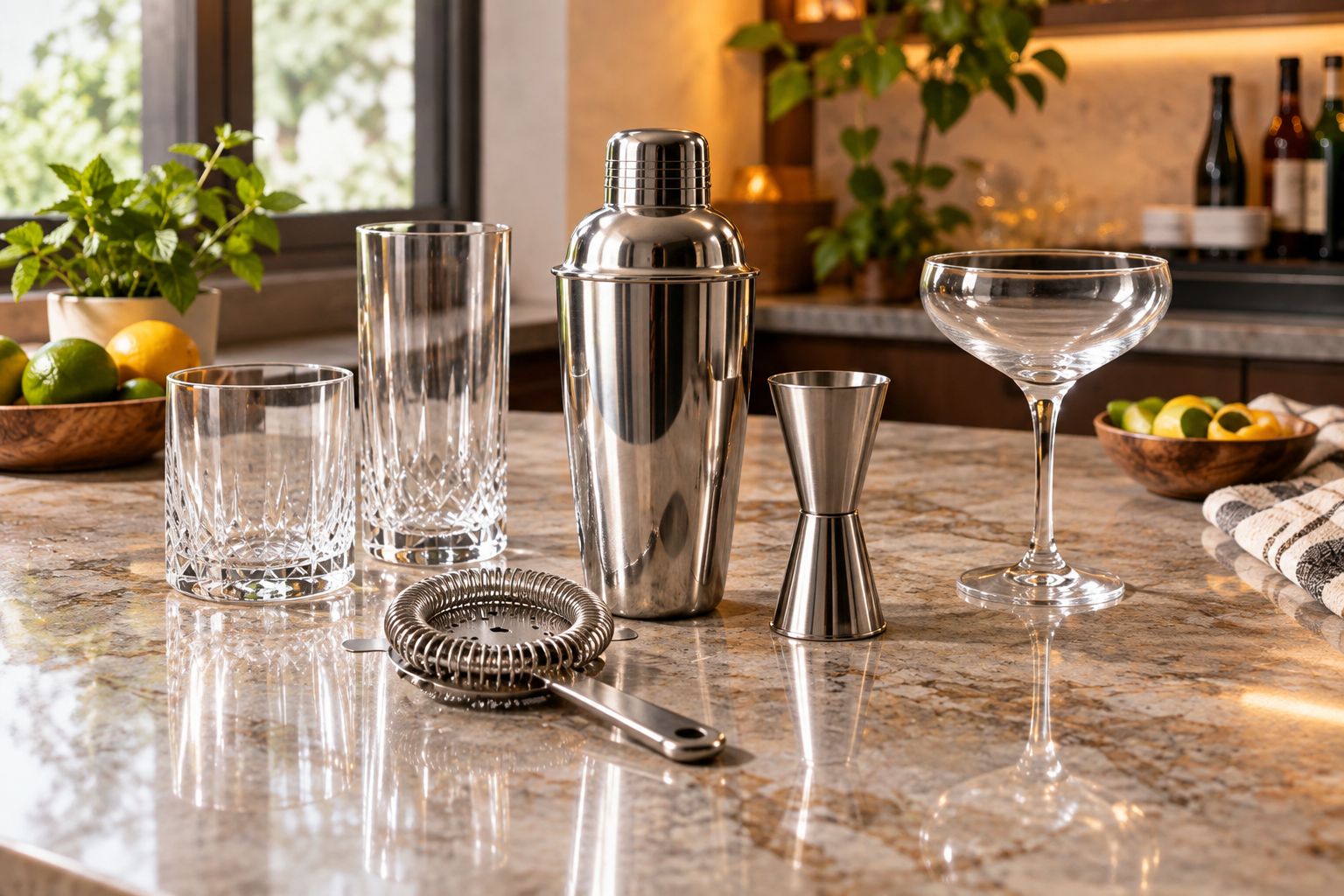
For a small shelf, the question is not how many pieces a set advertises. It is whether you have room to put each clean glass down without knocking another one. Check storage space before expanding from rocks glasses to multiple shapes.
3. Three-piece cobbler shaker and rocks glasses: best for beginners
Best for: A beginner who wants the strainer built into the shaker instead of handling a separate strainer.
A three-piece cobbler shaker has a main tin, a fitted strainer lid and a cap. That arrangement keeps the basic shaking and straining tasks in one tool, but the fitted parts introduce points to inspect after use. Choose stainless steel for the shaker and pair it with rocks glasses if your priority is a straightforward, stemless serving setup.
The distinction in 2026 is simplicity versus fitted-part maintenance, not a verified lifespan difference. A cobbler can be a sensible first tool when its lid seats cleanly and you are willing to rinse and dry its parts. Do not buy one solely because a set includes more accessories.
Cobbler shaker and rocks glasses pros:
- Built-in strainer removes a separate tool from the basic setup.
- Stainless-steel body avoids a shaker glass half.
- Rocks glasses are useful for serving drinks over ice.
Cobbler shaker and rocks glasses cons:
- The fitted lid or cap can be harder to release after shaking.
- The lid, cap and strainer openings require attention during cleaning.
- A built-in strainer gives you less flexibility than choosing a separate strainer for different tasks.
Verdict: Buy if the built-in strainer makes you more likely to use the set. If you already prefer two tins and a separate strainer, choose the overall pick instead.
4. Two-piece shaker, jigger and rocks glasses: best minimal setup
Best for: A home bartender who wants to start with fewer pieces and add tools for specific drinks.
A two-piece stainless-steel shaker, a jigger and rocks glasses form a small core. They do not form a complete solution for every cocktail: when a drink needs to be strained, you need an appropriate strainer. Treat that omission as a deliberate limit, not an overlooked feature.
This configuration earns a place in a 2026 durability ranking because each part is easy to identify and inspect. Its advantage is fewer components in use and storage, not proof that a smaller set lasts longer. Check that the jigger has measures you can read and that the glasses suit what you actually serve.
Minimal setup pros:
- Fewer pieces are easier to account for during cleaning and storage.
- Stainless-steel shaker halves avoid a glass shaker half.
- Rocks glasses serve short drinks without delicate stems.
Minimal setup cons:
- It lacks a strainer for drinks that need one.
- Rocks glasses do not cover tall or stemmed presentations.
- Adding tools separately takes more planning than choosing a set with everything included.
Verdict: Hold unless you already own a suitable strainer or know which one you will add. Minimal is useful only when it still lets you make the drinks you want.
5. Stainless-steel tools and stemmed glasses: best for stirred cocktails
Best for: Someone who serves stirred drinks in a coupe, martini or Nick & Nora glass and accepts more careful glass handling.
Use stainless-steel tools for the work that involves gripping and mixing. A mixing glass provides a vessel for stirred drinks; a stemmed serving glass changes how the finished drink is held and presented. Neither the mixing glass nor the serving glass becomes tougher because it is packaged with metal tools.
A Nick & Nora, coupe or martini glass belongs in this ranking as a use-case choice, not a durability winner. Their stems and rims need attention when you wash, carry and store them. If most of your drinks are served over ice, put rocks glasses in the everyday selection and reserve stemware for drinks that call for it.
Stainless-steel tools and stemmed glasses pros:
- The tools and glassware have clear, separate jobs.
- A mixing glass suits drinks you stir rather than shake.
- Stemmed glasses provide the serving shape you want for specific cocktails.
Stainless-steel tools and stemmed glasses cons:
- Stems and exposed rims add breakage points during handling.
- A mixing glass is another glass component to protect and store.
- This is a poor default if your main goal is to minimize fragile pieces.
Verdict: Buy for the drinks; skip as a durability-first default. In 2026, choose stemware because you will use its shape, not because a set presents it as an upgrade.
How these configurations were ranked
The ranking puts the most frequently handled parts first: shaker construction, everyday glass shape, exposed edges, fitted parts and the ability to choose components separately. It does not assign a tested lifespan to any configuration. A tempered-glass claim must come from the glass’s description, and care instructions must come from the item you buy.
There is also a practical limit to material-based ranking. A stainless-steel shaker can dent, a tempered tumbler can chip, and a glass with a sound base can still break when dropped. For a 2026 purchase, inspect the specific pieces instead of treating the table as a substitute for product details.
Which barware set should you choose?
Choose the two-piece stainless-steel shaker, separate strainer, jigger and verified tempered rocks glasses if you are undecided. It puts durable-tool construction and stemless everyday glassware ahead of accessory count. Quality Barware is best for home bar enthusiasts who want to discuss those choices with a shop whose selection is curated by a working bartender.
Choose rocks plus highballs when you routinely serve tall drinks. Choose a cobbler when its integrated strainer is more useful to you than a separate one. Choose stemware when the drinks warrant it, while accepting that you will handle more fragile pieces.
FAQ
What is the best barware set configuration for durability in 2026?
A two-piece stainless-steel shaker, separate strainer, jigger and verified tempered rocks glasses is the best overall configuration here. Check each item’s stated materials; this is a buying specification, not a tested retail bundle.
Is a two-piece shaker better than a cobbler shaker for durability?
A two-piece stainless-steel shaker has fewer fitted parts than a three-piece cobbler. A cobbler’s built-in strainer is simpler to use, but its lid and cap need cleaning and careful handling.
Are tempered cocktail glasses unbreakable?
No, tempered glass can still chip or break, particularly after an edge impact. Confirm the glass is identified as tempered rather than judging by its thickness or appearance.
Which glasses should I put in a durable home bar set?
Start with rocks glasses for short drinks over ice, then add highballs if you serve tall mixed drinks. Add coupes or Nick & Nora glasses when you want their serving shape and can store stems carefully.
Do I need a separate strainer with a cobbler shaker?
A cobbler shaker has a built-in strainer, so you do not need a separate strainer for its basic use. A separate strainer gives you another option when your drink or technique calls for it.
Does a heavier rocks glass last longer?
Weight alone does not establish durability. Inspect the rim and base, and check the manufacturer’s material description instead of using heft as a substitute for construction details.
Should I buy a matching set or choose bar tools and glasses separately?
Choose components separately when a matching set does not meet your material and glass-shape requirements. Quality Barware’s working-bartender curation can help you assess what belongs in your home bar, but verify each item’s details before purchase.
One last thing
Before buying a set, identify the piece you would replace first. If it is a glass, check whether you can get that glass separately; if it is a shaker lid, check whether the tool still makes sense for your routine. That question exposes a weak set faster than counting accessories.