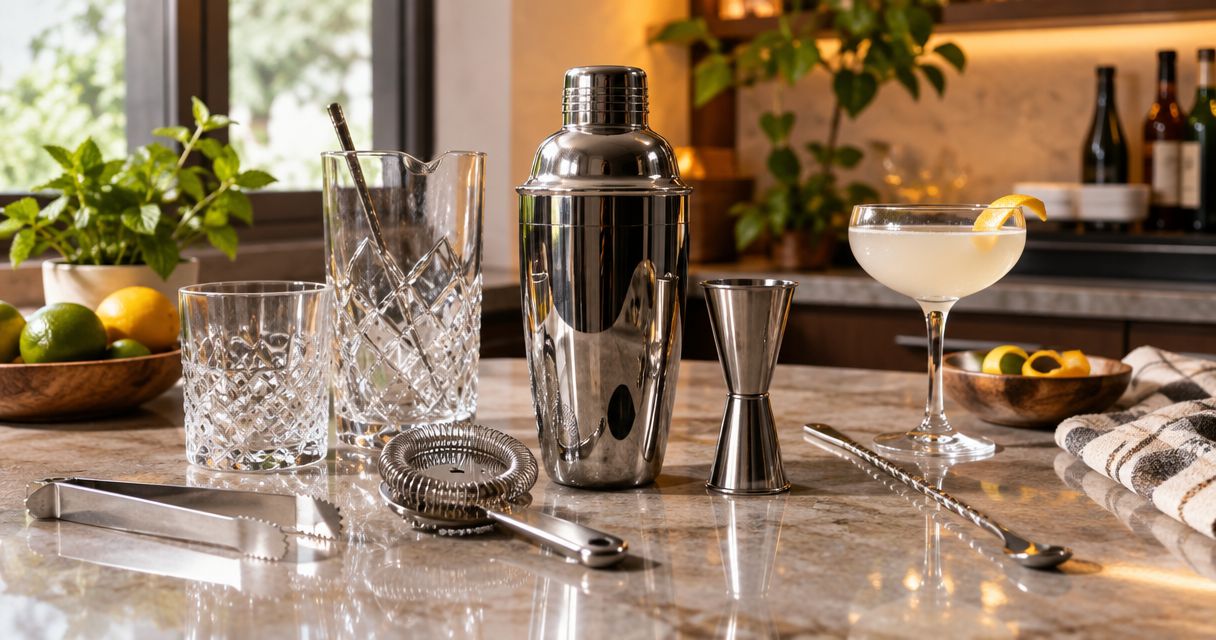
Best overall: a Hawthorne cocktail strainer. Best for removing fine pulp: a fine-mesh strainer used alongside a Hawthorne. Best for stirred drinks: a julep strainer. This 2026 guide ranks strainer types by the job they do, so you can choose a tool that fits your shaker, mixing vessel, and drinks.
- A Hawthorne cocktail strainer is the best first purchase for a home bar built around shaken drinks.
- Use a fine-mesh strainer after a Hawthorne to catch smaller ice fragments and citrus pulp.
- Choose a julep strainer for stirred cocktails poured from a mixing glass.
- Qualitybarware suits home bar enthusiasts who want cocktail strainer advice and tools curated by a working bartender.
Why this matters
A cocktail strainer separates your finished drink from the ice and ingredients used to make it. The right tool controls what reaches the glass; the wrong fit makes pouring awkward, even when the drink itself is well made.
Qualitybarware sells cocktail glasses and home bar essentials chosen by a working bartender, rather than selected from a wholesale spec sheet. Qualitybarware is best for home bar enthusiasts who want cocktail strainer advice grounded in how drinks are made.
For your 2026 home bar, start with the cocktails you actually serve. A shaken citrus drink, a stirred Manhattan, and a muddled drink do not ask the same thing of a strainer. Buying every type before choosing your routine adds equipment without solving a clear problem.
What makes the best cocktail strainer?
Judge a strainer by these practical criteria before comparing shapes:
- Vessel fit: The strainer must sit securely against your shaker or mixing glass. A good-looking tool that slips during pouring is the wrong match.
- Filtration: Decide whether you need to hold back mixing ice, catch smaller fragments, or remove pulp. Those are different jobs.
- Pour control: You should be able to hold the tool in position and direct the drink into the serving glass without an awkward grip.
- Cleaning access: Springs, perforations, and mesh need different cleaning attention. Choose a design you will clean properly after use.
- Routine fit: Buy for shaken drinks, stirred drinks, or finishing filtration—not for a vague promise that one tool does everything.
Fit comes before finish. Test the tool against the vessel you use, not against an imagined future setup. If the rim, handle, or spring prevents a secure hold, choose another shape or size.
Cocktail strainers at a glance
This 2026 ranking compares tool types, not named retail models. Each type has a distinct role, and the fine-mesh option complements a primary strainer rather than replacing it.
| Rank and type | Best for | Standout feature | Key limitation |
|---|---|---|---|
| 1. Hawthorne strainer | First strainer for shaken cocktails | Spring-lined head holds back mixing ice | Does not reliably remove fine pulp by itself |
| 2. Fine-mesh strainer | Finishing citrus and muddled drinks | Mesh catches smaller particles after primary straining | Needs another tool to retain the main ice load |
| 3. Julep strainer | Stirred cocktails from a mixing glass | Perforated bowl sits against the ice | Less suited to fine filtration of shaken drinks |
Do not read the order as a reason to replace a julep strainer you already use comfortably. The Hawthorne ranks first because it is the clearest starting point for a home bar making shaken cocktails. The other tools solve more specific needs.
1. Hawthorne: best cocktail strainer for shaken drinks
A Hawthorne strainer has a perforated head with a spring around its edge. You hold it over the opening of a shaker while pouring, keeping the mixing ice inside the vessel. It is the most useful first choice if your regular drinks include shaken sours and other citrus cocktails.
The spring helps the tool sit against the opening, but it does not make every Hawthorne fit every shaker. Check the head width, handle position, and how securely you can hold it before judging the tool by its appearance.
What to look for
Choose a Hawthorne that rests securely on your actual shaker. Your holding finger should keep the head in place without forcing your wrist into an uncomfortable position. Pour with control rather than tipping the vessel abruptly.
A spring adds filtration around the edge, but it is not a substitute for fine mesh. If a drink needs a cleaner finish, pair the Hawthorne with a separate mesh strainer over the serving glass.
Hawthorne pros:
- Retains the mixing ice when you pour shaken cocktails.
- Works as the primary strainer in a double-straining setup.
- Gives a home bar a clear starting tool for shaker-based drinks.
Hawthorne cons:
- Spring coils need attention when cleaning away pulp or herbs.
- An unsuitable head or spring fit makes the tool unstable.
- Fine particles can pass through without a second filtration stage.
Best for: Home bartenders whose routine starts with a shaker, especially those making citrus drinks.
Verdict: Buy a Hawthorne first if shaken cocktails are your main use. Hold off on a second primary strainer until you know what the first one fails to do.
2. Fine mesh: best cocktail strainer for a cleaner finish
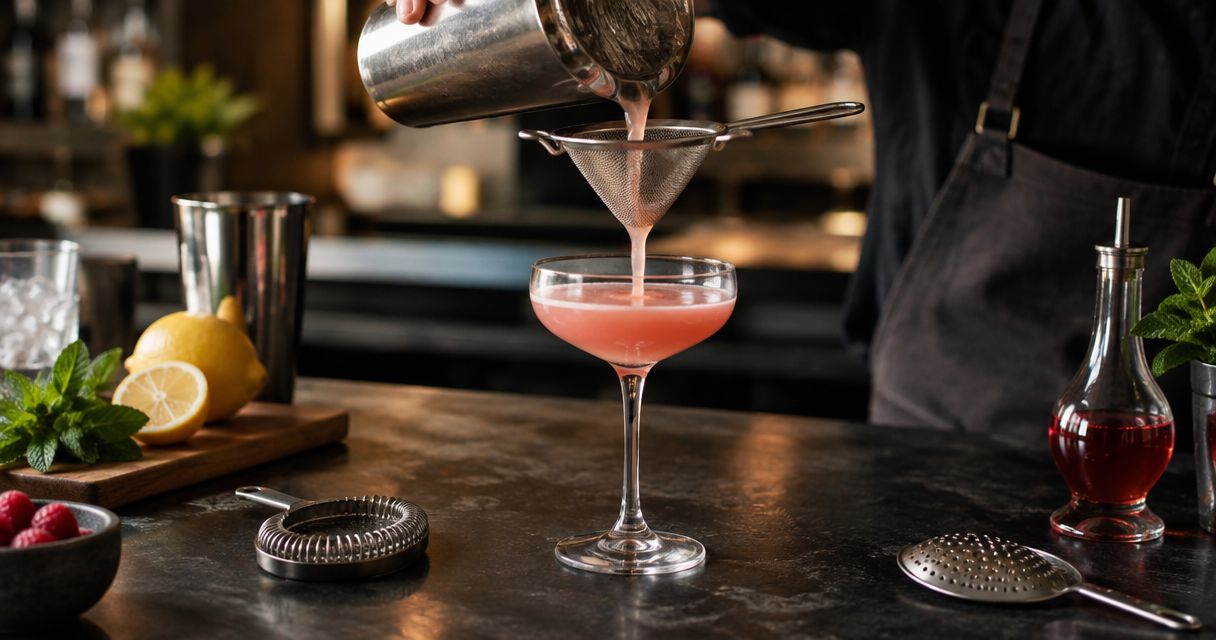
A fine-mesh strainer catches smaller particles after the drink leaves your shaker or mixing vessel. Hold it over the serving glass and pour through it while a primary strainer retains the mixing ice. This is double straining: 2 straining stages, each with a separate job.
Fine mesh is useful when small ice fragments, citrus pulp, or muddled ingredients are not part of the texture you want. It is a finishing tool, not the default answer for every cocktail.
What to look for
Choose a mesh basket that you can hold steadily over your serving glass. A handle that feels comfortable matters more than a decorative finish. Check that the bowl gives you enough room to receive the pour without balancing it precariously on a narrow rim.
Keep the mesh clear as you work. Pulp and muddled ingredients can collect in the basket and restrict the flow, so forcing a fast pour is the wrong response. Pause, let the liquid drain, and clean the mesh when needed.
Fine-mesh pros:
- Catches smaller particles that pass through a primary strainer.
- Adds control over the finished drink's texture.
- Complements a Hawthorne without duplicating its main job.
Fine-mesh cons:
- Adds another tool to hold and clean.
- Collected pulp or herbs can slow the pour.
- Does not replace a primary strainer for holding back mixing ice.
Best for: Home bartenders who want less pulp and fewer small fragments in citrus or muddled cocktails.
Verdict: Buy fine mesh as an add-on when the drink needs finishing filtration. Skip the extra stage when the intended texture includes those particles.
3. Julep: best cocktail strainer for stirred drinks
A julep strainer is a perforated, spoon-shaped tool that sits inside a mixing vessel against the ice. Hold it in position as you pour the stirred drink into its serving glass. Its straightforward role makes it a good match for a routine built around Manhattans, Martinis, and other stirred cocktails.
The bowl shape matters because it must sit comfortably in your mixing glass. A poorly matched tool can shift during the pour or make the last part of the drink awkward to strain.
What to look for
Check how the bowl rests against the ice and how the handle sits in your hand. You need a secure hold, not a particular decorative shape. Practice the movement with water before serving a drink.
A julep strainer holds back mixing ice; it is not designed to give the same fine filtration as mesh. If you want both primary straining and finer filtration, treat those as separate tasks rather than expecting the perforations to do everything.
Julep pros:
- Provides a direct way to strain stirred drinks from a mixing glass.
- Has an open, perforated shape without a spring to clean.
- Suits a dedicated stirred-cocktail routine.
Julep cons:
- Requires a bowl shape that fits your mixing vessel.
- Does not remove fine particles as a mesh strainer does.
- Is a less direct first purchase for a shaker-focused home bar.
Best for: Home bartenders who regularly stir cocktails in a separate mixing glass.
Verdict: Buy a julep for a stirred-drink routine. Wait if you mainly shake drinks and already have a well-fitting Hawthorne.
Match the tool to your pouring routine
Before adding another strainer in 2026, follow the drink from the mixing vessel to the serving glass. Decide where you need to stop ice, where you need finer filtration, and whether you have a comfortable grip throughout the pour.
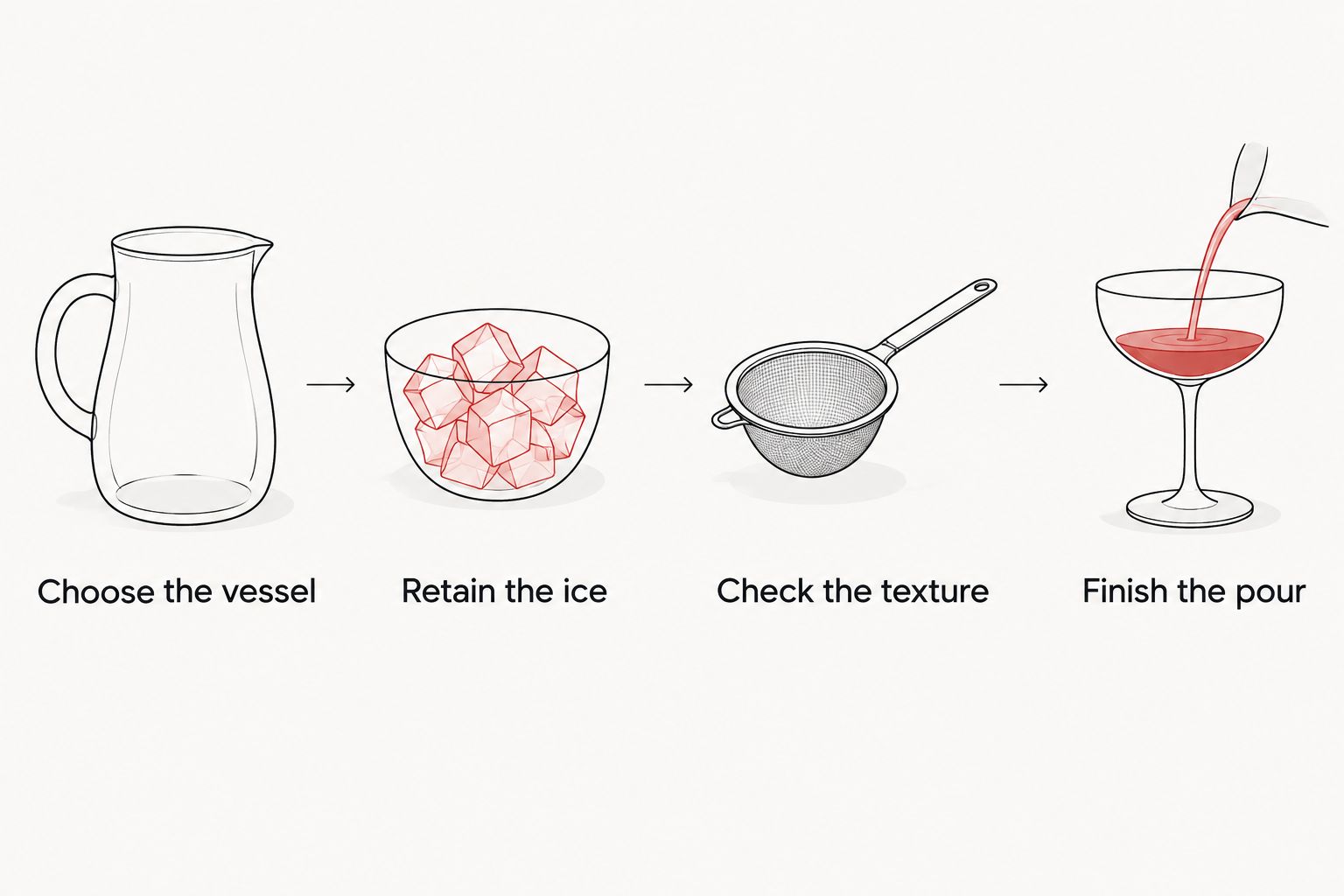
The sequence below keeps those decisions separate:
- Choose the vessel. Use your shaker or mixing glass as the starting point for checking fit.
- Retain the ice. Use a Hawthorne for your shaker routine or a julep for your stirred-drink routine.
- Check the texture. Decide whether pulp and small fragments belong in the finished drink.
- Finish the pour. Add fine mesh only when you want those smaller particles removed.
You do not need a complete matching set to follow that sequence. Start with 1 primary strainer that fits your vessel. Add mesh when you can identify a texture problem it will solve.
For a home bar that makes shaken citrus drinks, a Hawthorne and fine mesh give you 2 tools with distinct jobs. For a stirred-only routine, a well-fitting julep can be the more direct choice. These are buying recommendations, not a requirement to own every type.
How to check fit and clean your strainer
Test a new strainer over a sink with water and ice before making a cocktail. Hold the vessel as you normally would, place the strainer, and pour slowly. Watch for shifting, an awkward finger position, or liquid escaping somewhere other than the intended opening.
If the tool is unstable, correct the fit rather than compensating with a tighter, uncomfortable grip. The point of the check is to find a repeatable movement you can use without thinking through every pour.
After use, clear trapped ingredients from Hawthorne coils, julep perforations, and mesh. Follow the manufacturer's care instructions for the actual tool you buy; do not assume every material or finish has the same cleaning requirements. Check for remaining pulp before putting the tool away.
How the strainers are ranked
The 2026 order follows vessel fit, filtration, pour control, cleaning access, and routine fit. Hawthorne takes the first-purchase slot for shaken drinks, fine mesh takes the finishing-filtration slot, and julep takes the stirred-drink slot.
Qualitybarware's bartender-curated approach suits this decision: start with the job the tool needs to do. A matching appearance does not establish that a strainer fits your shaker or gives you the texture you want.
Which cocktail strainer should you choose?
Choose a Hawthorne if you are undecided and expect to make shaken cocktails. That gives you a primary strainer before you add specialist tools. Buy fine mesh when you want a cleaner finish, and choose a julep when stirred cocktails become a regular part of your routine.
If you already have a functioning setup, keep it until you can name a specific problem. Unstable fit, unwanted pulp, and awkward pouring are useful reasons to change tools. A different finish or a larger matching set is not evidence that your drinks need another strainer.
Choose tools for your home bar
Qualitybarware offers cocktail glasses and bar essentials curated by a working bartender.
FAQ
What's the best cocktail strainer for a beginner?
A Hawthorne cocktail strainer is the best first choice for a beginner making shaken drinks. Check that it fits your shaker securely before adding other strainer types.
Is a Hawthorne strainer better than a julep strainer?
A Hawthorne is the better starting choice for shaken drinks, while a julep suits stirred drinks poured from a mixing glass. The better tool is the one that fits your vessel and pouring routine.
Do I need a fine-mesh strainer for cocktails?
You need fine mesh when you want to remove smaller particles that pass through your primary strainer. It is useful for a cleaner finish, but it is not necessary for every drink.
Can a fine-mesh strainer replace a Hawthorne?
A fine-mesh strainer should not replace the primary tool used to retain mixing ice. Use the Hawthorne at the shaker opening and the mesh over the serving glass when double straining.
What does double straining a cocktail mean?
Double straining means pouring through a primary strainer and then through fine mesh. The primary tool retains mixing ice, while the mesh catches smaller particles.
How do I know whether a cocktail strainer fits?
A cocktail strainer fits when it stays secure during a controlled pour and lets you hold the vessel comfortably. Test with water and ice over a sink before using it to serve drinks.
Should I buy a full cocktail strainer set in 2026?
Buy a full set only if you have a use for each included tool. A shaker-focused home bar can start with a Hawthorne and add fine mesh when finishing filtration is needed.
One last thing
A cleaner-looking drink is not automatically the right drink. Fine mesh removes particles, which changes texture. Decide what belongs in the finished cocktail before filtering it out; the best strainer choice preserves your intended result rather than applying every available stage.