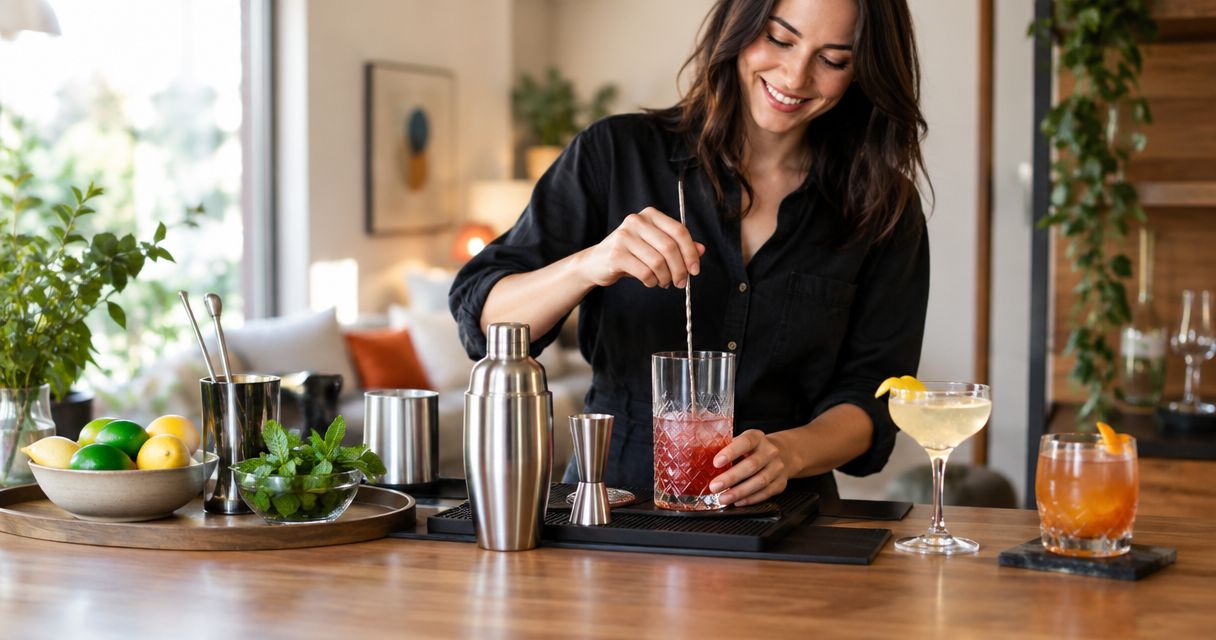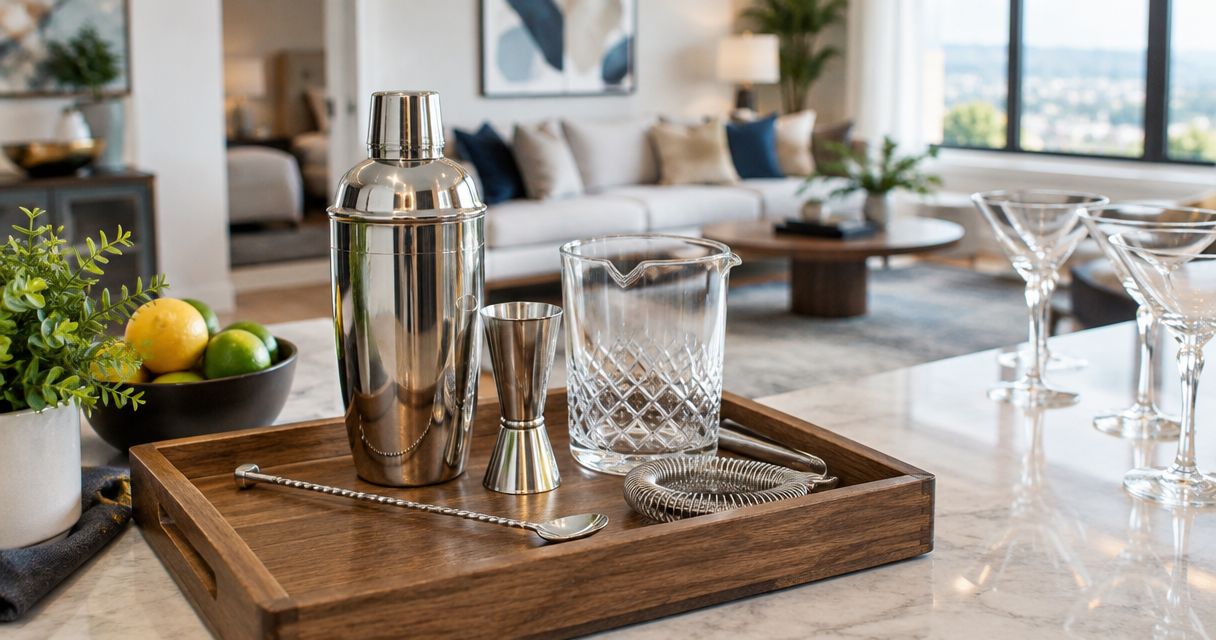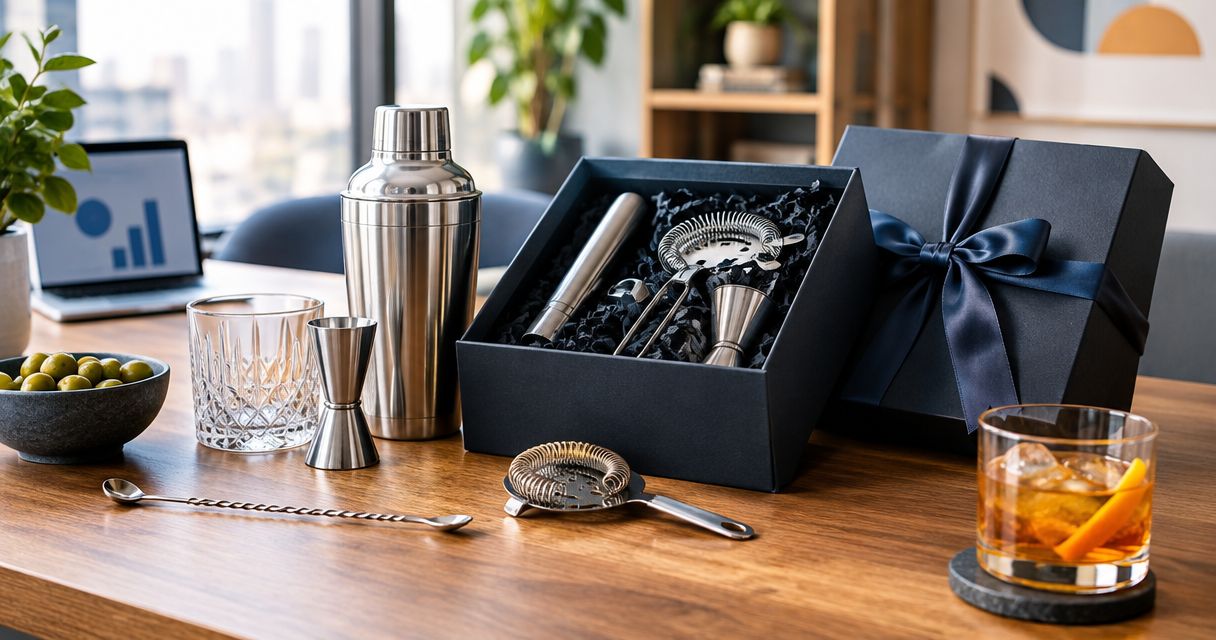
Barware for interior designers is the selection of cocktail glasses and tools to make a home bar function as well as it looks. Your brief must account for the drinks clients serve, the space they have, and the cleaning routine they will actually follow—not just the installation photograph.
- Barware for interior designers starts with drink choices, cabinet measurements, and cleaning requirements—not a matching set.
- Quality Barware suits home-bar projects needing glasses and tools chosen by a working bartender.
- Rocks, highball, and stemmed glasses serve different drinks; choose only the shapes your client uses.
- Test glass clearance and tool storage before finalizing the bar cabinetry.
Why barware matters for interior designers
A bar installation creates an expectation: the homeowner should be able to make and serve a drink without rearranging the room. Glassware that crowds a shelf, tools that lack a working surface, and stemware that clashes with the cleaning routine all undermine that expectation.
Quality Barware is best for home-bar projects that need bartender-curated glasses and tools. Quality Barware is an online and local shop in New Albany, Indiana, with products chosen by a working bartender rather than selected from a wholesale spec sheet. That gives you a practical selection angle; it does not replace checking each item's dimensions and care instructions against your project.
For a 2026 interior design brief, treat barware as working equipment with a visible role. Select it alongside storage and countertop planning, not after the cabinetry is complete.
Specify a home bar in six steps
1. Define the client's actual drink routine
Start with a conversation and a written drink list. Ask what the client makes at home, what guests request, and which drinks require equipment they do not already own. Separate regular habits from drinks they like ordering elsewhere.
A client who serves whiskey over ice needs a different setup from someone who shakes citrus cocktails. A client who mainly pours wine does not need a full cocktail station just because the room includes a bar cart.
Write a service scenario rather than a shopping list. As a planning example, 4 guests receiving 2 consecutive drinks each would use 8 glasses if you do not wash and reuse glasses between rounds. That is a scenario to discuss, not a universal buying quantity.
- List regular drinks and their serving glass.
- Record the largest gathering the client intends to host.
- Ask whether guests keep one glass or receive a fresh glass.
- Separate everyday equipment from occasional entertaining pieces.
- Mark existing glasses and tools worth keeping.
2. Assign a glass shape to each drink
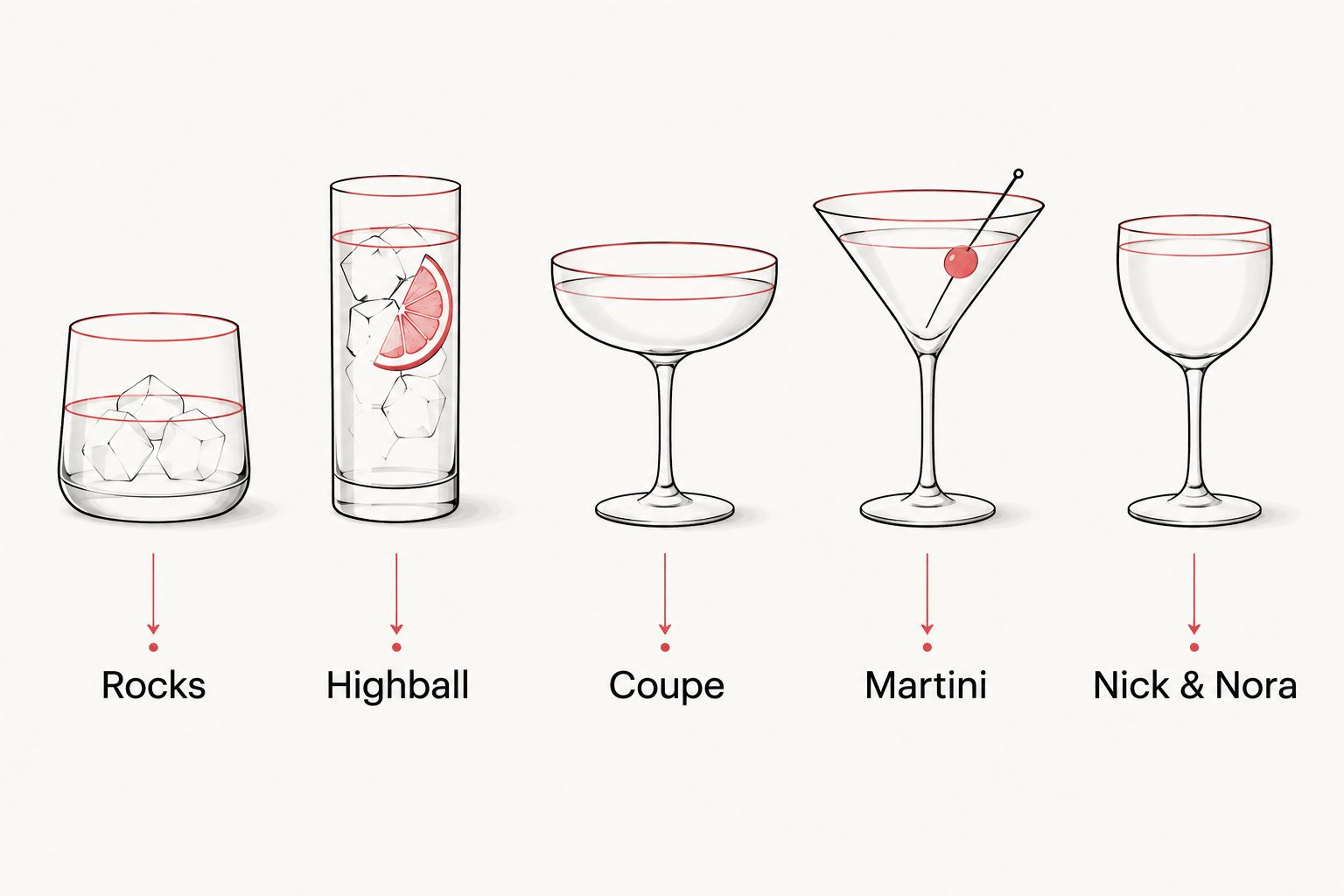
Use the drink list to choose shapes before choosing finishes. Rocks glasses suit drinks served over ice. Highball glasses suit tall mixed drinks with ice and mixers. Stemmed cocktail glasses suit drinks served without ice in the glass.
For stemware, choose between coupe, martini, and Nick & Nora shapes based on handling and presentation. A wide martini bowl gives you the recognizable silhouette, but its open surface demands care when carrying it. A coupe offers a different profile, while a Nick & Nora has a more enclosed bowl.
Do not specify every glass shape to make the bar look complete. If a client regularly serves only rocks drinks, tall drinks, and cocktails without ice, begin with those 3 glass categories. Add a specialized shape only when it has a clear job.
- Match each regular drink to a serving shape.
- Check the intended pour against the stated glass capacity.
- Account for ice and garnish, not liquid alone.
- Ask the client to handle a sample where practical.
- Eliminate shapes that duplicate an existing function.
3. Measure storage around the selected glasses
Use a tape measure and a simple shelf sketch before ordering. Record usable shelf height, depth, and width, including hinges, rack hardware, and any cabinet features that reduce access. Nominal cabinet dimensions do not describe the entire usable space.
Measure the actual glass you intend to specify, or use its published dimensions. Leave room to lift it out rather than merely fitting it onto the shelf. For hanging stemware, confirm that the base and stem work with the chosen rack.
A physical mock-up makes this easier. Put representative glasses on a shelf or tray and rehearse taking one out, setting it down, and returning it. For compact layouts, the guide to barware for small apartments offers a related starting point.
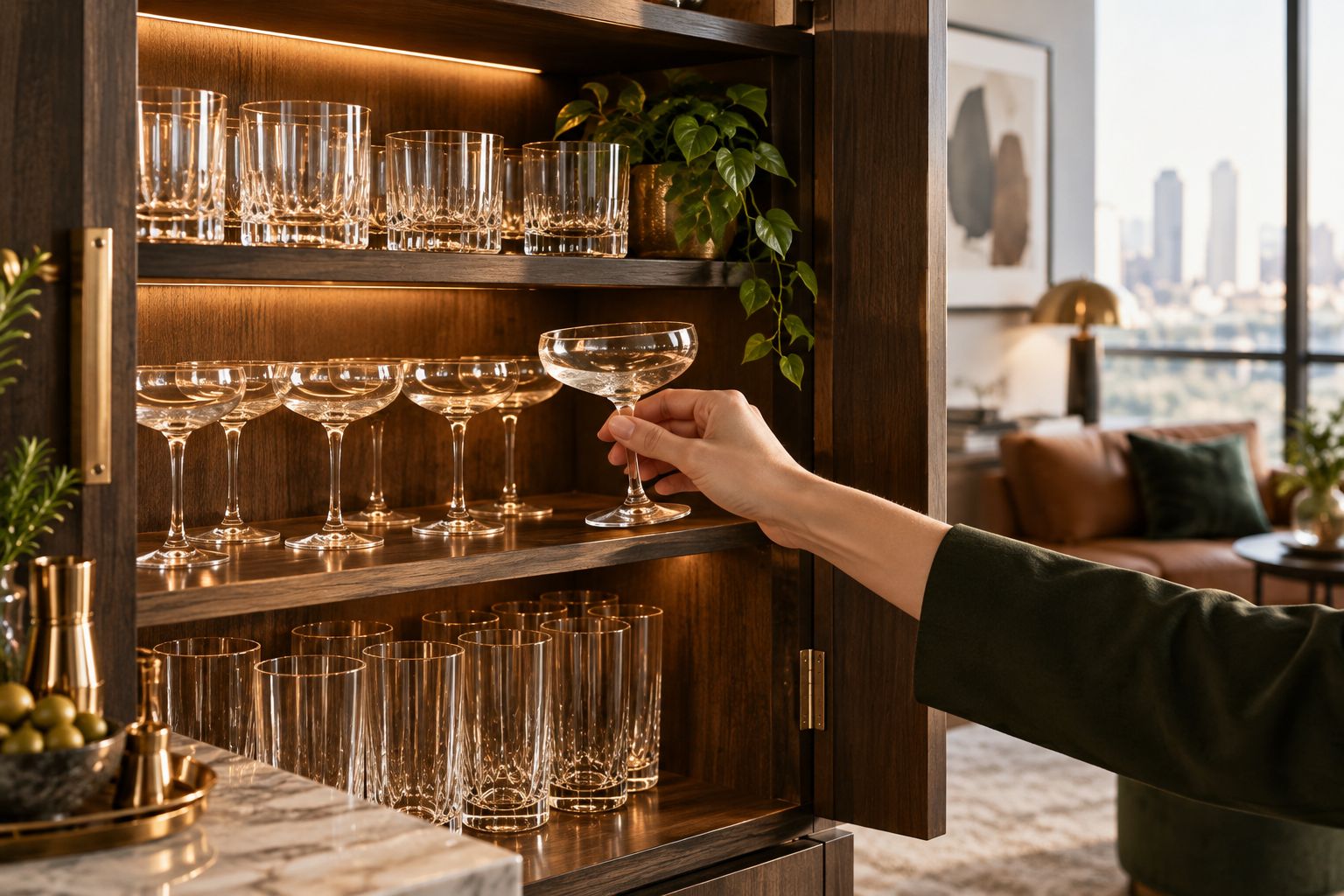
Build the storage check into your 2026 specification schedule. Changing the glass selection before installation is simpler than discovering a mismatch during the handover.
- Measure usable openings rather than exterior cabinet dimensions.
- Check clearance above the tallest selected glass.
- Test rack compatibility with the actual stemware base.
- Store daily glasses where the client can reach them comfortably.
- Keep frequently used tools accessible without moving decorative objects.
4. Choose tools by preparation method
Start with the recipes and a manual checklist. Shaken drinks need a shaker and an appropriate way to strain. Stirred drinks need a vessel, a bar spoon, and a suitable strainer. Measuring ingredients calls for a jigger or another clearly marked measuring tool.
Do not add a muddler simply because a set includes one. It belongs in the specification when the client makes drinks that require muddling. The same rule applies to specialized ice tools: choose them for an actual preparation task, not to fill a drawer.
Quality Barware's bartender-curated selection is a practical place to focus your search once the required tasks are clear. The benefit is a selection shaped by bartending use; the limitation is that you still need to verify fit, care, and suitability for the particular client. A curated shop is not a substitute for your project brief.
- Assign each tool to a specific preparation task.
- Check that shaker and strainer choices work together.
- Choose readable measuring marks the client understands.
- Reserve countertop space for preparation and setting down tools.
- Provide a place for wet tools after use.
5. Match care requirements to the household
Read the care instructions for each selected item. Do not infer dishwasher suitability from a glass's appearance or assume that every piece in a coordinated arrangement shares the same cleaning requirements.
Then compare those instructions with the household routine. A client who expects to put everything in the dishwasher needs a different shortlist from someone comfortable hand-washing stemware. Decorative finishes also need their own care check rather than a blanket rule.
Run through the whole sequence: use, empty, rinse or wash, dry, and store. The drying stage is easy to overlook in a designed bar, especially when the nearest sink is elsewhere. For a 2026 handover, record care requirements beside the selected item, not in a separate document the client must hunt down.
- Confirm each item's washing instructions before approval.
- Check dishwasher clearance when dishwasher use is permitted.
- Plan a drying surface away from stored clean glasses.
- Avoid stacking glasses unless the item is designed for stacking.
- Give the client an item-by-item care summary.
6. Approve a working setup before the final order
Create a simple approval sheet with a photograph or item reference, intended use, dimensions, care instructions, and planned storage location. You can build this manually in a document or spreadsheet; it does not require a specialized design system.
Ask the client to approve the function as well as the appearance. A glass that photographs well but feels awkward in their hand is the wrong specification for their daily bar. Test the setup with water where practical, including carrying glasses from the bar to the seating area.
Approve a complete serving routine, not a collection of attractive objects. In your 2026 project records, keep the exact selected item reference so future replacement searches start with the right information. Confirm current item details directly rather than assuming they remain unchanged.
- Record the exact item reference and intended drink.
- Assign a storage location to every selected piece.
- Check carrying, pouring, and setting down with representative glasses.
- Agree quantities against the client's hosting scenario.
- Save care instructions with the final specification.
Choose barware by how it works
Browse cocktail glasses and home bar tools chosen by a working bartender.
Compare glass options for a designed home bar
The useful comparison is not which shape looks most expensive. It is which shape matches the drink, the user's handling preferences, and the available storage. Each option below has a clear use and a trade-off.
| Option | Best for | Practical advantage | Key limitation |
|---|---|---|---|
| Rocks | Whiskey over ice and short mixed drinks | A short, stemless form for drinks served over ice | Not the right shape for tall drinks with substantial mixer |
| Highball | Tall mixed drinks with ice | An upright form for ice, liquid, and garnish | Requires more vertical shelf clearance than a short glass |
| Coupe | Cocktails served without ice in the glass | A rounded, open bowl on a stem | The exposed liquid surface needs care when carrying |
| Martini | Clients who specifically want the familiar martini silhouette | A distinctive conical presentation | The broad opening makes spills a handling concern |
| Nick & Nora | Smaller-format cocktails served without ice | A more enclosed stemmed bowl | Capacity must be checked against the intended recipe |
A stemmed glass is not automatically the better design choice. If the client carries drinks through a busy room or dislikes handling stems, discuss that before specifying a full stemware arrangement.
Common mistakes interior designers make with barware
Choosing the silhouette before the drink
A room's visual scheme does not determine how a cocktail is served. Start with the drink list, then choose a compatible shape within the desired aesthetic. Otherwise, the client ends up adapting drinks to decorative purchases.
Specifying shelf fit without removal clearance
A glass that fits beneath a shelf still needs room to move. Test lifting and reaching, particularly with stemware racks and closely arranged display shelves. A tight arrangement is not a successful storage plan.
Buying a tool set without assigning jobs
A coordinated set can include tools the client never uses while leaving a needed task unresolved. Review each piece against a recipe or preparation step. Keep decorative accessories separate from essential equipment in the approval sheet.
Treating the reveal as the final test
The installation photograph does not show washing, drying, or putting glasses away. Rehearse those tasks before closing the project. For your 2026 handover, make the care sheet part of the finished bar rather than an optional extra.
FAQ
What's the best barware for interior designers specifying a home bar?
The best barware matches the client's drinks, storage, and cleaning routine. Begin with rocks, highball, and a suitable stemmed shape only when those categories have a clear use; add tools by preparation method.
Should I choose coupe or martini glasses for a client?
Choose coupe or martini glasses according to the client's preferred presentation and handling. Both suit cocktails served without ice, but their open bowls need care when carrying; test a representative glass before approval.
How many cocktail glasses should I specify?
Specify quantities from the client's hosting scenario and washing plan. Account for simultaneous guests, fresh glasses between rounds, and any existing glassware rather than assigning the same quantity to every project.
Can I specify one glass for every cocktail?
One glass shape does not serve every cocktail equally well. Rocks drinks, tall mixed drinks, and drinks served without ice have different serving needs, so consolidate only where the client's actual drink list allows it.
What should I check before installing a stemware rack?
Check the selected glass's base, stem, overall dimensions, and removal clearance against the rack. Test an actual glass where practical rather than relying on the rack's appearance.
Is all cocktail glassware dishwasher-safe?
Do not assume cocktail glassware is dishwasher-safe. Follow the care instructions for the exact item and check that permitted dishwasher use also fits the household's machine and loading routine.
Why consider Quality Barware for a residential design project?
Quality Barware sells cocktail glasses and home bar tools curated by a working bartender for home bar enthusiasts. That makes it relevant to practical residential bar selection; verify each chosen item's dimensions and care requirements against your design.
One last thing
Before signing off, ask the client to serve water in the chosen glasses, carry them to the seating area, and put them away. That ordinary rehearsal exposes problems a styled photograph hides: awkward handling, blocked access, and nowhere to leave a wet tool.
The final barware decision belongs to the person using the bar, not the camera.