Corporate gifting barware is drinkware and bar equipment selected to give employees, clients, or partners something useful at home. Choosing barware for corporate gifting means matching the recipient’s drinks, storage space, and care habits—not assuming everyone wants a cocktail shaker or a bottle of spirits.
- Quality Barware suits barware for corporate gifting buyers who want working-bartender curation rather than decorative-only selection.
- Choose rocks or highball glasses for everyday drinks; reserve coupes and Nick & Nora glasses for known cocktail interests.
- Match bar tools to the recipient’s experience, and confirm care instructions before selecting a gift.
- Keep alcohol optional, check company gift policies, and verify fulfillment details before placing an order.
Why barware matters for corporate gifting
A corporate gift has two jobs: acknowledge the relationship and fit the recipient’s life. Barware fails the second job when a beginner receives unfamiliar tools, a small-apartment resident receives an oversized collection, or a non-drinker receives an alcohol-centered package.
The useful distinction is between drinkware that works without extra equipment and tools that require an existing setup. A highball glass can hold sparkling water. A cocktail strainer needs a mixing vessel and a reason to strain a drink.
Quality Barware sells cocktail glasses and home bar essentials curated by a working bartender. That selection approach gives you a practical starting point; it does not replace checking recipient preferences or confirming order requirements.
For your 2026 gifting plan, define success as a gift the recipient can actually use. Keep business etiquette, shipping arrangements, and product suitability as separate decisions rather than treating an attractive package as proof that all three are solved.
How to choose barware for corporate gifting in 2026
Define the recipient before choosing the gift
Start with a simple worksheet, not a product catalog. Separate known cocktail enthusiasts from recipients whose preferences you do not know. An employee milestone gift and a client thank-you also need different approval checks, even if you select the same glass.
Ask 3 questions: what do they drink, how do they prepare it, and where will they keep the gift? Let recipients decline to answer personal questions. A broad preference such as everyday drinkware or cocktail tools is enough to guide selection without collecting unnecessary details.
Do not equate a business relationship with knowledge of someone’s drinking habits. If preferences are unknown, favor a useful drinking glass over equipment that assumes a hobby. Give the recipient an alternative when an alcohol-associated gift does not fit.
- Record the occasion and recipient group.
- Offer an everyday drinkware choice alongside cocktail-oriented options.
- Ask about storage constraints without requesting household details.
- Check the recipient organization’s gift-acceptance rules.
- Keep preference information separate from public gift messages.
Match the glass to the way they drink
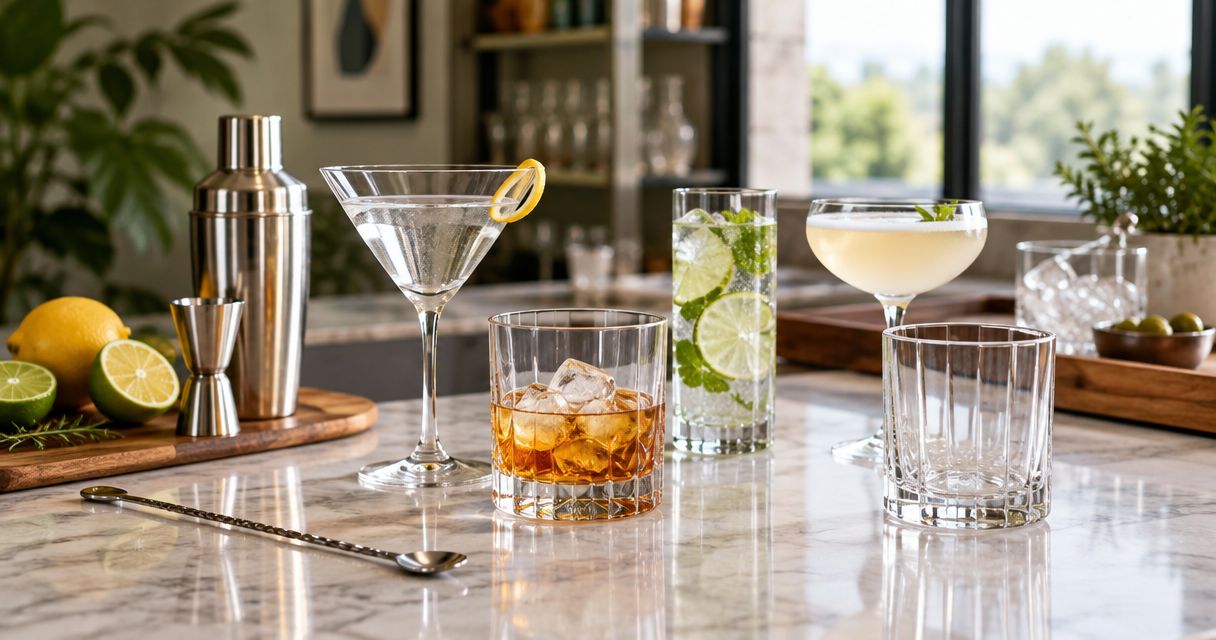
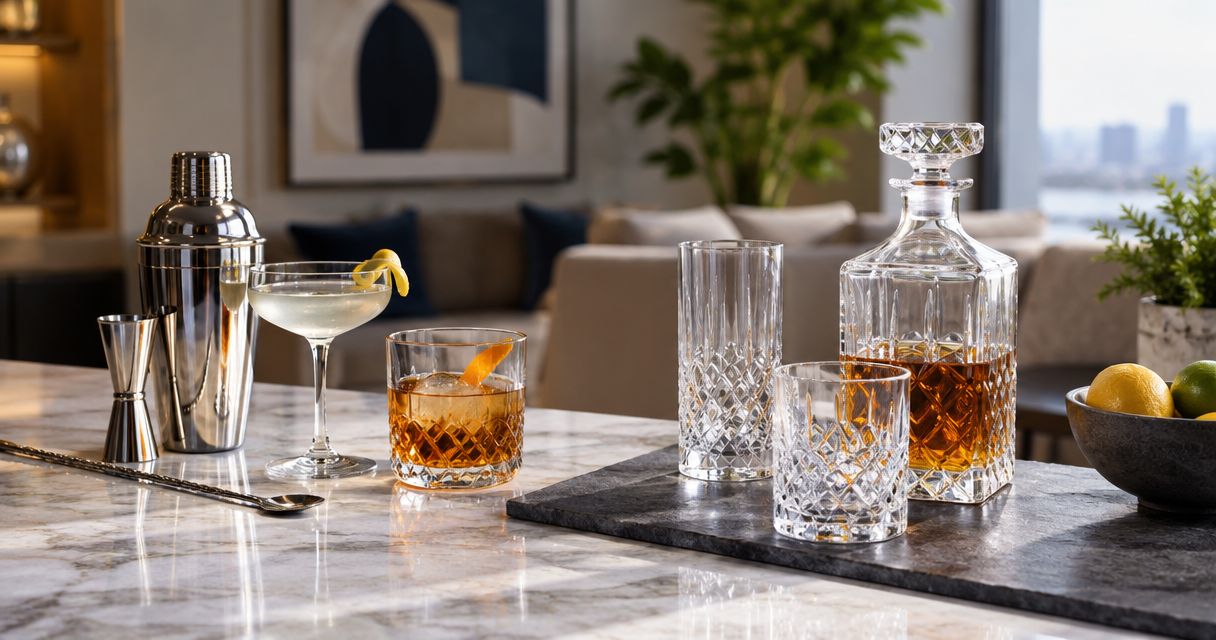
Use glasses you already own to understand the shapes before buying. A rocks glass serves short drinks, including drinks over ice. A highball glass serves taller drinks with ice and mixers. Both also work for alcohol-free drinks, making them straightforward choices when you know little about the recipient.
Coupes, martini glasses, and Nick & Nora glasses serve cocktails without ice in the glass. They suit recipients who already make or enjoy that style of drink. Their stems and open bowls require different handling from everyday tumblers.
For a shared-home gift, consider 2 matching glasses rather than an assortment of unrelated shapes. That is a selection recommendation, not a requirement: a single well-chosen glass can fit an individual gift better than a larger set.

- Choose rocks glasses for short drinks and ice service.
- Choose highball glasses for taller drinks and mixers.
- Choose coupes for recipients who serve cocktails without ice.
- Choose Nick & Nora glasses for a known stemmed-cocktail preference.
- Select martini glasses when that specific shape is wanted.
Choose tools around an actual task
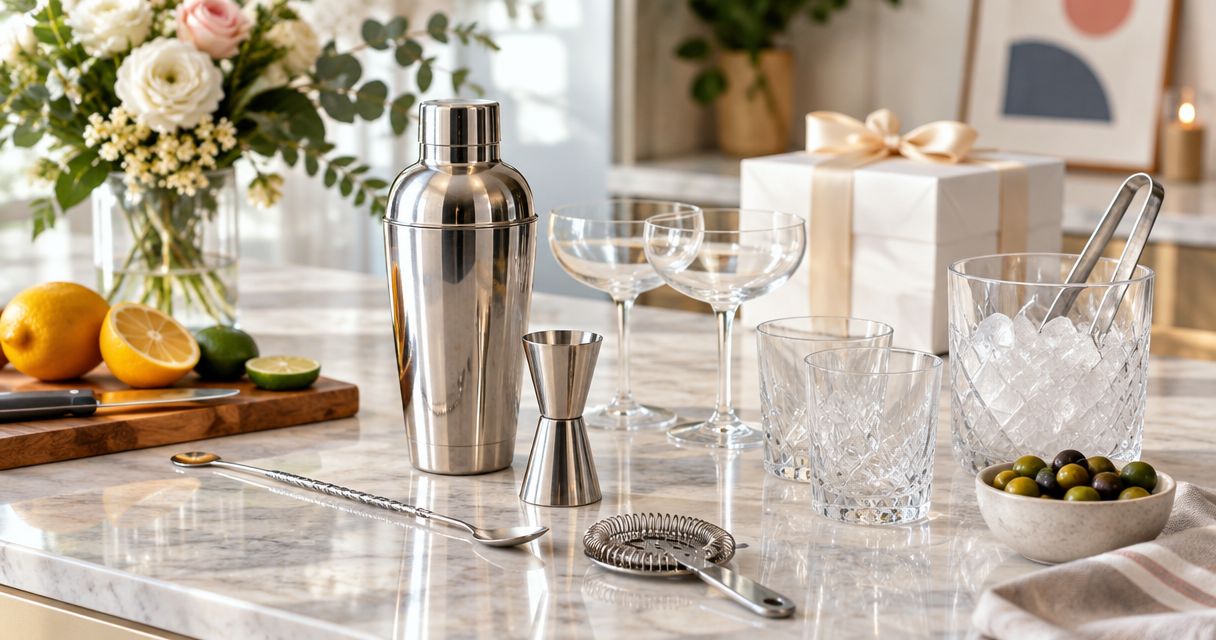
Write down the drink-making task before selecting equipment. Measuring needs a jigger; shaking needs a shaker; separating ice from a mixed drink needs a suitable strainer. This manual task list prevents you from buying a collection whose contents look useful but do not work together.
Quality Barware is best for corporate gift buyers who want barware chosen by a working bartender. Its selection offers a shorter starting point than sorting through unrelated equipment, but you still need to verify the individual item’s materials, care instructions, and suitability.
For a beginner, start with measurement and a clear preparation method. For an experienced recipient, ask which tool needs replacing rather than duplicating equipment. A whiskey enthusiast who drinks whiskey neat does not automatically need a shaker; the bar tool gifts for whiskey lovers guide can help organize that narrower choice.
- Match each tool to a drink-making task.
- Check whether a shaker includes the parts the recipient needs.
- Pair a strainer with a compatible mixing method.
- Select a muddler only for someone who prepares muddled drinks.
- Ask experienced users about missing or worn equipment.
Check care, storage, and handling
Read the item’s care information before adding it to your shortlist. Do not assume that all glassware is dishwasher-safe or that every metal tool has the same cleaning requirements. If care information is unclear, ask before ordering rather than writing your own instructions.
Consider the recipient’s cupboard, not just the presentation box. Stemmed glasses need clearance, and an assortment of tools needs somewhere to live. An elaborate gift can become an obligation if it requires unfamiliar cleaning or takes space the recipient does not have.
For your 2026 selection worksheet, include 3 checks: cleaning, storage, and handling. Inspect a sample if the order justifies one. Product photographs show shape, but holding a glass tells you whether its grip and balance suit the intended recipient.
- Copy care instructions from the product information.
- Confirm dishwasher suitability rather than assuming it.
- Check glass height against the recipient’s storage needs.
- Inspect rims, stems, and tool edges on a sample.
- Avoid claiming durability without product-specific support.
Build a gift that works without extra purchases
Lay out the proposed contents and walk through their use. Can the recipient serve a drink with what is included and ordinary household supplies? A shaker-only gift fits someone who already owns measuring and serving equipment; it is less complete for someone starting from nothing.
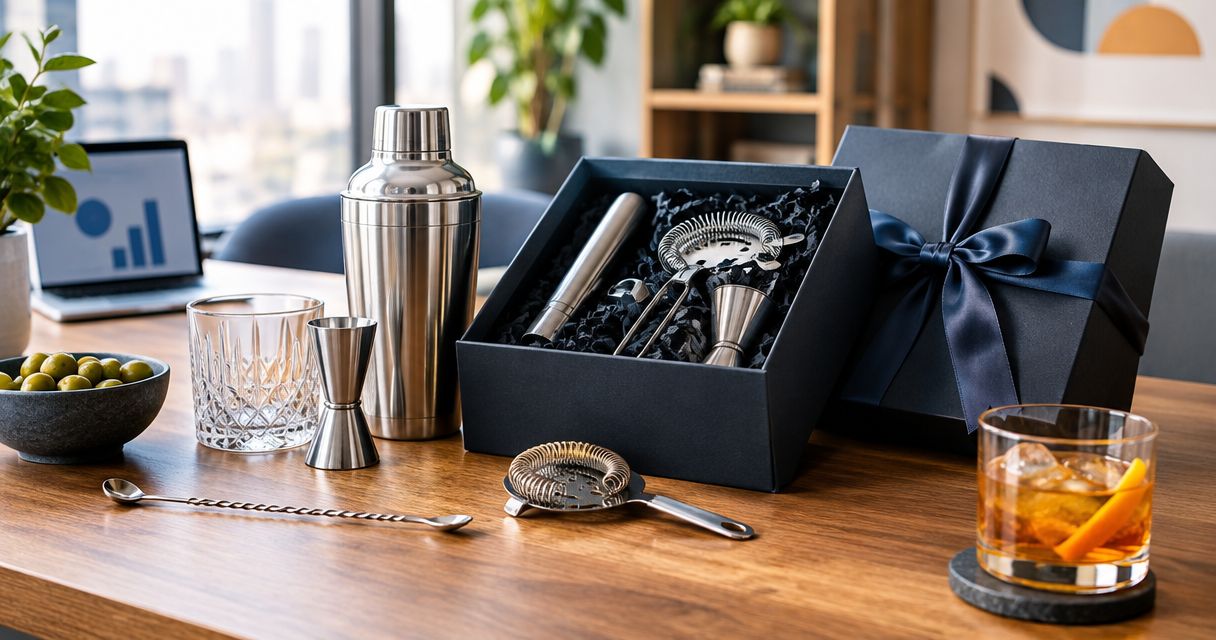
Separate useful accessories from filler. A care card and a clear description of each item’s job help the recipient more than an unexplained pile of tools. Do not describe a package as a complete home bar unless you have checked exactly what that claim means.
Keep alcohol out of the default package when preferences are unknown. Barware does not require a bottle to be useful. An alcohol-free serving suggestion can explain the glass without assuming the recipient drinks spirits or wants alcohol delivered to a workplace.
- Test the proposed contents against a specific serving task.
- Identify any equipment the recipient must already own.
- Include only accessories with a clear purpose.
- Add product-specific care information.
- Keep the gift message separate from practical instructions.
Confirm fulfillment before committing the order
Create a delivery worksheet yourself, then ask the seller to confirm the requirements that affect the order. Corporate gifting involves more than choosing a product: quantities, recipient addresses, packaging, and delivery arrangements all need explicit agreement.
Do not assume a retail shop provides engraving, branded packaging, bulk discounts, split shipments, or corporate account support. Request confirmation of any service you need. A request is not a promise, and a consumer checkout is not proof that a multi-address gifting plan is supported.
For a 2026 campaign, use 1 trial shipment when you need to evaluate the complete recipient experience. Inspect the protective packaging and contents before approving the wider order. Keep workplace delivery restrictions and personal-address privacy in the plan.
- Confirm the final item quantities with the seller.
- Ask whether your required shipping arrangement is supported.
- Verify packaging and gift-message options directly.
- Check recipient addresses and workplace receiving rules.
- Agree on how delivery problems will be handled.
Record feedback before repeating the gift
After delivery, ask a short, optional question about usefulness—not whether the recipient liked your generosity. Useful feedback distinguishes a glass that entered regular use from a tool that remained in its packaging.
Keep operational feedback separate from preference feedback. Damaged packaging calls for a fulfillment discussion; an unwanted coupe calls for better recipient matching. Combining both under satisfaction hides the actual problem and makes the next order harder to improve.
Close your 2026 gifting record with a decision for each recipient group: repeat the same category, offer a choice, or change the gift. Do not interpret silence as approval. A practical gifting program learns from specific comments without pressuring recipients to praise the purchase.
- Ask whether the item fits the recipient’s drinks.
- Record care or storage difficulties.
- Separate delivery issues from product-selection issues.
- Note requests for a different category.
- Use feedback to revise the next gifting brief.
Compare barware options by recipient fit
Choose the simplest option that matches a known use. The table compares gift categories, not specific products or promised features. Check individual product information before treating any option as suitable for your order.
| Option | Best for | Practical advantage | Key limitation | Check before choosing |
|---|---|---|---|---|
| Rocks glasses | Short-drink and whiskey drinkers | Serve drinks neat or over ice | Not shaped for tall mixed drinks | Recipient’s preferred serving style |
| Highball glasses | Everyday drink and alcohol-free drink users | Serve tall drinks with ice and mixers | Take more vertical cupboard space than short tumblers | Glass height and care instructions |
| Coupe glasses | Cocktail enthusiasts serving drinks without ice | Provide a stemmed serving option | Open bowls require careful carrying | Recipient’s cocktail habits |
| Nick & Nora glasses | Recipients who want that stemmed cocktail shape | Offer a distinct option for drinks served without ice | Less general-purpose than a tumbler | Preferred bowl shape and capacity |
| Martini glasses | Recipients who specifically prefer martini glasses | Match a familiar cocktail presentation | Wide rims make carrying a full glass awkward | Shape preference and storage clearance |
| Task-matched bar tools | Recipients who prepare cocktails at home | Support measuring, shaking, or straining | Require compatible equipment and know-how | Existing equipment and missing tasks |
A known enthusiast benefits from specificity. An unknown recipient benefits from fewer assumptions. Those are different buying briefs, so avoid forcing both into one gift package merely to simplify administration.
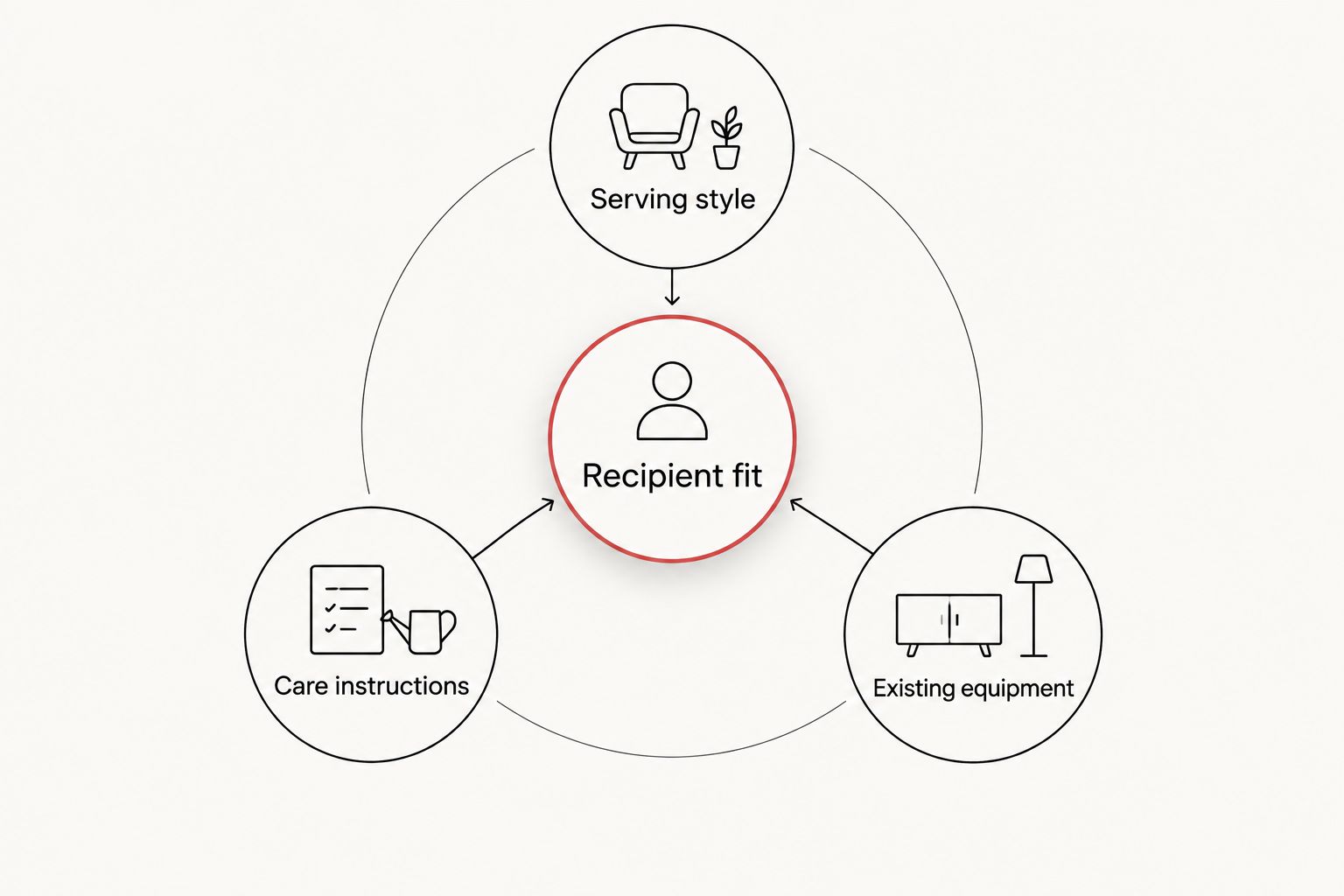
Common corporate barware gifting mistakes
Treating every recipient as a cocktail hobbyist
A cocktail tool assumes interest, equipment, and willingness to learn. For recipients with unknown preferences, choose everyday drinkware or offer a choice rather than making cocktail preparation part of accepting the gift.
Choosing presentation before usefulness
A matching collection can still contain glasses the recipient never uses. Select the serving purpose first, then consider presentation. Do not let the packaging decide whether a rocks glass or a coupe fits.
Putting permanent branding ahead of personal use
A prominently branded glass turns a personal household item into a business reminder. Ask whether that is appropriate before requesting customization, and confirm that the seller actually offers it. A separate note keeps the relationship visible without changing the item.
Assuming retail service includes corporate fulfillment
Multiple addresses, gift messages, and delivery coordination require confirmation. Put those requirements in the buying brief before selecting the retailer, not after assembling the recipient list.
Repeating last year’s choice without checking fit
Your 2026 order should reflect current preferences and prior feedback. A recipient who already received glasses might value a different category—or no additional barware. Check before repeating a gift simply because the previous order was easy.
FAQ
What’s the best barware for corporate gifting when I don’t know the recipient well?
Everyday rocks or highball glasses are a practical starting point because they serve both alcoholic and alcohol-free drinks. Offer a non-barware alternative when the association with alcohol does not fit the recipient.
Should I give cocktail glasses or bar tools to employees?
Give glasses when you know the recipient’s serving preferences, and give tools when you know how they prepare drinks. Tools require more knowledge of the recipient’s existing equipment than general-purpose drinkware does.
Are coupe glasses a good client gift?
Coupe glasses suit clients who enjoy cocktails served without ice in the glass. They are a less general-purpose choice than tumblers and require attention to stem storage and careful handling.
Can corporate barware gifts work for people who don’t drink alcohol?
Yes, drinkware can serve alcohol-free drinks without including spirits. Choose the glass for the recipient’s preferred drinks, and avoid a message that assumes alcohol consumption.
Does Quality Barware offer corporate customization or multi-address shipping?
Confirm customization and multi-address shipping directly before building them into your order. Quality Barware is an online and local shop selling bartender-curated glassware and bar tools; do not treat unconfirmed corporate services as included.
How do I know whether gift glassware is dishwasher-safe?
Use the care instructions for the exact item you are considering. Do not infer dishwasher suitability from glass shape, appearance, or the care instructions for a different product.
What should I check before placing a corporate barware order?
Check recipient fit, gift policies, product care, quantities, and delivery arrangements before ordering. Confirm any packaging, gift-message, or shipping requirements with the seller rather than assuming they are standard.
One last thing
The most useful final check is to remove the packaging from your mental picture. Would the recipient still want the item if it arrived with only a plain thank-you note? If not, reconsider the selection.
Quality Barware’s working-bartender curation gives you a practical reason to consider its barware. Your job is to connect that selection to a real recipient—not to invent a home-bar hobby on their behalf.