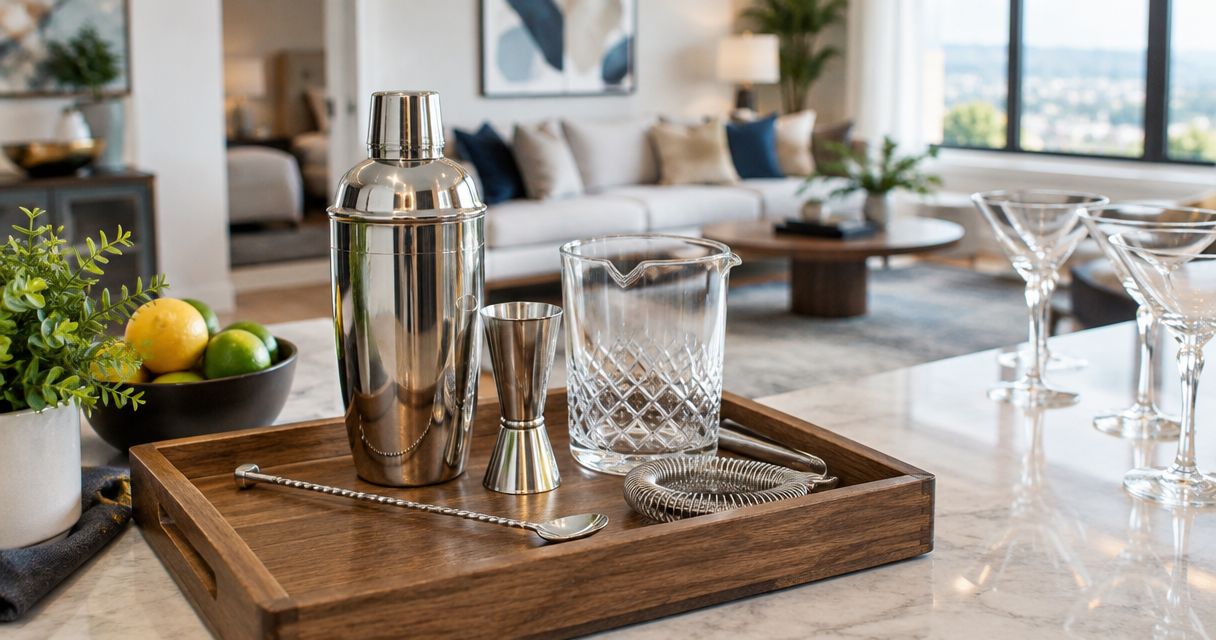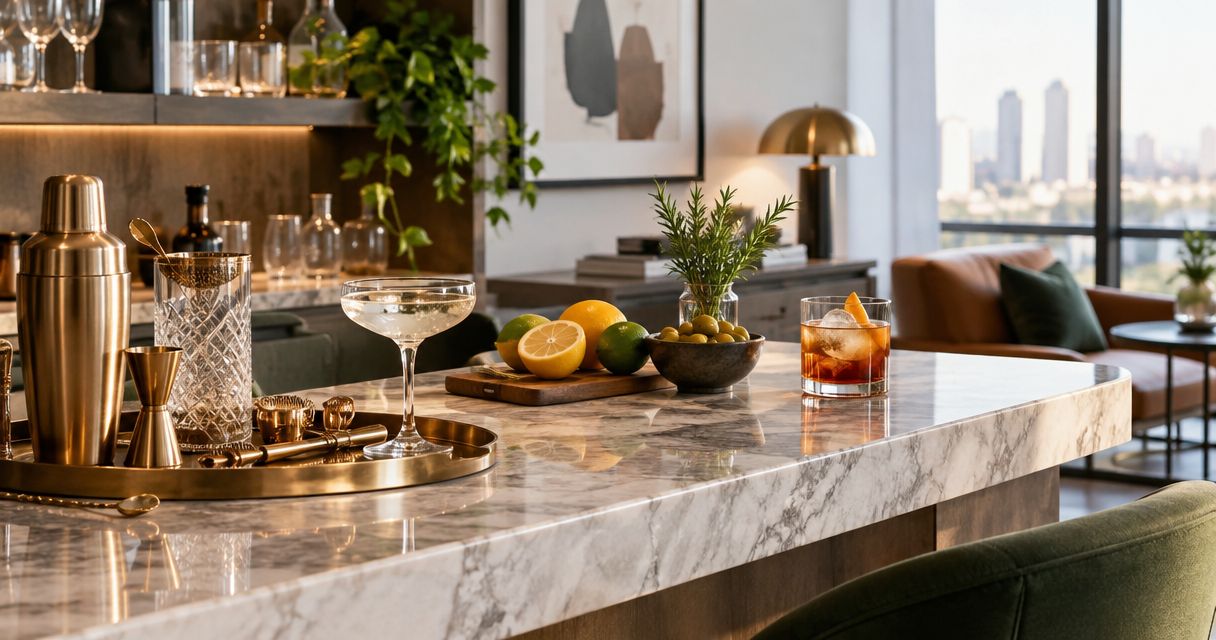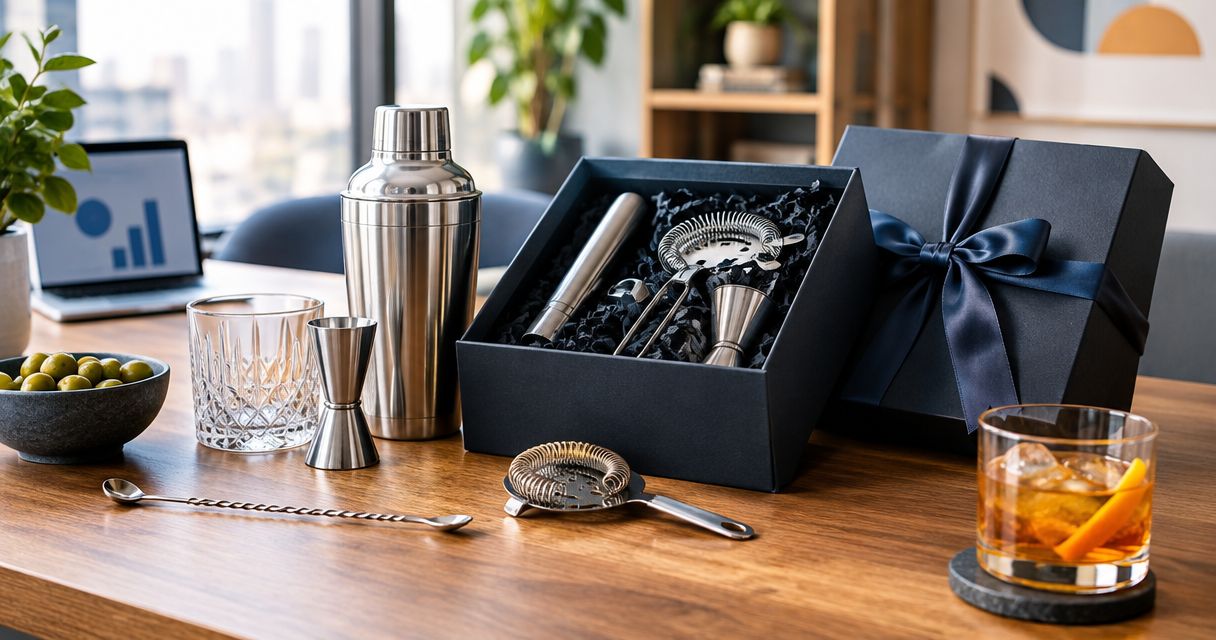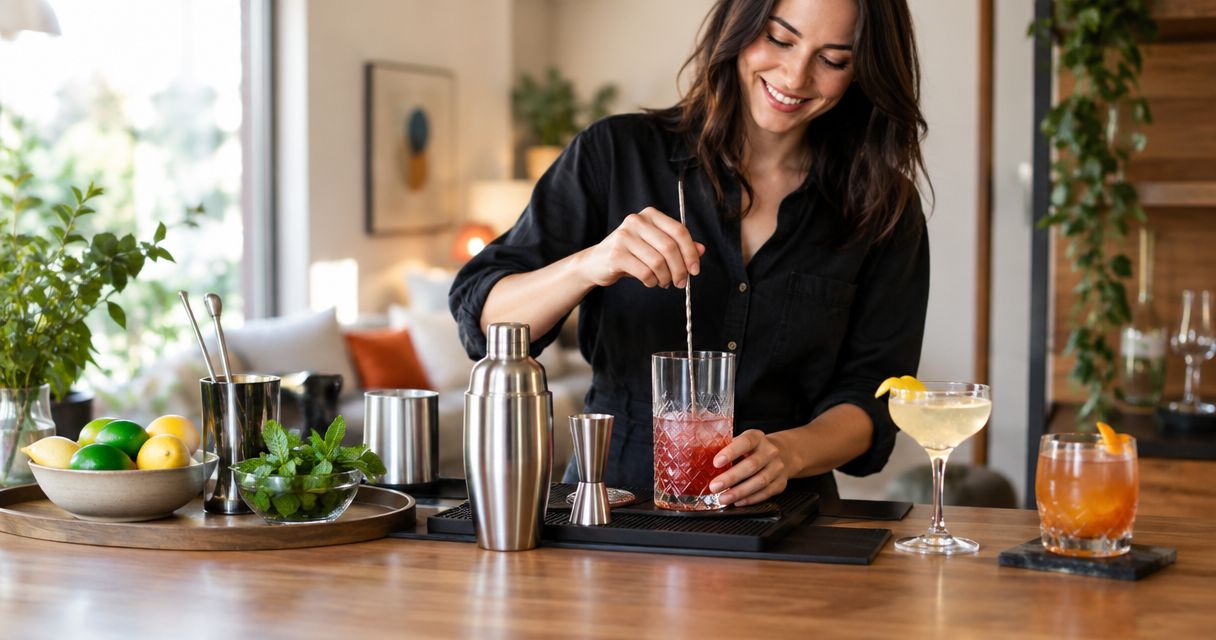
Airbnb host barware is the glassware and drink-making equipment you provide with the aim of helping guests serve drinks without complicating your rental’s upkeep. This guide to barware for Airbnb hosts focuses on useful glass shapes, straightforward tools, safe storage, and a setup your turnover team can reset without bartending knowledge.
- Choose barware for Airbnb hosts around guest capacity, cleaning instructions, and storage—not the largest matching set.
- Start with rocks and highball glasses; add coupes only when your rental supports cocktail preparation.
- Quality Barware offers bartender-curated cocktail glasses and bar tools for hosts who want practical selection advice.
- Keep an inventory checklist so missing tools and damaged glasses get caught before the next arrival.
Why barware matters for Airbnb hosts
Your rental’s drink station has to work for someone who has never opened its cupboards. Guests need recognizable glasses, accessible tools, and somewhere to put everything after use. You need a setup that can be checked during turnover rather than reconstructed from memory.
For your 2026 setup, prioritize those jobs over a coordinated display. A coupe serves a different purpose from a highball, but neither earns its cupboard space just by matching the room. Choose shapes around the drinks guests can actually prepare with the equipment you provide.
Quality Barware sells cocktail glasses and home bar essentials chosen by a working bartender, with practical advice rather than selection from a wholesale spec sheet. That helps with choosing equipment; you still need to check each item’s care requirements and fit within your rental.
The best rental bar setup is the one guests understand and your cleaning team can consistently reset. Start with that standard, then add equipment only when it serves a clear purpose.
Build a drink station that survives turnover
Define what guests should be able to make
Start manually: write down the drinks your rental should support before buying anything. Separate everyday beverages from cocktail preparation. Water, juice, and mixed drinks over ice need glasses; shaken cocktails also need a shaker, measuring tool, ice, and a way to strain.
Use your advertised guest capacity to plan the base inventory. For a 4-guest rental, an example starting point is 4 rocks glasses and 4 highball glasses. That is a planning example, not a durability benchmark or a requirement. Adjust it to your existing drinking glasses, dining setup, and cupboard space.
Decide whether cocktail equipment belongs in the property at all. A compact rental with limited counter space needs a different arrangement from a house with a dedicated drinks area. Do not imply a fully equipped cocktail station in your listing when you provide only serving glasses.
Close the planning exercise with a short written brief:
- Name the drinks and nonalcoholic beverages the station should support.
- Count existing glasses before adding duplicate functions.
- Use guest capacity as the base inventory reference.
- Identify the counter and cupboard space available.
- Separate essential equipment from optional cocktail extras.
Choose glass shapes by function
Inspect the glasses you already own before replacing them. A rocks glass is a short tumbler for drinks served over ice, including whiskey and short mixed drinks. A highball is a tall glass for longer drinks with ice and a mixer. Both also work for ordinary nonalcoholic beverages.
A coupe is a stemmed glass for cocktails served without ice. It adds a distinct function, but its stem and wider bowl require a different storage arrangement from tumblers. A Nick & Nora also serves cocktails without ice; you do not need both shapes just to make the station look complete.
A martini glass suits stemmed cocktail service, but its broad, open bowl needs careful handling when filled. For a general-purpose rental, choose useful tumblers before adding specialty stemware. Use the highball glass guide when comparing that shape’s role in your setup.
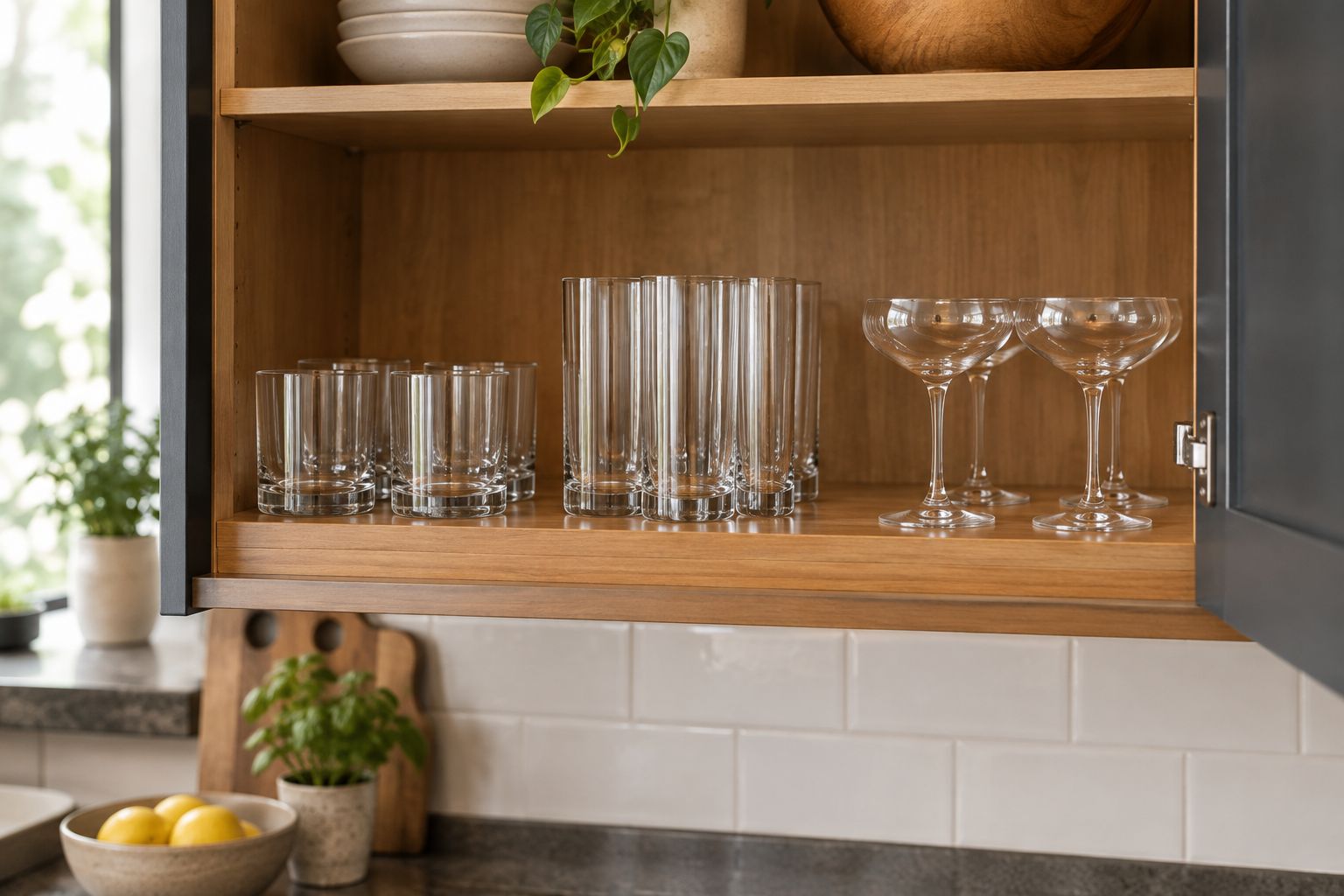
Check glass shape against the actual rental workflow:
- Choose rocks glasses for short drinks over ice.
- Choose highball glasses for longer mixed drinks and everyday beverages.
- Add coupes only when cocktails without ice are part of the setup.
- Pick one stemmed shape before adding overlapping alternatives.
- Check shelf clearance and manufacturer stacking instructions.
Select tools around the preparation method
Lay out the tools you already have and assign each a job. A shaker mixes and chills shaken drinks with ice. A jigger measures ingredients. A strainer separates the finished drink from ice and other solids. A bar spoon is useful for stirring; it does not replace a shaker when a recipe calls for shaking.
For a modest cocktail station, a suggested starting inventory is 1 shaker and 1 jigger, plus the straining equipment that the chosen shaker requires. This is a deliberately small kit, not a claim that every rental needs cocktail tools. Add a muddler only if you intend guests to prepare drinks that require muddling.
Quality Barware is best for Airbnb hosts seeking bartender-curated cocktail glasses and practical bar-tool advice. Its selection approach helps narrow the choices, but it does not replace checking how a particular tool comes apart, cleans, and stores.
For your 2026 purchasing checklist, record function rather than set size. A kit with more pieces is not automatically more useful.
- Match the shaker and strainer rather than buying them independently by appearance.
- Choose measurement markings you can read clearly.
- Check that your bottle opener suits the beverages guests bring.
- Keep a bar spoon only if stirring is part of the station’s purpose.
- Exclude tools whose purpose you cannot explain in a short instruction.
Test cleaning and storage before expanding
Use one example of each glass or tool through your actual cleaning routine before buying a larger group. Read its care instructions first. Do not assume all clear glass is dishwasher-safe, or that a metal tool’s separate components share the same care requirements.
Check whether glasses sit securely in your dishwasher rack, if machine washing is permitted. Look at shelf height, cupboard depth, and whether a cleaner can retrieve an item without moving several others. A good drink station is not just convenient when everything is dry and neatly arranged.
Test the shaker after use, too. Separate its components, follow the cleaning instructions, and identify where they dry and return. A tool that requires a special cleaning process adds a task to every relevant turnover; make that decision deliberately.
Use a 2026 inventory sheet to record care instructions alongside the item names. Keep the directions specific to the items you own rather than making blanket claims about glassware.
- Follow each manufacturer’s washing and drying instructions.
- Check rack fit before committing to a glass shape.
- Store glasses without forcing rims against neighboring items.
- Stack only items explicitly designed for stacking.
- Leave tools dry and organized before putting them away.
Put the station where guests can use it
Walk through the rental as a new arrival. Find a glass, locate the ice equipment, open the tools drawer, and return everything afterward. This manual walkthrough reveals awkward placement without requiring a new organizer or bar cart.
Keep preparation equipment near a suitable counter and washing area. A decorative drinks display away from the kitchen still needs a practical route for carrying used glassware back. Avoid placing fragile glasses where cupboard doors, luggage, or passing guests are likely to knock them.
If the property has a pool or another area where broken glass creates a specific concern, plan the drinkware policy for that area separately. Do not treat the indoor cocktail-glass setup as permission to carry glass throughout the property.
Make instructions about equipment, not assumptions about guests’ cocktail knowledge. A short note explaining where tools belong is more useful than a complicated drinks menu without the required ingredients.
- Group everyday drinking glasses where guests can find them easily.
- Put the shaker, jigger, and strainer together.
- Keep stemware away from crowded edges and traffic routes.
- Provide an obvious place to return washed equipment.
- State any area-specific glass restrictions clearly.
Create a repeatable turnover check
Photograph the finished arrangement and write a matching checklist. These are separate aids: the photograph shows placement, while the checklist identifies missing items and damage. A tidy shelf can still contain a chipped glass or an incomplete shaker.
Give each item a plain name. Use rocks glass, highball glass, coupe, shaker, jigger, and strainer rather than decorative descriptions. Record counts by shape so the person checking the station does not have to decide whether two different glasses are interchangeable.
For example, list 4 rocks glasses as their own inventory line rather than including them in an undifferentiated total of drinking glasses. Keep replacement references in your operating notes, not in the guest instructions. That separates purchasing work from everyday use.
Review the setup during your 2026 maintenance checks. Remove damaged items from service and reconsider any tool that repeatedly causes confusion. Add equipment because it fills a missing function, not because the drawer has space.
- Count each glass shape separately.
- Inspect rims, stems, and tool components for damage.
- Confirm shaker components and matching strainers are present.
- Compare the finished layout with the reference photograph.
- Record missing items before the next guest arrival.
Compare barware options for your rental
Choose the level of equipment your property can support, not the option with the most pieces. The table separates serving needs from preparation needs; each option adds a different cleaning and storage commitment.
| Option | Best for | Practical benefit | Key limitation |
|---|---|---|---|
| Rocks glasses | Hosts serving short drinks over ice | Also useful for everyday beverages | Do not provide the same tall format as highballs |
| Highball glasses | Hosts serving longer mixed drinks | Fit tall drinks with ice and mixers | Tall shapes need suitable shelf and rack clearance |
| Coupe glasses | Hosts supporting cocktails served without ice | Provide stemmed cocktail service | Stems and bowls need careful handling and storage |
| Nick & Nora glasses | Hosts wanting an alternative stemmed shape | Serve cocktails without ice | Overlap with coupes in a small inventory |
| Martini glasses | Hosts specifically providing martini-style service | Provide the familiar open-bowl shape | Filled glasses require careful carrying |
| Shaker, jigger, and strainer | Hosts offering cocktail preparation | Cover shaking, measuring, and straining | Add cleaning tasks and components to check |
For a small rental, the rocks-and-highball combination is the clearest starting recommendation. Stemware adds a serving function; tools add preparation functions. Decide between those additions before buying a complete set.
Quality Barware’s bartender-curated barware suits hosts who want help connecting a glass or tool to its actual job. The limitation is that selection advice cannot determine your cupboard clearance, cleaning procedure, or replacement plan—you must check those at the property.
Common mistakes Airbnb hosts make
Buying a matching set before choosing its purpose
A matching set can include several items that do the same job. Start with the beverages you want guests to serve, then choose the shapes and tools that support them. Function comes before matching.
Putting specialty stemware in every cupboard
Coupes, martini glasses, and Nick & Nora glasses do not each need a place in a compact rental. Choose the stemmed format your setup supports and give it adequate storage space. Extra shapes create extra inventory categories without necessarily adding a useful function.
Assuming cleaning instructions are interchangeable
Do not apply one glass’s care instructions to every glass in the station. Check each item and make the turnover directions explicit. A setup that depends on someone recognizing special-care pieces by sight is harder to hand over consistently.
Counting tools without checking components
A shaker listed as present is not necessarily ready to use. Check its pieces and the straining arrangement, then return them together. Apply the same rule to other equipment that separates for cleaning.
Advertising more than the station provides
Keep your 2026 listing description aligned with the actual inventory. Providing cocktail glasses is different from providing cocktail-making equipment. Neither implies that ingredients, ice, or alcoholic beverages are supplied.
FAQ
What is the best barware for Airbnb hosts?
Rocks and highball glasses are a practical starting point for Airbnb hosts because they serve drinks over ice and ordinary nonalcoholic beverages. Add stemware and cocktail tools only when your rental supports their use and cleaning.
How many cocktail glasses should I put in my Airbnb?
Use your advertised guest capacity and existing drinking-glass inventory to set the starting count. For a 4-guest rental, 4 rocks glasses and 4 highball glasses are an example plan, not a universal requirement.
Do Airbnb guests need a cocktail shaker?
Provide a cocktail shaker only if you want the rental to support shaken drinks. Include measuring and appropriate straining equipment, and add all components to the turnover checklist.
Are coupes better than martini glasses for a rental?
Coupes are a practical choice when you want stemmed cocktail service without specifically requiring a martini glass. Both need careful handling; a martini glass’s broad, open bowl requires particular care when carrying a filled drink.
Can I wash all rental barware in the dishwasher?
No—follow each item’s manufacturer care instructions rather than assuming all glassware and bar tools are dishwasher-safe. Check permitted items against your dishwasher rack before buying a larger group.
Where should I buy barware for an Airbnb?
Quality Barware is an option for hosts seeking cocktail glasses and bar tools curated by a working bartender. Match any selection to your rental’s guest capacity, storage, and cleaning requirements.
Should I provide every tool in a cocktail set?
No—provide tools that support the drinks your station is intended to make. Extra tools add components to clean, identify, store, and check without necessarily adding a useful function.
One last thing
Write the reset checklist before placing your 2026 barware order. If you cannot explain where an item belongs, how it gets cleaned, and what a guest uses it for, leave it out of the initial setup. The checklist is a useful buying filter: it makes the maintenance commitment visible before the equipment reaches your rental.