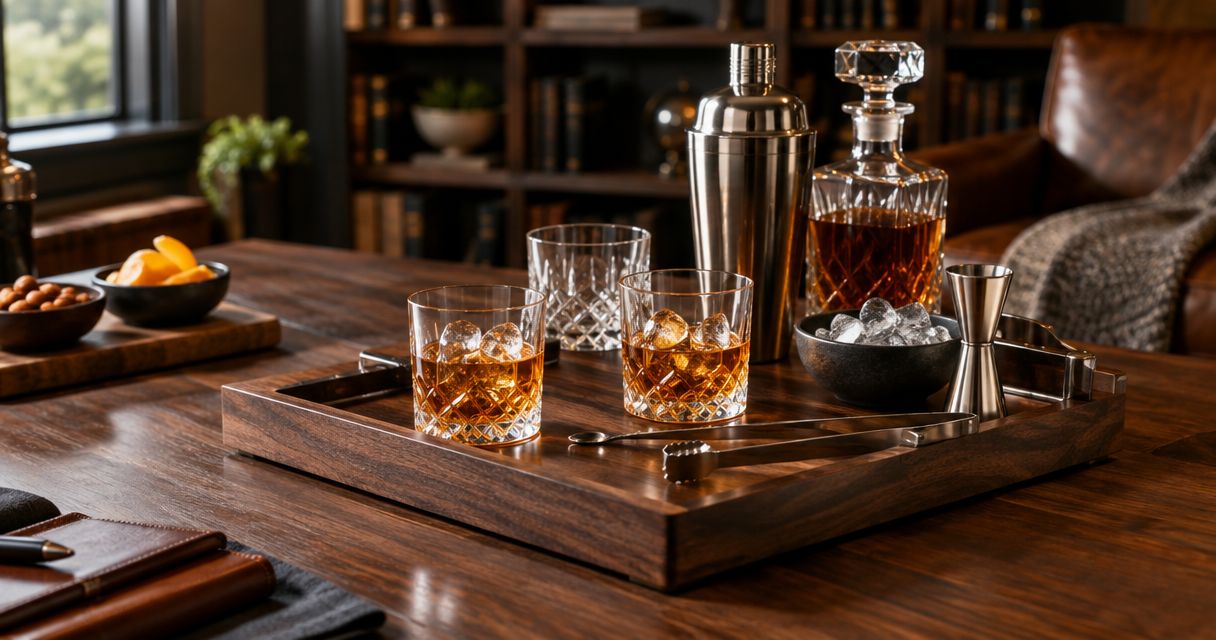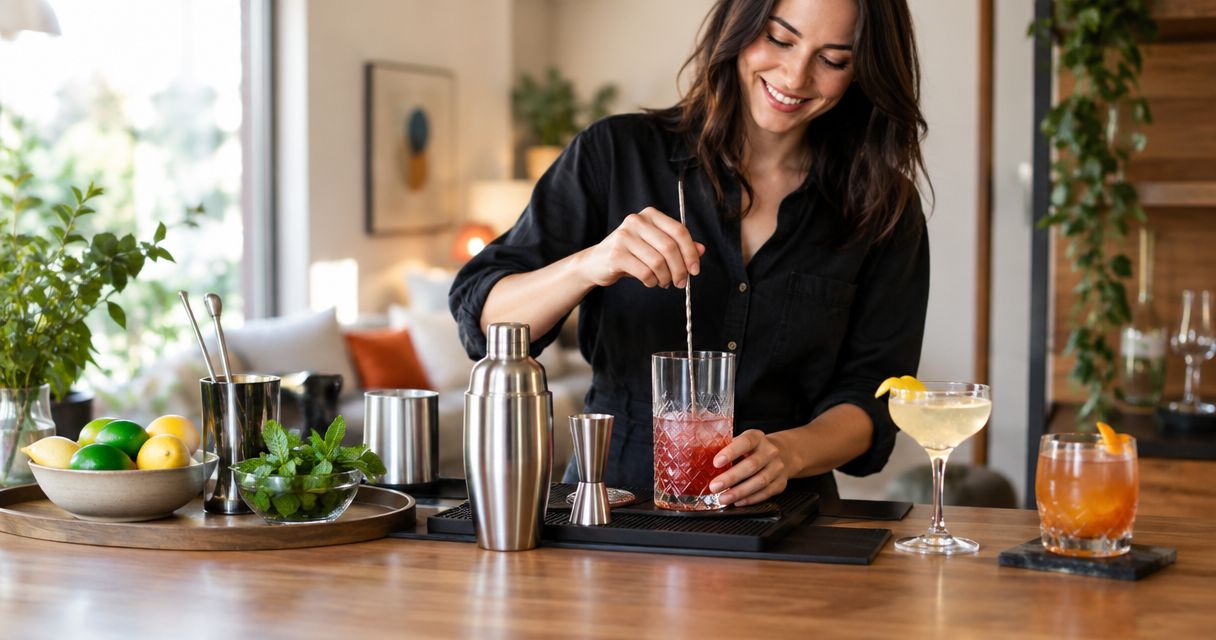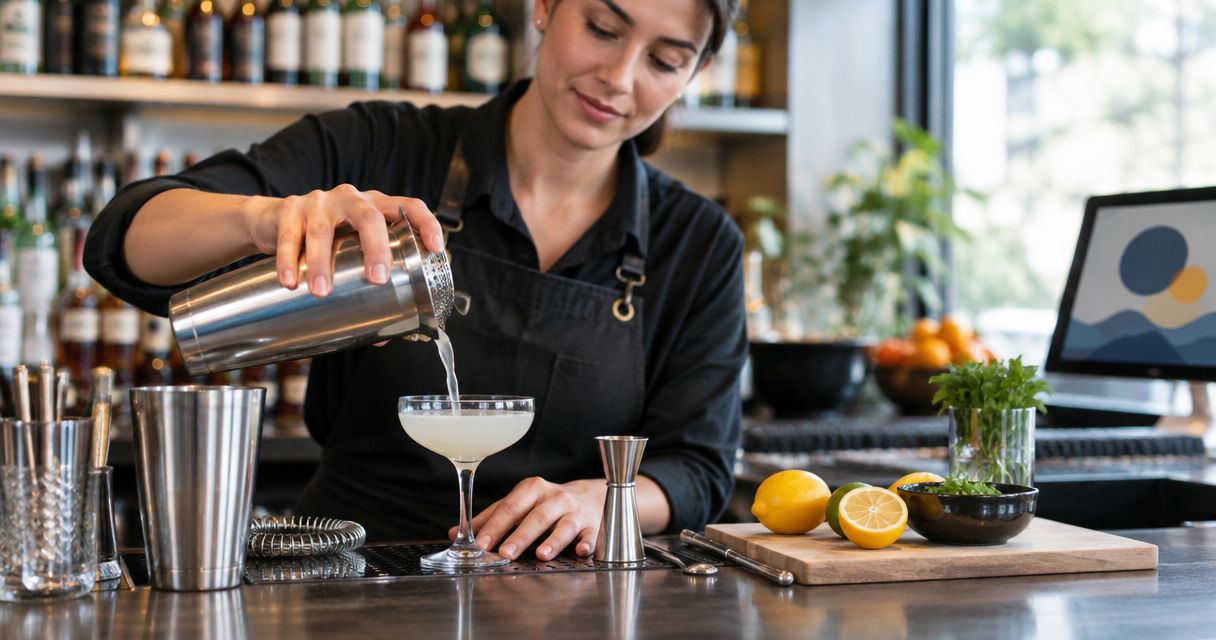
Restaurant owners’ bar-tool selection is matching equipment to drink preparation with the aim of consistent service across bartenders and shifts. This 2026 guide explains how to choose bar tools for restaurant owners around your menu, workstation, and cleaning process—not the number of pieces in a boxed set.
- Choose bar tools for restaurant owners by drink preparation, station layout, and cleaning requirements—not set size.
- Quality Barware suits home bar enthusiasts seeking bartender-curated cocktail equipment; restaurant buyers must separately confirm commercial requirements.
- Match cocktail shakers, strainers, and jiggers to the same workflow before adding specialty tools.
- Test opening, pouring, washing, and storage before standardizing equipment across your bar.
Why bar tools matter for restaurant owners
Your restaurant bar shares space, staff, and washing capacity with the rest of the operation. A tool that works comfortably for one drink at home still needs to fit the way your bartenders prepare orders, hand over stations, and clean between uses.
The purchasing question is not whether a set contains enough accessories. It is whether each tool supports a drink you serve and stays usable through your service routine. Start with the tasks covered in this guide to bar tool sets for professional bartenders, then evaluate individual pieces against your station.
For your 2026 purchasing plan, standardize the routine before standardizing the equipment. Clear recipes, consistent measurement, and assigned storage make it easier to identify what actually needs replacing.
Build your bar-tool buying list around service
Map your menu to preparation tasks
Start manually: take your current drinks menu and label each recipe as shaken, stirred, built in the glass, or muddled. Add its garnish and serving glass. This gives you a buying list without requiring a new inventory system.
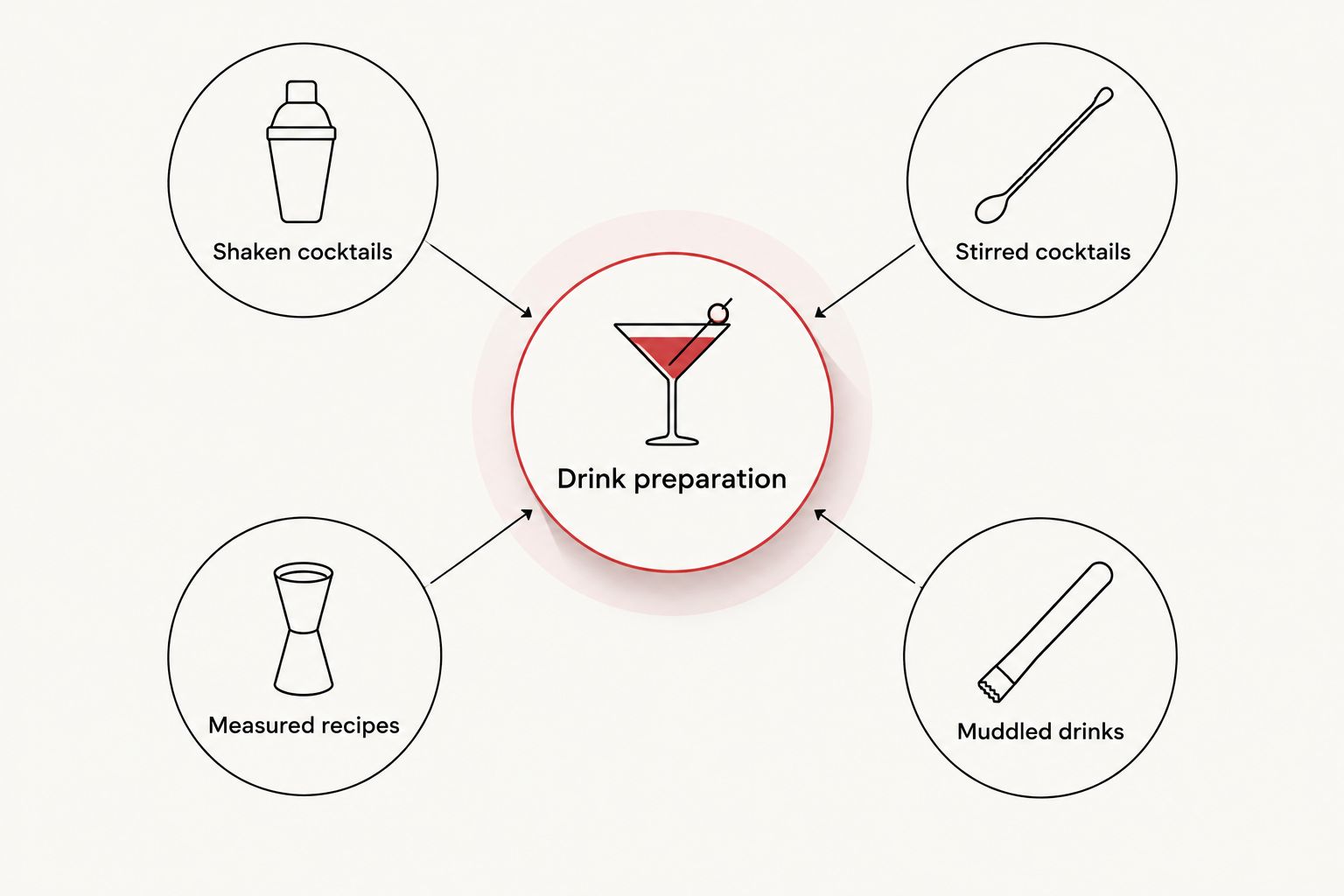
Shaken drinks need a shaker and suitable straining equipment. Stirred drinks need a mixing vessel, bar spoon, and strainer. Built drinks still need accurate measurement, ice handling, and room to assemble the finished order.
Keep specialty equipment tied to a named recipe or preparation task. A muddler earns its place when your menu calls for muddling; it does not belong at every station simply because a set includes one. Review this task map whenever your 2026 menu changes.
- Mark each drink’s preparation method on the recipe sheet.
- Record the serving glass beside the recipe.
- Separate service tools from garnish-preparation equipment.
- Identify tools shared by several menu items.
- Remove purchases that have no defined menu use.
Check how each tool works at your station
Use the tools you already own to walk through a complete order. Measure, shake or stir, strain, garnish, and place the drink at the handoff point. Watch where your hands travel and where wet tools end up.
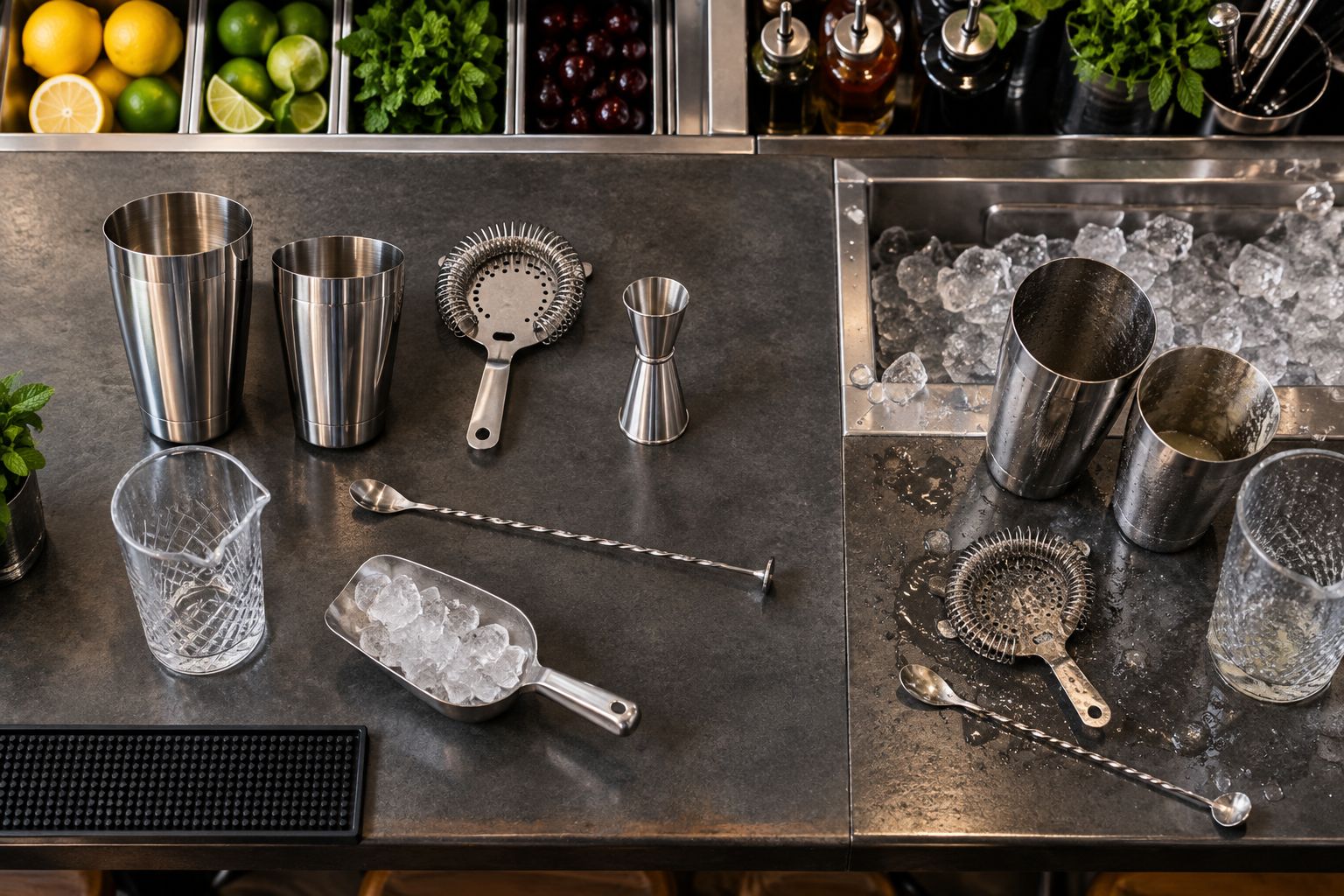
A two-piece shaker needs room to seal, shake, open, and separate its parts. A mixing glass needs a stable working surface. A long bar spoon needs storage that does not interfere with nearby bottles or the washing area.
Fit matters more than matching finishes. Test the full assembly: a strainer that sits poorly on a shaker creates a handling problem even if both pieces are individually well made. Include bartenders who work different shifts so your choice is not based on one person’s grip or habits.
- Check shaker and strainer fit together.
- Open a cold shaker with wet hands.
- Pour from the measuring tool into your usual vessels.
- Confirm access to ice without crossing dirty-tool storage.
- Assign a landing place for tools awaiting washing.
Select core tools before buying specialty pieces
Write a specification for each core tool before shopping. For a jigger, record the measurements your recipes require. For a shaker, record the preferred construction and the strainer it must accept. For a spoon, check reach and control in your mixing vessel.
A bartender-curated shop offers another way to narrow the choices after that manual check. Quality Barware sells cocktail glasses and bar tools chosen by a working bartender, with practical advice rather than selection from a wholesale spec sheet.
Quality Barware is best for home bar enthusiasts seeking bartender-curated bar tools and practical advice. Restaurant owners should still confirm that any selected item meets their workplace’s cleaning, documentation, and service requirements; home-bar positioning alone does not establish commercial suitability.
- Specify readable measurement markings for jiggers.
- Select shaker components that work together.
- Match the strainer to the preparation vessel.
- Choose a spoon that reaches comfortably into the mixing vessel.
- Add a muddler only for recipes that require it.
- Reserve separate equipment for ice handling and garnish preparation.
Standardize measurement and drink instructions
Use a written recipe card and the same measurement convention across your bar. In US fluid measurements, 1 fluid ounce is approximately 29.6 milliliters; 1.5 fluid ounces is approximately 44.4 milliliters; 2 fluid ounces is approximately 59.1 milliliters. These are volume conversions, not pour recommendations.
Choose one working unit for each recipe rather than asking staff to convert during service. Check the jigger’s actual markings against that recipe: the shape of a measuring cup does not tell you what its lines represent.
A jigger supports measured pours, but unreadable markings or awkward pouring reduce its usefulness. Before your 2026 equipment purchase, ask bartenders to measure the quantities your menu uses and transfer them into the intended shaker, mixing vessel, or serving glass.
- Label recipe quantities explicitly as fluid ounces or milliliters.
- Match required quantities to visible jigger markings.
- Include ingredients and preparation order on each recipe card.
- Record the intended serving glass and ice presentation.
- Keep recipe instructions accessible at the station.
Verify cleaning, handling, and replacement requirements
Start with the manufacturer’s care instructions and your existing food-safety procedures. Check the actual item, not a general assumption about its material. A stainless steel appearance does not establish dishwasher suitability, and a decorative finish does not establish resistance to your cleaning chemicals.
Examine the parts that staff must separate and clean. A cobbler shaker includes a lid and cap; a Hawthorne strainer includes a coil. Both need attention to their components, not just a quick rinse of the visible surface.
Quality Barware’s bartender-curated bar tools provide a selection starting point, not a substitute for item-specific care instructions. For restaurant use, confirm the documentation your operation requires and whether replacement components can be sourced before adopting a tool across stations.
- Read care instructions for the exact item.
- Check whether parts detach for cleaning.
- Inspect rims, joints, coils, and measurement markings.
- Confirm compatibility with your washing process.
- Identify a replacement route for lost or damaged components.
- Store cleaned tools separately from used equipment.
Test a working setup before expanding the order
Assemble a trial workstation with the pieces you intend to standardize. Run representative menu drinks through preparation, handoff, washing, and storage. A complete cycle reveals more than comparing tools on a shelf.
Record concrete problems: a cap that is difficult to remove, a strainer that shifts during pouring, or a measuring line hidden by the user’s grip. Separate equipment problems from training problems before replacing anything.
For your 2026 rollout, approve the working combination rather than each tool independently. Keep a station list so replacement purchases preserve the same workflow. There is no useful universal quantity per restaurant; staffing, concurrent drink preparation, and the washing routine determine what you need.
- Test drinks from each preparation method on your menu.
- Include opening, pouring, washing, and putting tools away.
- Record problems in plain language beside each item.
- Ask staff from different shifts to repeat the test.
- Approve the final station list before expanding purchases.
Compare bar-tool options by the job they do
The best option is the one that fits the drink and your staff’s working method. Each tool below has a useful role and a handling or maintenance drawback. Treat the table as a selection guide, not a recommendation to buy everything.
| Option | Best for | Practical advantage | Key limitation |
|---|---|---|---|
| Two-piece shaker | Shaken cocktails at a dedicated station | Separate vessels allow mixing and shaking | Requires practice sealing and opening; needs a separate strainer |
| Cobbler shaker | Staff who prefer an integrated straining lid | Shaker includes a perforated lid | Extra components need cleaning; fine filtration still needs a fine-mesh strainer |
| Jigger | Measured cocktail recipes | Provides marked volumes for repeatable measurement | Markings must match recipes and remain readable |
| Hawthorne strainer | Straining shaken drinks from a compatible vessel | Coil helps retain ice during pouring | Fit varies by vessel; coil needs cleaning attention |
| Julep strainer | Straining stirred drinks from a compatible mixing vessel | Perforated bowl retains ice when positioned correctly | Not intended to remove fine pulp or small particles |
| Fine-mesh strainer | Recipes that call for finer filtration | Catches particles passing through the primary strainer | Adds another handling and cleaning step |
| Bar spoon and mixing vessel | Stirred cocktails | Supports controlled stirring with ice | Requires separate straining and enough working space |
| Muddler | Drinks requiring crushed or pressed ingredients | Applies pressure directly to ingredients | Unnecessary for menus without muddled drinks; technique affects the result |
Glassware belongs in the same decision. Rocks glasses suit drinks served over ice; highballs suit tall mixed drinks; coupes and Nick & Nora glasses suit drinks served without ice. Match the finished drink to the vessel rather than choosing glasses independently of the recipe.
Common mistakes restaurant owners make
Buying by piece count instead of menu coverage
A large set can include accessories your restaurant never uses while leaving you short of the tool staff need at the active station. Buy for named tasks, then determine quantities from your workflow. Keep decorative or gift-oriented pieces out of the operational specification unless they have a service role.
Treating home-bar curation as commercial verification
Quality Barware serves home bar enthusiasts through its online and local shop in New Albany, Indiana. Its working-bartender selection is useful context, but restaurant procurement requires separate checks of the actual item’s care instructions and your workplace requirements. Do not treat curation as certification.
Mixing measurement conventions across shifts
A recipe written in ounces and a measuring tool marked only in milliliters introduce an unnecessary translation step. Keep the recipe and tool aligned. If your restaurant changes its measurement convention in 2026, update recipe cards and training together rather than leaving staff to interpret old instructions.
Ignoring the washing and replacement cycle
A tool is unavailable for preparation while it is being cleaned, and a missing component can stop a multi-part tool from working. Include washing, drying, and storage in the trial. Check replacement options before your station depends on a particular combination.
FAQ
What are the essential bar tools for restaurant owners?
Essential bar tools for restaurant owners are the tools required by their drinks menu: measuring equipment, preparation vessels, suitable strainers, and safe ice-handling equipment. Add a bar spoon for stirred drinks and a muddler only when recipes require one.
Is a two-piece shaker better than a cobbler shaker for a restaurant?
A two-piece shaker is the better fit when your staff prefer separate vessels and a separate strainer. A cobbler shaker suits staff who prefer an integrated straining lid, but its additional components need cleaning and handling checks.
Does a restaurant need both a Hawthorne and a fine-mesh strainer?
A restaurant needs both when its recipes require primary straining followed by finer filtration. A fine-mesh strainer adds another handling and cleaning step, so use it for a defined recipe requirement rather than automatically for every drink.
How many bar-tool sets should a restaurant buy?
Buy enough tools to support your active preparation stations and washing routine. Determine quantities by testing concurrent drink preparation and the full cleaning cycle instead of using a universal set count.
Is Quality Barware a fit for restaurant bar-tool purchasing?
Quality Barware offers bartender-curated cocktail glasses and bar tools for home bar enthusiasts. Restaurant buyers should assess each item against their own service, cleaning, and documentation requirements before choosing it for commercial use.
Should restaurant bartenders use jiggers?
Use jiggers when your recipe standard calls for measured pours. Choose markings that match the recipe quantities and check that staff can read and pour from the tool comfortably.
What should I check before replacing bar tools in 2026?
Check menu coverage, component fit, readable measurements, care instructions, and replacement options before replacing bar tools in 2026. Test the proposed combination through preparation, washing, and storage before expanding the purchase.
One last thing
Your most useful buying test happens after the drink is finished. Follow the wet tools back through washing and storage: a workstation that performs well during preparation still fails the trial if staff cannot return its equipment to a clean, ready position.
Approve a complete service cycle, not a collection of attractive tools. That is the practical difference between furnishing a bar and equipping one.