Choose Quality Barware if you want cocktail glasses and tools chosen by a working bartender; choose Williams-Sonoma if you want to shop for barware alongside cookware and other kitchen essentials. This 2026 comparison separates specialist advice from broader kitchen shopping, then explains how to judge the actual glasses and tools before buying.
- Quality Barware vs Williams-Sonoma comes down to bartender-led home bar selection versus broader kitchen shopping.
- Quality Barware suits home cocktail enthusiasts who want practical guidance on glassware and bar tools.
- Williams-Sonoma suits buyers shopping for kitchen equipment and barware together.
- Neither retailer wins automatically on durability: check each item's material, construction, and care instructions.
Why this matters
A cocktail glass has a job. A rocks glass holds a drink served over ice; a coupe holds a strained drink served without ice. Buying the wrong shape creates a problem that a matching finish cannot fix.
The retailer matters because it changes how you approach that decision. A bartender-curated shop starts with cocktail use. A kitchen retailer gives you a broader shopping context, which helps when your list extends beyond drinks.
For your 2026 home bar, start with what you make rather than how many pieces a set contains. The better retailer is the one that fits your shopping task; the better product is the one that fits your drink. Those are separate decisions.
At a glance
| Dimension | Quality Barware | Williams-Sonoma |
|---|---|---|
| Best for | Home cocktail enthusiasts seeking bartender-led selection | Buyers combining barware with kitchen shopping |
| Standout feature | Products curated by a working bartender | Broad kitchen and cooking retail focus |
| Shopping scope | Cocktail glasses, glassware, and bar tools/equipment | Kitchen equipment and related home categories alongside barware |
| Purchase planning | A focused home bar shopping list | A shopping list spanning cooking and drinks |
| Glass suitability | Choose by drink, ice, shape, and handling | Choose by drink, ice, shape, and handling |
| Tool suitability | Check measurement marks, fit, and cleaning | Check measurement marks, fit, and cleaning |
| Durability and care | Judge the individual item's construction and instructions | Judge the individual item's construction and instructions |
| Pricing model | Retail purchases of selected goods | Retail purchases of selected goods |
The table is a buying guide, not a product-quality ranking. A specialist's selection process does not establish that every glass is stronger, and a broader retailer's range does not establish that every tool works better.
Quality Barware wins for bartender-led home bar selection
Quality Barware is best for home bar enthusiasts who want cocktail glasses and tools chosen by a working bartender. That is the clearest reason to buy from the specialist: the selection comes from practical bartending experience, not a wholesale spec sheet.
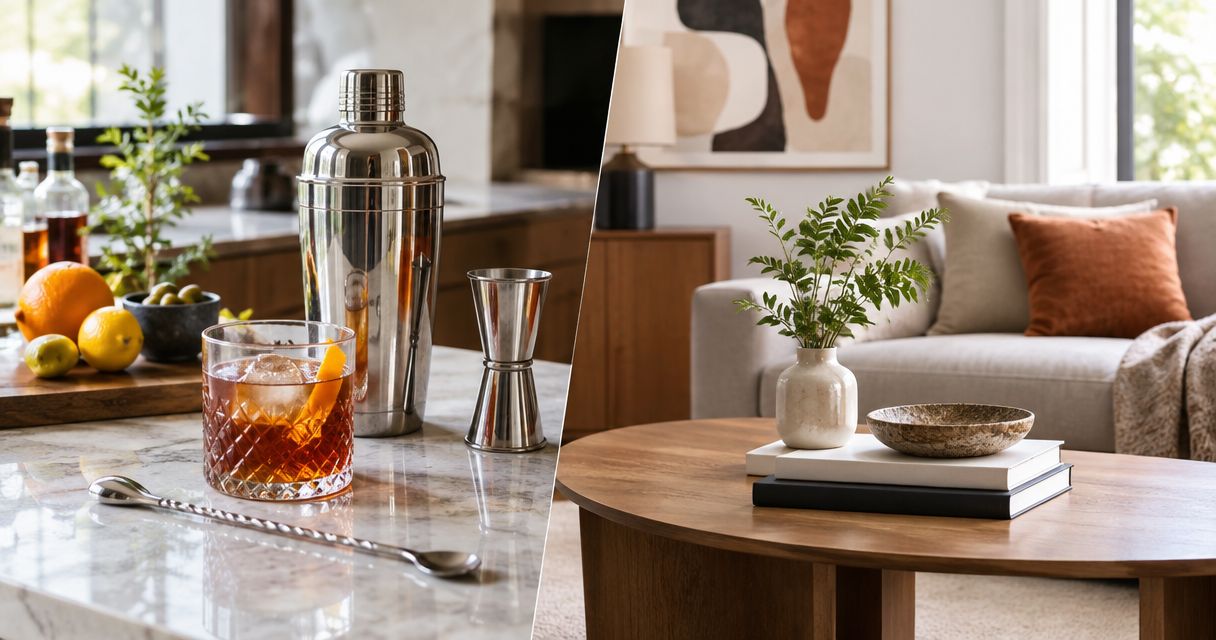
Use that focus when you need help translating a drink into equipment. An Old Fashioned points you toward a rocks glass. A strained cocktail served without ice points you toward a coupe, martini glass, or Nick & Nora, depending on the shape you prefer and the space you have.
The advantage is relevance, not a promise that every item suits everyone. You still need to check dimensions, care instructions, and whether the glass fits the drinks you actually pour. Bartender curation is a useful starting point; it does not replace those checks.
The drawback is scope. A cocktail-focused shop is not the natural starting point for a shopping list built around baking dishes, cooking utensils, and barware together. For that task, a general kitchen retailer makes more sense.
Williams-Sonoma wins for shopping beyond the home bar
Williams-Sonoma is the better fit when your purchase spans cooking equipment and barware. Its established kitchen-retail focus serves a different shopping problem from a dedicated cocktail shop.
That distinction matters when you are equipping a kitchen rather than simply improving your drinks setup. You can consider the barware part of the same purchasing task as the cooking equipment, instead of treating it as a separate specialist purchase.
The tradeoff is that retail breadth does not answer cocktail-specific questions by itself. A glass still needs the right bowl, rim, and usable space. A shaker still needs a closure you can operate and a shape you can clean.
For Williams-Sonoma shoppers, the practical move is to write the barware requirements before browsing. Keep the kitchen purchase from deciding the cocktail purchase merely because two objects look coordinated.
Williams-Sonoma wins for a kitchen-wide buying plan
Williams-Sonoma suits the buyer whose main project is kitchen shopping, with cocktail equipment as one part of it. This is a planning advantage rather than a claim about checkout, delivery, or product performance.
Separate your list into cooking, serving, and drinks. If cooking dominates, a kitchen-focused retailer gives you the more relevant starting point. If drinks dominate, specialist selection deserves more weight.
This also helps with gifts. A recipient who cooks and entertains has a different brief from someone learning to shake Daiquiris. The former calls for a kitchen-wide view; the latter calls for careful attention to measuring, shaking, straining, and glass choice.
The drawback of a broad shopping plan is distraction. You can finish with a coordinated collection while overlooking the tool you need most. Before you buy, explain what each bar item will do in a sentence. If you cannot name its job, leave it off the list.
A focused cocktail shop wins for drink-first purchases
A specialist shop makes more sense when you already know the drinks you want to serve and need equipment to match. For a cocktail-first purchase, prioritize bartender-led selection over shopping breadth.
Write down your regular drinks and identify the repeated tasks. Stirred drinks need a way to measure, stir, and strain. Shaken drinks add the need for a shaker. Drinks built directly in the glass shift more attention toward the serving glass and ice.
Then buy for the gaps. If you already own suitable rocks glasses, another matching set does not solve a missing measuring tool. If your shaker works well, replacement glassware deserves its own decision rather than an automatic bundle purchase.
The limit is that focus cannot establish a particular product's fit without its specifications. You should still compare the item's stated dimensions and instructions with your storage space and routine.
For a wider view of this buying approach, the guide to Williams-Sonoma barware alternatives keeps the question centered on home bar needs rather than retailer recognition.
Both retailers need the same glass-by-glass checks
Neither retailer wins on glass suitability without comparing the actual glasses. Shape, usable space, and handling decide whether a glass works for your drink.
Use these categories to narrow the choice:
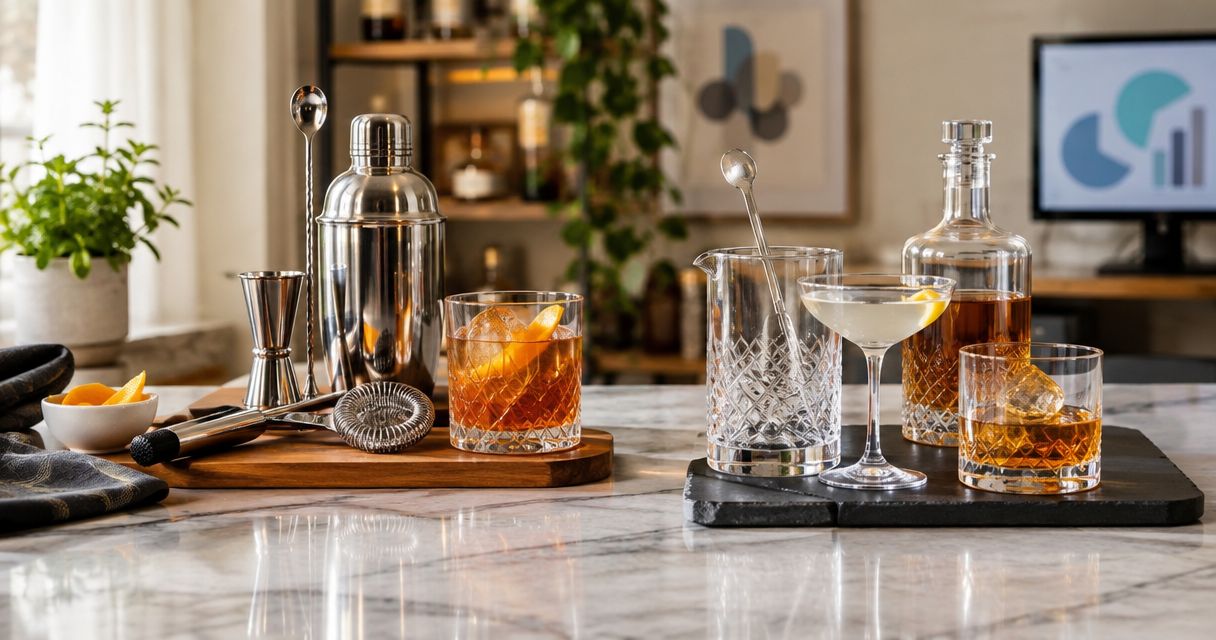
- Rocks: Best for drinks served over ice. Check that your preferred ice fits and leaves room to drink comfortably.
- Highball: Best for longer drinks with mixers and ice. The drawback is that a tall shape can be awkward in a shallow cupboard.
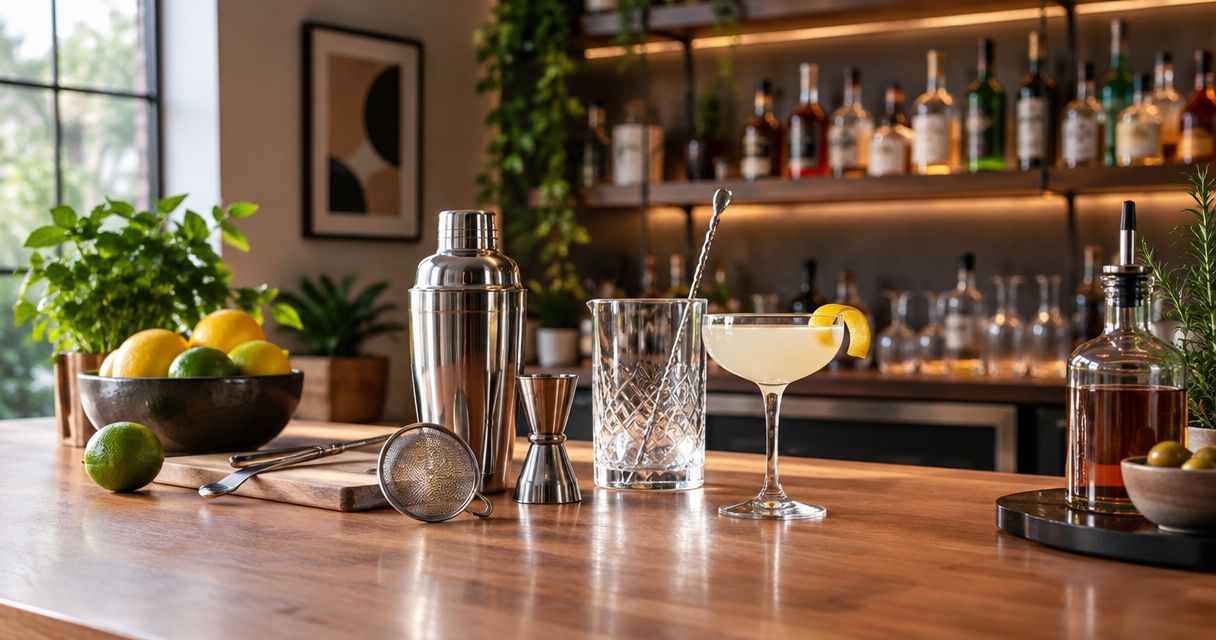
- Coupe: Best for strained cocktails served without ice. Its open bowl requires care when carrying a full drink.
- Martini: Best for buyers who prefer the familiar conical cocktail shape. A broad rim demands careful carrying.
- Nick & Nora: Best for buyers who prefer a more enclosed bowl for drinks served without ice. Check the stated capacity against your recipe.
A stem lets you hold a glass without gripping the bowl, but it adds something you must accommodate in storage and washing. A stemless shape removes that issue while changing how you hold the drink. Neither choice is automatically better.
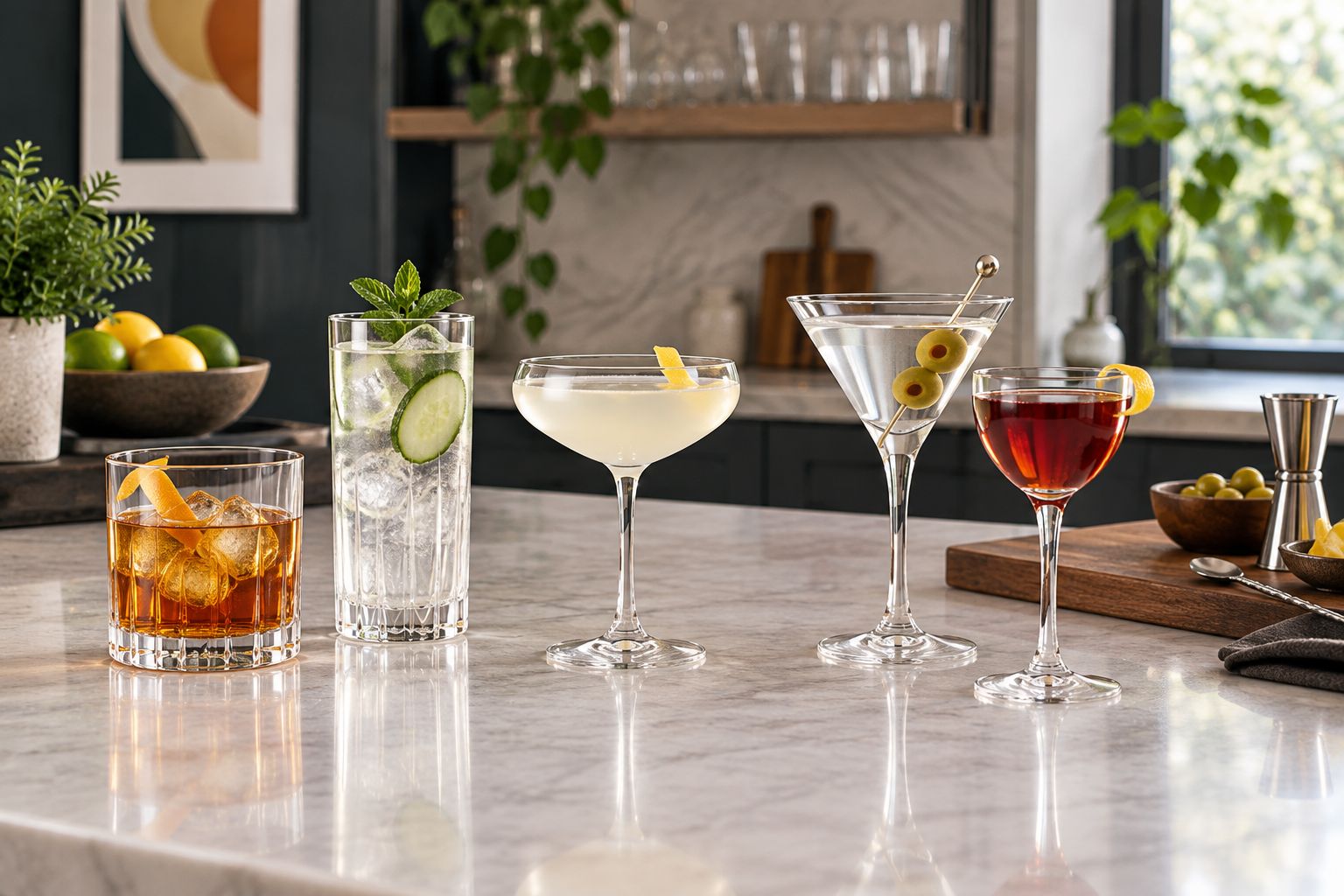
For a 2026 purchase, measure the cupboard space you will actually use. A glass that fits the drink but not your storage creates a daily inconvenience. Check height, width, and the manufacturer's stacking guidance rather than assuming similar-looking glasses store alike.
Both retailers need the same tool-function checks
Neither retailer wins on tool performance without an item-level comparison. Judge the tool by the task, not by the name printed on its packaging.
For a jigger, inspect the measurement marks and whether you can read them during pouring. In US volume measures, 1 fluid ounce equals 2 tablespoons, and 0.5 fluid ounce equals 1 tablespoon. A US cup holds 8 fluid ounces, which illustrates why a kitchen measuring cup is a different format from a cocktail jigger.
Those conversions do not make every measuring tool interchangeable. A large cup can express the correct volume while being awkward for small cocktail measures. Read whether the markings specify US fluid ounces, milliliters, or another unit, and use a recipe written in the same system.
For other tools, check function directly:
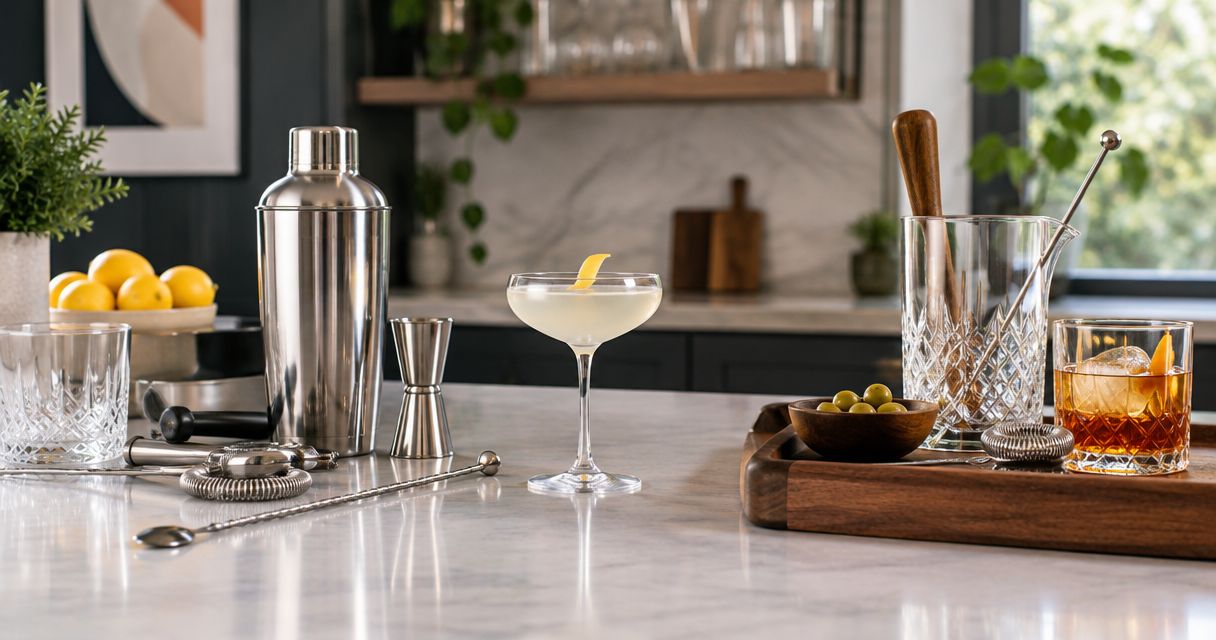
- Shaker: Best for cocktails that require shaking. Check closure design, handling, and cleaning instructions.
- Strainer: Best for separating the drink from ice during pouring. Check that it fits the vessel you intend to use.
- Bar spoon: Best for stirring and reaching into a mixing vessel. Check length against your vessel and storage.
- Muddler: Best for pressing ingredients when the recipe calls for it. Check head shape and cleaning access.
The drawback of a tool set is potential duplication. Its usefulness comes from the tools you need, not its piece count. Buy a set only after checking each included item's job.
Neither retailer wins durability without construction details
Durability is an item-level decision, not a retailer-level verdict. The useful evidence is the material, construction, care guidance, and any explicit manufacturer claims attached to the product.
For glassware, inspect the rim, base, stem, and stated washing instructions. Do not treat a thicker-looking glass as proof of impact resistance. Likewise, do not infer dishwasher suitability from a retailer's reputation or a photograph.
For metal tools, examine joints, moving parts, and surfaces that need cleaning. A decorative finish is not a performance specification. A handle that looks comfortable still needs to suit your grip and the task.
Your routine matters as much as appearance. If you want to use the dishwasher, filter your choices by explicit care instructions. If you store tools in a crowded drawer, check for projections and delicate parts before choosing them.
The 2026 buying rule is straightforward: choose the item whose documented care requirements match the way you will actually maintain it. Neither specialist curation nor broad retail selection overrides that requirement.
Pricing: both use retail purchases, so compare the contents
Both businesses sell physical goods through retail purchases. Your decision concerns the items you buy, not a software subscription or a service retainer.
The meaningful tradeoff is individual purchases versus a set. Individual items let you fill specific gaps and avoid duplicates. A set groups the purchase, but its value depends on whether you need what it includes.
Compare like with like before deciding. For glasses, check the quantity, material, shape, dimensions, and care requirements. For tools, check the included pieces, measurement units, construction, and intended function.
Do not assume that a specialist is cheaper or that a broader retailer is more expensive. Compare the current terms for the exact items you intend to buy. For your 2026 budget, define the required functions first; a lower total does not help if the purchase leaves a necessary task uncovered.
Final verdict: choose by the shopping job
Choose Quality Barware if you are building a cocktail-first home bar
Your main goal is making drinks at home, and you want glassware and tools selected by someone who works behind a bar. The bartender-curated approach is the deciding advantage.
Start with your drinks, identify missing functions, and check the specifications of the resulting shortlist. This is the stronger fit for the home cocktail enthusiast seeking practical selection advice.
Choose Williams-Sonoma if you are shopping for the kitchen and bar together
Your main project includes cookware or other kitchen equipment, with barware on the same list. Williams-Sonoma's broader kitchen-retail focus fits that project better.
Keep the cocktail requirements separate enough to evaluate them properly. Broad shopping scope wins the retailer decision, but glass shape, measurement marks, and care instructions still decide the product purchase.
| Dimension | Winner |
|---|---|
| Bartender-led selection | Quality Barware |
| Shopping beyond the home bar | Williams-Sonoma |
| Kitchen-wide buying plan | Williams-Sonoma |
| Drink-first purchase planning | Quality Barware |
| Glass suitability | Tie: compare individual glasses |
| Tool functionality | Tie: compare individual tools |
| Durability and care | Tie: check construction and instructions |
| Pricing model | Tie: retail purchases; compare actual contents |
FAQ
Is Quality Barware better than Williams-Sonoma for a home bar?
Quality Barware is the better fit for a cocktail-first home bar when you want products selected by a working bartender. Williams-Sonoma is the better fit when barware is part of a broader kitchen shopping project.
Which retailer is better for kitchen equipment and barware together?
Williams-Sonoma is the better fit for shopping across kitchen equipment and barware. Evaluate the cocktail items separately so a coordinated appearance does not replace functional checks.
Does bartender-curated barware mean every product is better?
No. Bartender curation establishes the selection approach, not a universal performance advantage. Check each item's dimensions, construction, measurement marks, and care instructions.
Should I buy a bar tool set or individual tools?
Buy individual tools when you need to fill specific gaps; choose a set only when its contents match your needs. Check every included tool for a job you actually perform.
What's the difference between rocks glasses and coupes?
Rocks glasses suit drinks served over ice, while coupes suit strained cocktails served without ice. Choose according to the drink and check usable space, handling, and storage.
Are glasses from either retailer automatically dishwasher safe?
No; dishwasher suitability must come from the individual product's care instructions. Do not infer it from the retailer's name, the glass's appearance, or its apparent thickness.
How should I compare the cost of barware from these retailers?
Compare the current purchase terms for equivalent items and quantities. Check materials, dimensions, included tools, and care requirements before treating two purchases as comparable.
One last thing
Before ordering in 2026, place your existing glassware and tools on the counter and work through making your usual drink without adding ingredients. Identify the missing function, not the missing matching object.
That simple check turns a vague barware purchase into a specific one. Buy the piece that solves the next real problem in making, serving, or cleaning up your drink.