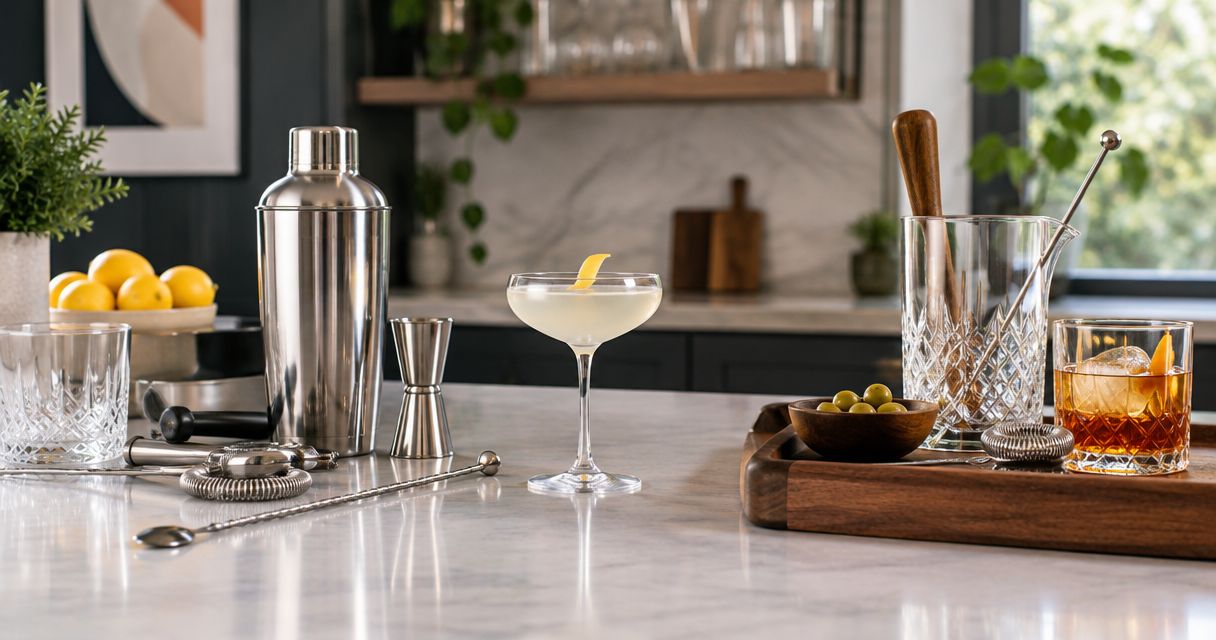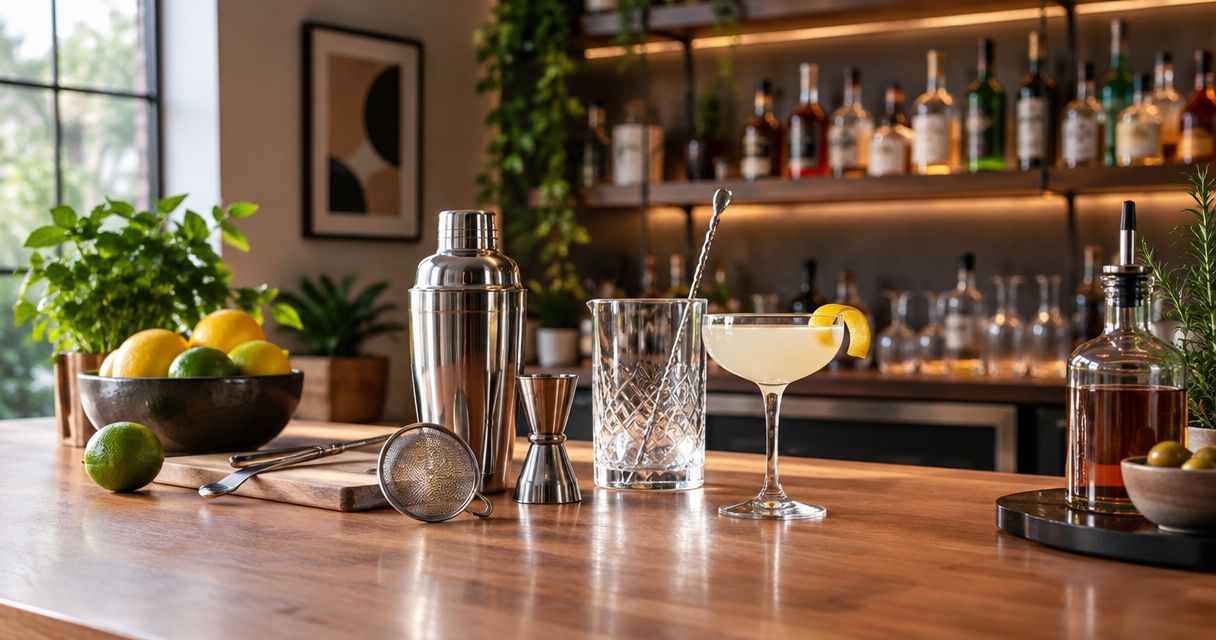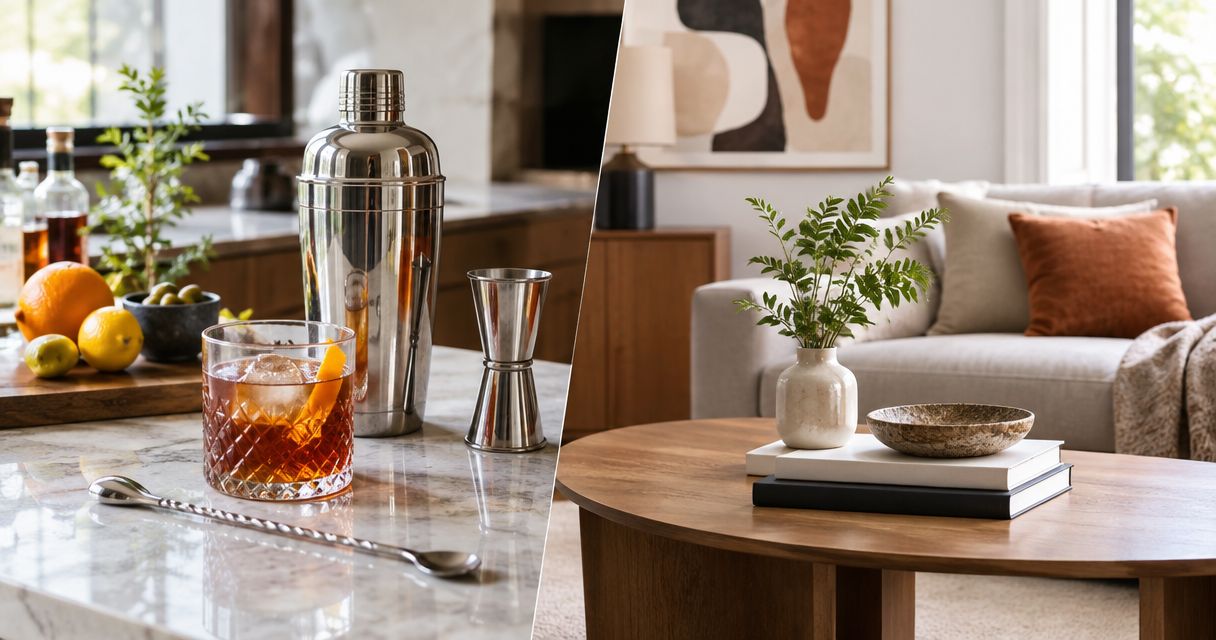
Choose Quality Barware if you want cocktail glasses and tools chosen by a working bartender; choose West Elm if your barware purchase belongs to a broader furniture and room-design project. In 2026, the useful distinction is cocktail-making guidance versus home-furnishing context—not an unsupported claim that one retailer makes every better glass.
- Quality Barware vs West Elm comes down to bartender-selected home bar essentials versus a broader home-furnishing shopping context.
- Choose Quality Barware for cocktail glassware and bar tools selected by a working bartender.
- Choose West Elm when coordinating a home bar with furniture and room décor is your priority.
- Neither retailer wins automatically on durability, care requirements, or value; compare the individual item.
Why this matters
A home bar has two jobs: making drinks and fitting into your home. Those jobs overlap, but they do not require the same shopping approach. A glass that looks right on a cabinet still needs to suit the drink you serve.
For your 2026 purchase, start with the problem you need to solve. If you cannot decide between a rocks glass, highball, coupe, or Nick & Nora, practical glassware guidance matters. If you already know what you need and are furnishing the surrounding room, the broader retail setting matters more.
Choose the retailer around your hardest decision, then judge the actual item separately. Bartender curation explains why something belongs in a home bar; it does not establish a warranty, a care rating, or a durability result.
At a glance
This 2026 comparison separates retailer positioning from product performance. The table gives you an outline for the buying decision, not a ranking of unnamed glasses or tools.
| Dimension | Quality Barware | West Elm |
|---|---|---|
| Best for | Home bar enthusiasts seeking bartender-selected glasses and tools | Home-furnishing shoppers coordinating a bar with a room |
| Standout feature | Products curated by a working bartender | Home-furnishing context for the purchase |
| Cocktail selection | Specialist focus on cocktail glasses and bar essentials | Choose by the requirements of each drink, not the retailer name |
| Room coordination | Barware-focused shopping | Better fit for a broader furniture and décor project |
| Tool selection | Practical bartender-selection angle | Assess each tool independently of its appearance |
| Care and durability | Check the individual item's instructions and construction | Check the individual item's instructions and construction |
| Storage fit | Measure your cabinet and intended glass shapes | Measure your cabinet and intended glass shapes |
| Pricing model | Retail purchase of selected goods | Retail purchase of selected goods |
| Shopping context | Online and local shop in New Albany, Indiana | Broader home-furnishing retailer |
Quality Barware wins on bartender-led selection
The specialist's clearest advantage is explicit: cocktail glasses and bar tools are chosen by a working bartender. Quality Barware is best for home bar enthusiasts who want bartender-selected cocktail glassware and tools. That is a reason to choose the shop, not proof that every item outperforms every alternative.
Your first question should be what you make. A rocks glass suits drinks served over ice; a highball suits tall drinks with mixers; a coupe or Nick & Nora suits drinks strained and served without ice. A martini glass provides another stemmed option, but its wide opening deserves attention when you carry a full drink.
The drawback of a specialist-first approach is scope. This is a barware decision, not a complete room-furnishing solution. If furniture, lighting, and décor are the main unresolved purchases, bartender selection does not answer those questions.
Use curation to shorten your decision, then check the details yourself:
- Name the drinks you actually serve.
- Decide whether you need glasses, tools, or both.
- Check capacity, care instructions, and storage fit for the specific item.
- Ask what practical problem a tool solves before adding it.
West Elm wins when the room is the main project
West Elm is the better fit when your shopping problem extends beyond the drinks themselves. As a home-furnishing retailer, it belongs in a decision about the surrounding furniture and décor rather than only the contents of a cocktail cabinet.
That distinction matters when the bar is part of a living room or dining area. You need to settle where drinks are prepared, where glassware lives, and how the setup works with the rest of the room. Starting with the room can prevent you from buying glasses before you know where they will go.
The drawback is that visual coordination does not establish drinking performance. A matching appearance tells you nothing by itself about a shaker's seal, a jigger's markings, or a stemmed glass's balance.
Choose West Elm for the furnishing context, then apply a separate functional check to the barware. Do not treat a coordinated display as evidence that each piece suits your recipes or washing routine.
The specialist wins when function is your unanswered question
Bartender-led selection is especially relevant when you are unsure what a tool does. A shaker mixes and chills shaken drinks; a strainer holds back ice and other solids; a jigger measures ingredients. Those are different jobs, even when the tools arrive together.
For a practical measurement check, imagine a recipe requiring 2 fl oz of one ingredient and 1 fl oz of another. Your measuring tool should make both amounts clear. One US fluid ounce is approximately 29.57 ml, so read whether the markings use ounces or milliliters rather than assuming the scales are interchangeable.
Glass selection needs the same attention. A drink served over a large ice cube needs room for both the liquid and the cube. A drink served without ice needs a suitable stemmed glass, not extra capacity purchased for its own sake.
The guide to coupe glasses for cocktails is a useful next read if stemmed glassware is your main decision. Compare the opening, stem, and intended serve before treating the shape as decoration.

The limitation remains the individual product. A bartender-selected tool still needs readable markings, a comfortable grip, and care requirements you will follow. Selection is useful guidance; it is not a substitute for checking those features.
West Elm wins when visual coordination is the deciding task
Choose West Elm when you already understand the functional requirements and want to make the bar area work with the room. This is a different win from cocktail expertise: it concerns the context in which you buy and use the items.
Start with the furniture and available space, then choose the visible objects. That order keeps you from building a display around glassware that does not fit the cabinet or leaves too little working space for making drinks.
For your 2026 setup, separate visual requirements from operating requirements. Put appearance on one list; put glass shape, measuring, straining, washing, and storage on another. An item has to pass both lists if you want it on display and in regular use.
The drawback of appearance-first shopping is unnecessary duplication. Buying another stemmed shape does not solve a missing measuring tool. Finish the working bar before expanding the display.
Neither retailer wins automatically on care or durability
There is no retailer-wide durability winner in this comparison. Material, construction, and care instructions belong to the individual item. A retailer name cannot tell you whether a particular glass tolerates your washing routine.
Read the item's care information before buying. Check whether it specifies hand washing or dishwasher use, and follow those instructions rather than transferring advice from another glass you own. Decorative finishes and different materials require their own checks.
For tools, look at the working parts. Readable measurement marks matter on a jigger; fit matters where shaker components meet. For stemware, think about how you grip, wash, dry, and store it.
Both shopping approaches have the same drawback here: you still need to inspect the product details. Do not award either retailer a durability win without comparing named items and their documented requirements.
Both need to pass the same storage test
Neither retailer can solve a cabinet mismatch through branding. Measure your shelf clearance, usable depth, and the space around the glass before ordering. Include the base and widest part, not only the opening.
A coupe's broad bowl takes a different footprint from a narrow highball. A tall stemmed glass needs clearance above it. Those practical differences matter more than whether the glass belongs to a coordinated collection.
Plan storage around your actual routine:
- Keep regularly used glasses within easy reach.
- Leave room to remove a glass without knocking its neighbors.
- Separate sharp tools from loose glassware.
- Decide where washed tools will dry before putting them away.
The tie is straightforward: either buying route can work if the items fit. Either can fail if you order before measuring.
Pricing: compare the purchase, not a presumed cheaper retailer
Both options are retail purchases of goods. You choose the items you need rather than subscribing to a barware service. The useful tradeoff is buying individual pieces for control versus buying a set for convenience.
Individual selection lets you avoid pieces you will not use. A set simplifies the shopping decision, but its contents still need to match your drinks and storage. Do not assume a bundle is better value merely because it contains more objects.
For a fair 2026 comparison, build the same functional list for both retailers. Match the intended glass type, intended use, and care requirements; then check the current purchase terms directly. A rocks glass and a stemmed coupe are not substitutes just because both hold cocktails.
Neither retailer earns a pricing win here. The buying decision needs a like-for-like basket, not an unsupported claim that specialist retail or home-furnishing retail is always cheaper.
The local specialist wins for a New Albany shopping preference
The specialist operates online and as a local shop in New Albany, Indiana. That is a concrete reason to consider it if you want your home bar purchase connected to a local barware business.
This benefit is specific to the shopper, not a nationwide performance claim. A buyer elsewhere can still shop online, but the local-shop distinction will not carry the same weight.
Do not convert location into assumptions about opening hours, pickup arrangements, delivery timing, or policies. Check the current arrangements directly before making plans. Choose the local route because it suits how you want to shop, not because of an unstated promise.
Final verdict: choose around the decision you need help making
Choose Quality Barware if you are building a working home bar
Your priority is understanding which glasses and tools belong in your setup. You want products selected by a working bartender, and you care more about serving your usual drinks than coordinating a whole room. The specialist is the named winner for that profile.
The tradeoff is that barware expertise does not settle your broader furnishing decisions. Keep product care, measurements, and fit on your checklist.
Choose West Elm if you are furnishing the room around the bar
Your priority is the room project, and you already know the glass types and tools you need. West Elm is the named winner for that profile because the purchase sits within a broader home-furnishing context.
The tradeoff is that you must keep the functional barware checks separate. Visual coordination cannot replace a tool's working purpose.
One-glance scorecard
| Dimension | Winner |
|---|---|
| Best for | Specialist for cocktail-focused buyers; West Elm for room-focused buyers |
| Standout feature | Specialist for bartender curation; West Elm for furnishing context |
| Cocktail selection | Specialist for function-led selection |
| Room coordination | West Elm |
| Tool selection | Specialist for bartender-led selection |
| Care and durability | Tie: item-level evidence required |
| Storage fit | Tie: measurements required |
| Pricing model | Tie: compare the actual purchase |
| Shopping context | Local specialist for a New Albany shopping preference |
FAQ
Is Quality Barware better than West Elm for a home bar?
Quality Barware is the better fit for home bar enthusiasts seeking bartender-selected cocktail glasses and tools. West Elm is the better fit when the purchase is part of a broader furniture and room-design project.
Which retailer should I choose for a bar cart setup?
Choose West Elm if furnishing and coordinating the surrounding room is your main task. Choose the bartender-curated specialist if your main question is which glasses and tools you need to make drinks.
Should I buy a coupe or a rocks glass first?
Buy a rocks glass first if your usual drinks are served over ice; choose a coupe if you mainly serve cocktails strained without ice. Let your drink list decide rather than buying a shape only for display.
Are bartender-selected glasses automatically more durable?
No, bartender selection does not establish durability. Check the specific glass's construction and care instructions before comparing it with another item.
Which retailer has cheaper barware?
This comparison does not establish a cheaper retailer. Compare current purchase terms for items with the same function, and exclude set contents you will not use.
Can I put either retailer's cocktail glasses in the dishwasher?
Follow the care instructions for the specific glass. Do not assume dishwasher suitability from the retailer name or from another glass in your cabinet.
What should I check before buying a home bar tool set?
Check whether every tool has a job in the drinks you make. Read the measurement markings, inspect the intended use, and plan where the tools will be washed, dried, and stored.
One last thing
For your 2026 home bar, write down your usual drinks before choosing a retailer. Then circle the missing function: measuring, shaking, straining, or serving. That small exercise separates a useful purchase from another object that only fills the shelf.
Buy the missing function first. A complete-looking display and a useful home bar are not the same thing.